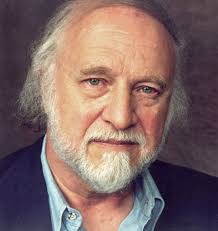
Richard Matheson – 1926-2013
 I Am Legend
The Shrinking Man
Hell House
Bid Time Return
What Dreams May Come
Duel
“Born of Man and Woman”
The Twilight Zone (9 episodes)
He will be sorely missed.
Learning to Fly
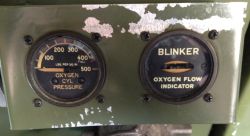
 I spent most of a recent Friday crawling around the Nine Oh Nine, a B-17 Flying Fortress, with Ken Mitchroney, my writing partner on Fata Morgana. Besides being a ton o’ fun, it was invaluable for the novel, and educational in some unexpected ways.
I’ve often mentioned that I’m a fiend for research, I think because I usually write about impossible things. The advantage is that it lends credence to what’s essentially an unbelievable idea. The disadvantage is that gritty realism also shines a harsher light on the impossible elements, forcing you to work harder to make them believable and dovetail them into your depictions of the familiar.
 Ironically, often the more specific you are, the more you open yourself up to argument. It’s not difficult to believe the line, “He rode the horse across the desert.” But if I write in detail about riding a horse across a desert, and get one of those specifics wrong, the whole thing falls apart. (I wonder if that’s why fantasy fiction has traditionally been so flowery and general: it’s trying to lull you into acceptance, to make you focus on the ornate icing because in truth there’s not much cake. Hmm.) I think the advantages outweigh the disadvantages, because when it works, you don’t just accept that someone rode a horse across the desert, you rode it yourself.
 In my case, I have be careful not to over- compensate. It’s easy to belabor the concrete details as courtroom evidence that these impossible events did in fact take place. It’s something I look for when I revise.
By now I’ve read a ton of books and watched a ton of video related to B-17s. the Eight Air Force, and the European Theater in 1943. Yet no amount of research is a substitute for experience. To crawl around inside that bomber, smell the grease and 108 octane, feel first-hand how crammed together those young men were, is to come away with a handful of One True Things that we wouldn’t have found without being there. Things that give the authenticity we’re looking for.
Still — I’ve promised Ken there won’t be a pilot’s manual in the novel. I think I’ve learned the difference between making a reader believe someone can fly a bomber, and teaching the reader to fly the damn thing himself.
Fata Morgana is about halfway done, and we’re hugely happy with it. Even better, our agent is hugely happy with it.

Atomic Armada
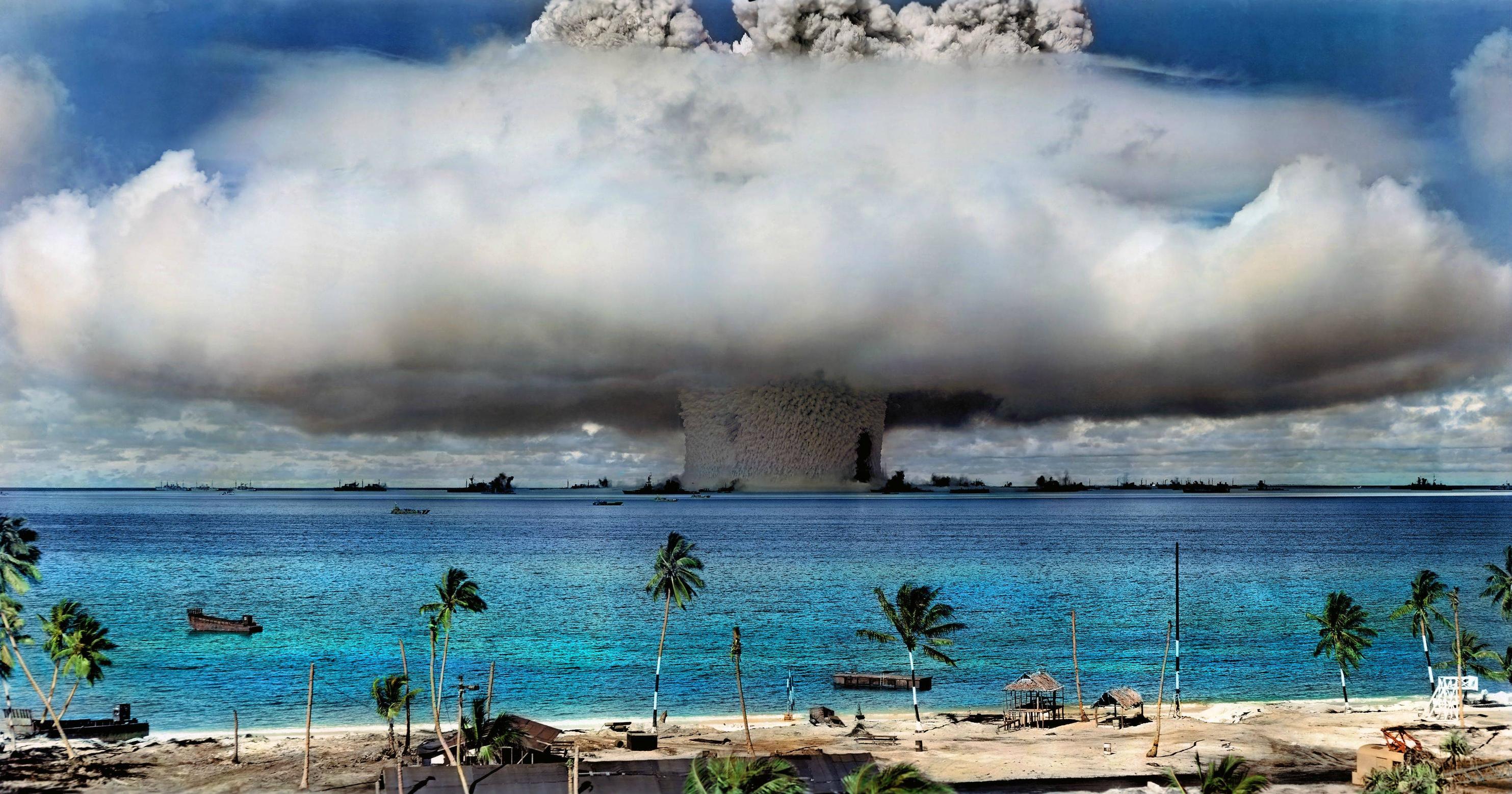
My friend Adrian Smith is a wreck diver and videographer who has started a Kickstarter campaign to fund an expedition to Bikini Atoll in the Pacific in order to document the warships sunk by a U.S. atomic blast in 1946. These WW2-era ships are the only ones ever to be exposed to close-range atomic blast (click the pic for a mind-blowing sense of how close).
To give you an idea of what these ships were exposed to, take a look at the water column of the mushroom cloud in this picture (or, even better, in this one). See the dark blotch on its lower right? That’s an aircraft carrier, lifted by the blast and standing on end.
Let me say that again. That’s an aircraft carrier. Lifted by the blast. And standing on end.
Among the sunken wrecks are the carrier Saratoga, the battleship Yamamoto (the flagship from which the Pearl Harbor attack was launched), the German battleship Prinz Eugen (which assisted the Bismark in sinking the USS Hood), and the U.S. submarine Apogon.
No comprehensive documentary exists of these historic vessels, and in recent years their erosion has accelerated. I think it’s very cool that Adrian is trying to get this documentary made. Here’s the Atomic Armada website. Fingers crossed for the expedition!
Name your poison

My favorite drink these days is a variation on a pre-Prohibition-era drink called a Whiskey Cocktail. It’s based on Jennifer Colliau’s recipe from Small Hand Foods.
The cocktail’s supposed to be made with bourbon (Buffalo Trace is recommended), but I use Bulleit small-batch rye. The Buffalo Trace has a lot of body, the Bulleit has a lot of character. It’s a preference thang.
Here’s the recipe, if you’re curious. Ingredients are listed in their pictured order, left to right.
- 1/4 oz simple syrup (1:1 sugar-to-water ratio)
- 1 dash Angostura bitters
- 1 dash orange bitters
- 2 oz. Bulleit rye (green label) or Buffalo Trace bourbon
- 1 lemon peel
- Add simple syrup and bitters to an old-fashioned glass.
- Add lemon peel and muddle moderately to release the oils.
- Add rye (or bourbon).
- Add large ice cubes (I use either the Tovolo King cube mold or the amazingly cool Tovolo sphere ice balls).
- Stir for 15-20 seconds.

It’s a tasty, sipping drink. They do sneak up on you, though.
Red, Inc.
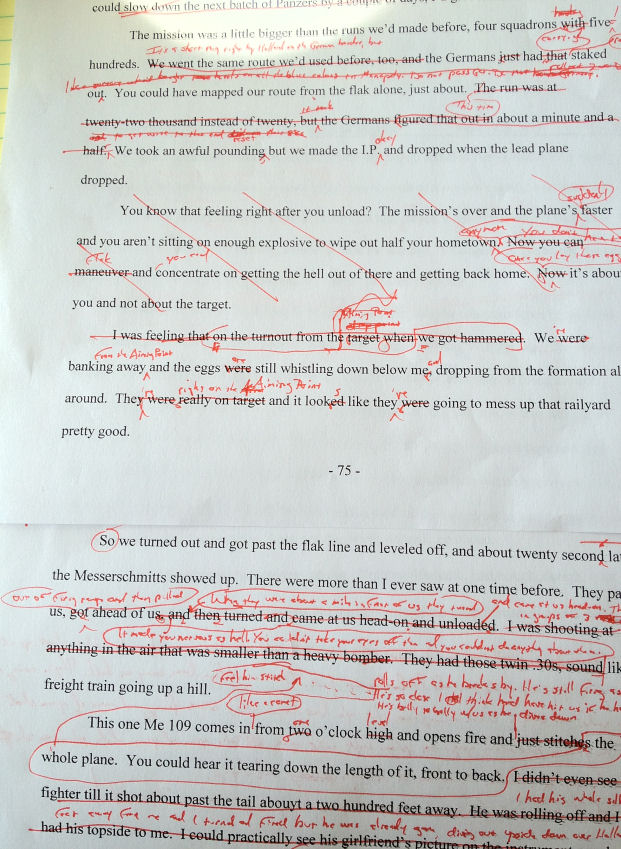
How do we know that Steve’s working on a novel?
Because his red pens are running out of ink.
I knew when I said, “Hey, Ken, let’s write a book together!” that I should have had the foresight to say, “Hey, Ken, let’s write and edit a book together!”
The sad, perverted truth, though, is that I like this part.
(And yah, it’s clickable if you’re morbidly curious about my editorial self-evisceration. Good luck reading my handwriting, though — I could write prescriptions, I tell ya.)
Rolling Sevens
My music podcasts, Podrunner and Groovelectric, turn seven in a week. No way I would have believed I’d keep doing them this long, much less that they would have remained so popular.
 Groovelectric remains my favorite simply because, being a straight-up music mix series, it represents what I do, and love, and attempt, as an electronic music DJ. Since it debuted in February 2006, it’s usually been in iTunes’ Top 100 music podcasts.
 Podrunner has been hugely popular. The workout-music series has been a top iTunes podcast for seven years in a row, and a pacemaker literally and figuratively. There was nothing like it out there when it debuted, and I am enormously proud of its popularity and positive influence.
 I had to change the theme music for Podrunner, so I took the opportunity to dig out my old MIDI keyboard and brush up on my music production software before getting to work on new theme music. I’m pretty sure it’s the first thing I’ve composed in a decade.
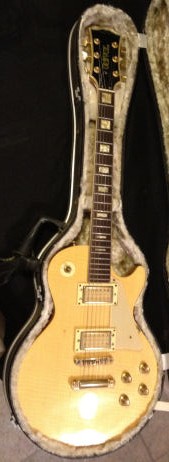
Even with guitar-rig sampler kits, I couldn’t get a lead guitar sound I wanted for the opening notes. So I dug out my Univox imitation Les Paul guitar and played it myself. It’s the first time I’ve recorded guitar in at least 20 years. I had an absolute blast doing it.
The new Podrunner theme is below if you want to give it a listen or download it.
[UPDATE] I tweaked the track a bit, making it shorter & chunkier, and I EQ’d & mastered it to make it sound better overall. That’s now the file below.
[audio:http://www.djsteveboy.com/podrunner_theme.mp3]
Download
Novel Collaboration
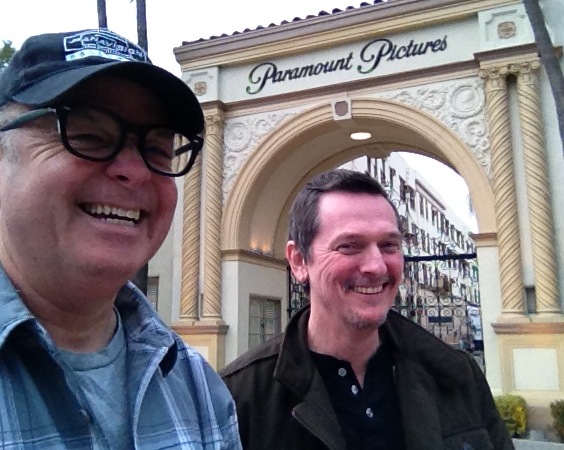
I’ve set aside Avalon Burning for a while to work on a novel with my friend Ken Mitchroney.
I’ve known Ken for nearly 30 years (ulp!), and we’ve worked on a ton of projects together — from comic books, to screenplays, to Toy Story 2 and much more — but this is the first time we’ve set out on a novel together.
I don’t want to give too many details, though I will say that I now know more about the care and feeding of B-17 bombers than I ever imagined I would.
The novel’s called Fata Morgana, and so far it is going pretty quickly. I am having an absolute blast.
“Hard Silver” — Free Download for Nook & Kindle!
Subterranean Magazine editor Bill Schafer has made the Winter 2013 issue available as a free download in ePUB and Mobi format (that covers Nook, Kindle, & most other e-book readers). You can also download the Fall 2012 issue here. This is a bodaciously cool thing for Bill to do!
Even more bodacious (and more cool), the Winter 2013 issue contains my dark fantasy/western novella “Hard Silver,” so I’m even more stoked.
Go thou and do likewise.
Supercut Request #1
A supercut is a video remix that compiles similar scenes from several films. For instance, here is a supercut of scenes of Claire Danes crying:
Supercuts can also reference a single movie, as with this supercut of every utterance the word “dude” in The Big Lebowski:
One of the things I like about supercuts is that they can point out cliches that are everywhere in films (endess instances of “I’ve got a bad feeling about this,” “I’m too old for this shit,” etc.), weird quirks or consistencies of actors or directors (every Schwarzenegger scream, Bruce Willis looking confused, Michael Bay’s circling cameras), or crass stupidities (too many to note here).
There are several supercuts I’d love to see someone put together. (I know I could do it myself, but I’m too damn lazy busy to acquire all the scenes for supercuts I’d like to see, much less learn whatever video software I’d need to edit them together).
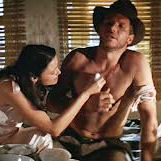 First up is Supercuts of Scenes of Women Treating Injured Men (Especially When Followed by Kissing). One such scene in the utterly predictable Christian Bale/Mark Wahlberg vehicle The Fighter made me think this supercut needs to be done. I don’t think it takes a lot of effort for most of us to come up with an embarrassing number of such scenes. One of the more famous (and one of the best) is from Raiders of the Lost Ark. I’d suggest more, but thinking of them is half the fun.
Feel free to offer up supercuts you’d like to see, or links to existing supercuts you like.
Always carry a spare

I saw one of these parked on the side of the road today. At first I couldn’t account for it, at least not in any rational way.
But then I realized that the latest monster SUVs — maybe the Ford Excretion, or the Cadillac Escalate — are now equipped with escape pods.
Think of it! In the event of accident or catastrophic failure, the sophisticated computer brain of the SUV seals the driver super-snug in this little emergency capsule, and then huffs him out of its injured behemoth body like last night’s burrito.
Imagine the relief of the driver! Having escaped some vehicular calamity, he may now cautiously navigate amid traffic in relative safety, until help or an actual vehicle can be summoned.
There must be a built-in GPS transponder for search & rescue. Maybe even a remote control in case the driver is incapacitated. Flares and MRE packets and even a signal mirror.
A disposable vehicle! Truly we live in an age of marvels.
So how’s your 2013 so far?
Banish’d Words & Phrases 2012
 HEREWITH, the following Words and Phrases are ordered Banish’d from the common speech as Damning Evidence of groupthink, known to be detrimental to the Rever’d Gift of Free Will:
- Drill down
- Double down
- Artisinal
- Low-hanging fruit
- I’m just saying (a perennial Banishment entry, alas)
- Awesome sauce (or anything-sauce)
- Meh
- Douche (in an Adjectival state)
- I think I threw up in my mouth a little (this Devil has resisted many previous Proclamations)
- Threw him under the bus
- Sustainable (most especially in reference to the marketing of Productes)
- Bespoke
- Man cave
- Epic fail
- Reboot
- Not so much
- Skin in the game
Special consideration is being given to explanatory sentences beginning with the word “So,” as there seems to be a highly infectious plague of them among talk-show guests.
The gentle quality of Mercy suggests that users of such Banish’d Words and Phrases be treated not with Scorn or Derision but with heartfelt Pity, and generally Punish’d subsequent to their thoughtless usage by a downward Gaze and a small shake of the Head.
New (& Free!) Novelette at Subterranean
 Subterranean has released my new novelette “Hard Silver” on their most excellent online magazine. It’s an idea I’ve been wanting to do for many years, and I’m so glad I finally got around to writing it, because it was a big honkin’ bag o’ fun to do.
“Hard Silver” is a fantasy Western, and my take on two genre tropes that were destined to cross paths, but astonishingly never have till now (as far as I’m aware, anyhow).
Even better, it’s free free FREE! So don’t be shy — read! Repost! Link! Let all the Intertubes behold its mighty presence! Bookmark it to jog your memory come awards time. Moo hoo, hah hah. (Did I mention that it’s free?)
Rellik Reading Redux
At a reading?
Benicia Literary Arts and The Rellik Tavern are hosting another reading event at The Rellik in Benicia, California, on Saturday, November 17, 3:00 – 5:00 PM.
This one is called Speakeasy (more for the literalness of the name than from any association with Prohibition-era juice joints). I’m a featured reader along with mystery writer David Corbett and Benicia’s Poet Laureate, Lois Requist.
There’s also an open mic segment, which should be fun. The last reading at the Rellik was terrific (video here), and this one is shaping up to be even better.
Speakeasy
The Rellik Tavern
Saturday, Nov. 17, 3:00 – 5:00 PM
726 First Street
Benicia, CA 94510 (map)
Words & Grooves
The Litquake reading went very well, but the video did not. It turns out that when the little red light is lit, it means the camera is recording, and when it isn’t lit, it isn’t. Like I should know that?
The reading at Bookshop Benicia went well, considering that I was a bit off my game. I’ve had a cold all week, and was also still having an unpleasant conversation with the food poisoning I’d had since eight that morning. (So much for “Never complain, never explain.”)
The culprit was a 7-Eleven burrito; I have only myself to blame. I seem to be very susceptible to the nasty little bugs that caper and cavort in late-night junk food, since I’ve had the pleasure of their company at least a couple dozen times.
Video of the reading will be posted soon. I broke a fever during it — that ought to be fun to watch, huh?
Tonight is my DJ gig at the San Francisco Litquake closing party (see the sidebar). I don’t plan to be feverish, coughing, or turning myself inside-out at any point during it. That will be a refreshing change of pace.
Off to Litquake
Today San Francisco is hosting the America’s Cup, a Columbus Day parade, a bluegrass festival, Fleet Week, a Giants game, and a Blue Angels aerial show. Estimates are that a million extra people will be in San Francisco today.
At the same time, I’m reading at Litquake (see sidebar info). Coincidence? I think not. Still, calling out a Blue Angels flyover just for my reading seems a bit much. Even though I’m very flattered. Really.
Threefer
Last year I performed at Litcrawl, the city-wide event that closes San Francisco’s massive, week-long Litquake festival of readings, panels, and book-related events. It was one of the best readings I’ve ever given, in front of one of the best crowds I’ve ever had.
Naturally I’m stoked that this year Ive been asked to do my little tap dance during Litquake’s opening weekend. I’ll be performing as part of The Fantastic Surrounds Us, a fantasy & science fiction-oriented segment of the “Off the Richter Scale” series that opens Litquake.
Litquake/Off the Richter Scale
Sunday, Oct. 7 – 2:00 – 3:00 PM
Variety Children’s Hospital Preview Room Theater
582 Market Street, San Francisco (map)
On Thursday, October 10, I’ll be reading in the East San Francisco Bay city of Benicia as part of Straitquake, a Litquake-affiliated event. This will be a longer performance than at Litquake.
Straitquake (Benicia Litquake Reading)
Thursday, Oct. 10, 7:00 – 9:00 PM
Bookshop Benicia
636 First Street, Benicia, CA (map)
And finally, I am totally stoked to announce that I”m DJing the Litquake closing party after Litcrawl on Saturday, October 13. The party is private from 10 to midnight, but wide open after that. Much funk will be served.
Litquake Closing Party (DJ gig)
Saturday, Oct. 13 2012
10:00 PM – 12:00 AM (private)
12:00 AM – Closing (open)
The Blue Macaw
2565 Mission St., San Francisco (map)
I will probably record all the performances. Video of the readings will be posted here, and audio of the DJ gig might end up on Groovelectric, depending on how much new material I use (and whether or not I suck).
Watch the Revolution Without Me
I’m getting a ton of email about the new tv show Revolution, asking if it is based on my 1983 novel Ariel, and if I had any involvement with the show. I haven’t watched the show and I’m not likely to.
The answer to the latter question is, no, I had nothing to do with the show. The answer to the former question is that I think it is a ripoff of a different novel that seems to be largely a ripoff of Ariel. I’ll leave the issue of whether you can ripoff by proxy for others to debate.
Further details would require a very lengthy post that I would probably regret writing, so this is all I’m gonna say about this for now.
Mortality Bridge: Now More Hell Per Dollar!
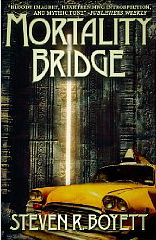 Thanks in part to the influence of Cory Doctorow’s reach on BoingBoing, and to the responsiveness of the good folks at e-Reads, the price of the trade paperback (large-format softcover, if you will) of Mortality Bridge is now $19.95.
As someone who winced whenever he saw the original $23.95 price, I can tell you that I am relieved and happy about this. Sure, I make less money per sale. But given this more reasonable price, I will probably sell more copies.
Would I rather sell more books for less money? You bet. If I had great business acumen, I doubt I’d have picked writing as a profession. The truth is, writers want to be read, sometimes unpragmatically so. Otherwise I’d just have one copy available and I’d price it at $100,000, and then wait and hope I score that sale. Sure, the odds aren’t good — but I just need one!
Fortunately for both of us, that ain’t the case, and you can get the very handsome trade paperback here for the New! Low! Price! of $19.95! operators are standing by call by midnight tonight get your free ginsu knives never needs winding lasts all month on a single charge minty fresh ZOMG whAt r U wtNg 4!
Drafty in Here
Nothing makes me feel like one of those reality-show rat-warren hoarders more than confronting the things I’ve hauled from garage to garage for years with some notion that Someday I Will Need These. I’ve been moving the same set of paper-marbling combs for 15 years, ferchrissake, entirely because they’re such a pain in the ass to make.
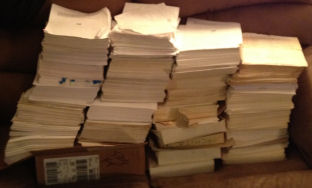
Among the things that have been taking a Garage Tour of America are manuscript drafts. I tend to keep the significant drafts & marked revisions of novel manuscripts. I tell myself they’re an important map of My Process. But now that I’m playing Apartment Tetris with all this stuff, I’m thinking, you know, I don’t really see any universities begging for my papers so that PhD theses can be mined for posterity.
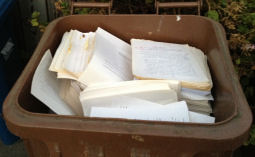
Mortality Bridge, for example. I probably revised it 40 or 50 times. I kept the major revisions, and I had at least 12 incarnations of the thing here. We’re talking 6600 sheets of paper. Carry enough of those up and down stairs and you’ll get to where you don’t care if it’s a signed first edition of the Old Testament — it’s outta here. And I’m not exactly First Folio Shakespeare; no one’s gonna bid on V3.1 of The Gnole on eBay.
So I decided to throw out my intermediate-draft manuscripts and keep only firsts and finals. Early versions of the continuation of The Architect of Sleep? Gone. The second draft of Ariel? History.
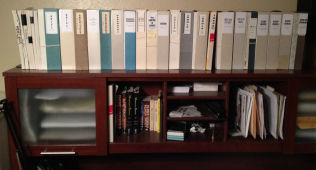
I looked at those about-to-be-tossed drafts on my couch (there were even more than in the picture) and thought about the time and effort they embodied. Four of those novels were never published.
I also thought about how many reviews I’d read, how many emails I’d gotten, that mentioned how I don’t write very much, or had stopped entirely for 25 years, or whatever bullshit makes the rounds until it becomes irrevertible. It’s enough to make you eat a bottle of tequila.
At the end of the day, though, what really matters is where those drafts led to. All the blind alleys, deleted scenes, rephrasings, tightening, clarity, rhythm, proofreading — they’re the dirt left behind as you dig your way to that final draft. Understanding that made it easier to throw it all away.
And now it truly may be said that Boyett recycles his stories.
Corybantic
Last night I went to hear Cory Doctorow lecture on “The Coming Civil War Over General-Purpose Computing,” for Stewart Brand’s The Long Now Foundation in San Francisco. I met Cory in 2010 at World Science Fiction Convention in Montreal, and I just wanted to box him up and take him home. We were on a panel together, and I found Cory intimidatingly knowledgeable and articulate.
I was familiar with Cory’s work on issues of intellectual property, privacy, and individual rights in the 21st Century. I’d been thinking along similar lines for a few years, and when I ran across Cory and Lawrence Lessig I saw that here were people who had not only cogently articulated ideas I’d been messing with, they had become movers & shakers in those areas.
I hadn’t read any of Cory’s fiction, and after meeting him I read a bunch. I’ve found it as engaging as Cory himself. His wonderfully subversive YA novel Little Brother is an Anarchist Cookbook for young teens.
The big surprise for me was Someone Comes to Town, Someone Leaves Town. It’s a flat-out, unapologetic magical-realist techno-activist science-fiction fantasy. (Whew.) It’s dark, and it’s loaded with exactly the kind of urban grit detail a book like this needs to stay grounded. It’s also the most lyrically written thing I’ve read by Cory, with a sustained mood and poetic tone that make it one of my favorite novels I’ve read in the last few years.
I’m pretty sure it’s also Cory’s least commercially successful novel. It doesn’t explain itself, it demands that you accept some baldly stated impossibilities, and it can’t possibly be catering to the nuts & bolts technophile audience who usually gobble Cory’s work like crack-filled bonbons. But for me it has the urgent immediacy of a book its author simply had to write, a “damn the torpedoes, full speed ahead” insistence.
I tend to like artists’ “B” sides. Chances they take, things they knock out with no notion where they’re going or if they’ll even sell, much less make money. You can just feel the artist not playing it safe. (Gene Wolfe’s Latro books are like that for me — I’d bet they are among his least-selling novels, but they’re by far is most evocative and interesting. For me, anyhow.)
I was surprised to learn that last year was Cory’s first time at Burning Man. I was not surprised to learn that he is going again this year. And I’m delighted to learn that by doing so, he will be blowing off WorldCon for the first time in 18 years. The Playa will do that to you. And while I think Cory has a lot to offer WorldCon, I think Burning Man has a lot to offer Cory.
I would never say this to Cory directly, for fear of looking like a squeeing fanboy, but he is one of my heroes. His stances on the sham that is current intellectual property law, the fundamental humanism that makes him a revolutionary at heart, and his unwavering dedication to telling the world when the emperor has no digital clothes — they’re all traits of someone fighting the Good Fight.
Great Strides
Yesterday marked the 43rd anniversary of the first human step upon another world. I remember it vividly. It’s hard to convey now the extent to which much of the world was caught up in the Apollo program at the time. (And it would be hard to go back to that time and make people believe how little has been accomplished in manned space exploration since.)
Though the Apollo program was conceived as an American propaganda machine, the vision gradually became reshaped in the public consciousness, so that Apollo 11’s historic firsts were celebrated as a unique and inspiring human accomplishment.
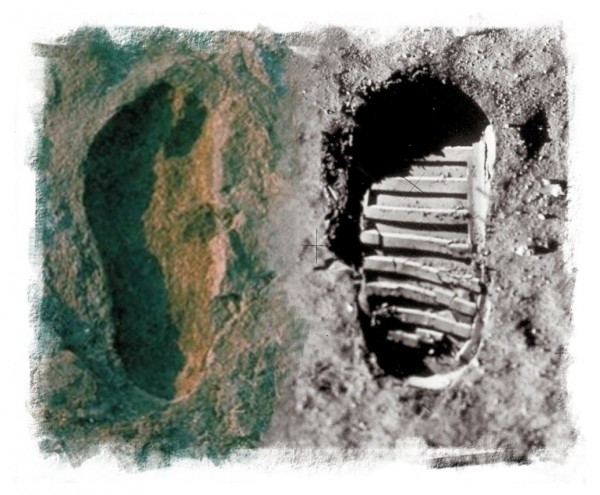 Some years back I made up this image in an attempt to express the breadth of that accomplishment. The left side is a picture of the earliest known hominid footprint, from Laetoli in Tanzania. (At least, it was the oldest known at the time I made the image. It may have been superseded since.) It’s 3.7 million years old.
On the right, of course, is Neil Armstrong’s iconic footprint on the moon from July 1969 — a footprint that’s still there, and that might still be there 3.7 million years from now.
Taken together, they represent a stride that encompasses all of human development. (I know it can be argued that the Laetoli footprint is from a line that died out, but we’re talking symbols here, okay?)
These days it’s pretty easy to look at news headlines and despair. For all of our ability, we can be a pretty wretched species sometimes. But I like to look at this image and realize what we can accomplish when we put our (so far) unique minds to it, and take pride in our achievements while being grateful for our unbelievable luck. (One example of our great good fortune, out of thousands: We’ve had time to evolve and develop a civilization between major catastrophic collision events. Better luck is if we have time for that civilization to get to a point where it can get us off the planet, avert such a catastrophe, or both. Assuming, of course, that it doesn’t get too smart for its own good and wipe itself out in any number of ingenious ways.)
Great strides.
Reading @ The Rellik
The Benicia Literary Arts Organization very kindly asked if I would read at their second public reading at The Rellik Tavern in Benicia. They’ve only done poetry so far and wanted to see how it would work if they incorporated fiction into the program.
It’s weird, but I was nervous because it was a home-town crowd. For some reason I can go into San Francisco, or to a convention, and do my dog & pony show in front of a bunch of strangers just fine. (Well, not completely fine — I always get a kind of racehorse-at-the-gate nervousness before any performance.) But where I live? Whole nother ball game, for some reason.
Luckily, I’ve bombed at The Rellik before, as a DJ, so if I sucked, I wouldn’t be on unfamiliar ground.
I read two short pieces. I videotaped (I always pause before I type that — there’s no tape anymore, but what else do you call it?) both, but there was so much background noise on the first that I don’t want to put it up.
I’m really happy with how the second one, “I’m Sorry to Have to Tell You This,” turned out. There’s audio of it on my media page, but I much prefer the video. It was the best performance of the story I’ve done, and the audience was great.
Big thanks to the BLA, and to Lois Requist, Benicia’s new Poet Laureat, for asking me to read.
Channel Changer (pt. 2)
(Continuing my look at the half-dozen or so tv shows I watch, and why I watch them.)
 Mad Men
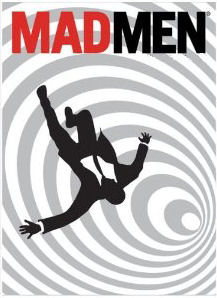
Like Breaking Bad, I’d heard about Mad Men for a while before I watched it. It’s a great show about a Madison Avenue advertising company, people said.
I worked in advertising for about six years, as a temp and then full-time, mostly at a boutique agency in Pasadena. I was a proofreader and a copywriter. I grew to hate that job possibly more than any job I ever had, which is why I avoided Mad Men at first. The very thought made my stomach grumble.
But like any work of art of any depth, Mad Men isn’t really about its subject matter. It’s about advertising, all right, and the writers & researchers have definitely done their homework. I clearly remember some of the campaigns they reference (Heinz baked beans, Volkswagen, Right Guard, the Kodak Carousel). And the maneuvering to get and keep accounts (adjusted for dramatic inflation) feels pretty authentic.
The show’s production values also are terrific. Set dressing is practically a character all by itself. Again, the research here seems thorough, accurate, and authentic. The show conjures 1960 through the mid-60s almost eerily. I’ve gotten uncomfortable watching sometimes because the show’s often awkward and tense office parties so closely match my memories of my parents’ similar parties (my father was a VP at Eastern Air Lines & my mom was an executive secretary at EAL).
Period dramas often get the accessories right but the fundamentals wrong. Actors wear authentic clothes but just don’t act or talk the way people did; they’re still contemporary. Mad Men gets it right across the board.
And this gets me to what Mad Men is really about. I think it wants to show us how different the world was 50 years ago. How people treated themselves, women’s near-subjugation, men’s role-confinement, the way they looked at the future — these aren’t subtle differences, they’re profound. It’s a depiction of a generation. I’m looking at my parents here, but I’m not seeing them from outside. They aren’t old people with dated notions and unrelatable values. With Mad Men I’ve been moving along with them, feeling what they feel in all its glorious unexamined contradiction. In Mad Men, I am my parents. I’m shown who they were as people, in the context of their time, as a part of the expanding and ultimately diminishing wave front that is a generation. I’m seeing how the world got away from them, how my generation usurped them, how the next will usurp me.
I think that’s a brilliant accomplishment.
Mad Men accomplishes this through some amazing character development. The writing is great, but what makes it stand out is that it’s often opaque. Sometimes you aren’t sure why a character has done something. You get the feeling the character doesn’t know, either. Yet it fits. In a show about people who create images intended to manipulate, meaningful symbols abound. Yet, like advertising, they often exist iconically, without explanation and sometimes without context, yet never without meaning — even if the meaning isn’t readily apparent. I think that takes courage, and confidence, and trust.
Channel Changer
I used to be one of those people who took obnoxious snobby pride in the fact that he didn’t watch television. For the longest time I didn’t even own one.
That hasn’t been true for a while now. And not only will I not offer up my former excuse (“The worst book is better than the best television show”), I’ll flatly contradict it. There’s stuff on tv now that is friggin amazing. The last few years have seen some of the best tv shows ever.
I’m not going to make a case for living on your ass and devouring shows. I like to think that no one on his deathbed looks back on his life as the lights are dimming and thinks, “I sure watched me some great tee vee!” But, y’know, I talk about books & writing a lot here, and sometimes about movies, and it’s just stupid to disregard a medium in which really good things are happening. Being a DJ has taught me that no medium is by its nature good or bad, and being a DJ and being published in science fiction & fantasy have taught me that there are no bad genres, just bad practitioners.
So I’m gonna spend a couple of entries not admitting to which shows I watch, but boasting about them. So nyah nyah.
Breaking Bad
I heard about how good this show was for years, but I had no desire to watch it. A chemistry teacher who becomes a meth cooker — oh, look, Weeds on speed! No, no, people said: The writing is great, the show is really dark & gritty & interesting, and everyone’s a bad guy. Oh, look, I said, The Sopranos on speed! (I was funny about The Sopranos. Beautifully produced, written, & acted, and I didn’t care, because I wanted everyone on the show dead. I only watched a few of them.)
Then Netflix streamed all the Breaking Bad episodes and I watched the first one. I was hooked in five minutes. (That’s right, kid, the first one’s free.) The opening was one of the strongest hooks I’ve ever seen on TV. And it’s not about bad guys doing bad things. It’s about how you become a bad guy. About losing your perspective. About the incremental path to evil.
And what makes it devastatingly effective is that it isn’t moustache-twirling, vein-popping, sociopathic TV Loon evil. It’s suburban two-car-garage evil, evil across the street from you, evil that belongs to your rideshare program and cheers the little league team. Not pure evil, because that’s a fiction concocted by lazy storytellers and simplistic moralists. This is evil alloyed with good, evil where the worst traits are actually caricatures of your own ambitions and desires, commingling with your best intentions. Fuck Sauron, folks. I’m never gonna meet him and neither are you. But I’ve met Walter White a hundred times, at least — and that’s scary.
To follow Walter White’s arc is to become acquainted with a perfectly understandable evil. You’re taken along so effectively that I imagine it’s startling to watch the first episodes again to see how naive Walter seems, how relatable, compared to the alpha-male Machiavellian bastard he is now.
The writing is spot-on, the characters are laminated and contradictory and their evolution is (mostly) believable (I have some issues with the rapid ballistics of Walter’s wife, Skyler). Its worldview is sparse, Spartan, bleak, dark darker darkest.
I can’t wait for the season premiere Sunday night.
Big Media Fail (Again)
So I rented Safe House the other day. Absolutely generic film done in shaky-cam (which I loathe). It had surprisingly good hand-to-hand fight scenes, and it looked as if the DVD’s bonus material had a featurette on their choreography. Cool!
So I go to the bonus section and play the featurette, and I get this screen:
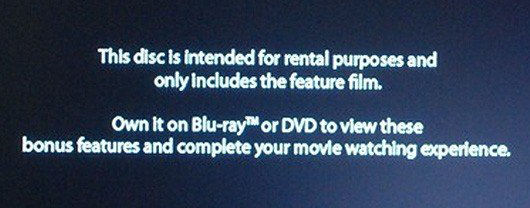
WTF? To watch this movie, I endured six movie previews, two tv show previews, an ad for a video game, a self-congratulatory ad for all of Universal’s Blu-Ray collection, and an ad for a theme park ride. And then they tell me that the version they’ve sold to Redbox is crippled in an effort to upsell me. Seriously?
This, after blocking video controls that would allow the owners of DVD players to skip advertisements; legislating that you are not allowed to duplicate an item you bought; locking it with Digital Rights Management encoding; seeing their former executives appointed to Cabinet posts related to intellectual property; furiously lobbying Congress to pass Draconian legislation; being caught red-handed gaming takedown-notice systems to eliminate competition and create de facto exclusives on artists they represent or are considering representing; having no fear of reprisal for malicious or incorrect accusations — the list goes on for miles.
Can these people still wonder why the world at large not only refuses to conform to their antiquated business model and archaic and increasingly irrelevant notions of copyright? Do they have any idea that people are refusing to adhere to their paranoid litigation and legislative efforts not because people are cheap, industry-destroying scofflaws, but because there is such joy to be taken in making the bully lose? Do they have any idea what’s in store for them now that they have gotten ISPs to collude with them on narcing on their customers?
The funny thing is, in the long run I don’t think we really have to do all that much to stop Big Media. They shoot themselves in the foot with astonishing regularity and precision. The ill will created by these drawbridge-raising, self-protective, out-of-touch, screw-you-jack-just-give-us-your-money measures is them bringing their own rope to their slow-motion hanging.
Mocking Jays
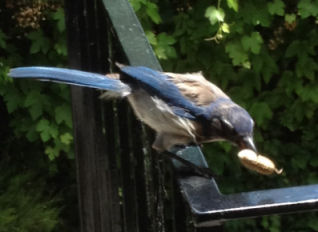
I really like bluejays. They’re smart (being in the crow family), brash, demanding little buggers who aren’t shy about letting you know they want something.
One of the little joys I take in my small apartment is that I’ve befriended two families of bluejays. It’s easy to do when you have peanuts. I got them used to picking them up from the rail outside my front door. Pretty soon they started landing and demanding peanuts.
One of the jays is an alpha male who just yells till he gets his peanut. The other is a smaller, scruffy-looking female who does a cutesy chirpy songbird schtick till I notice and bring her a peanut. It was cute till they started doing it at 7 a.m.
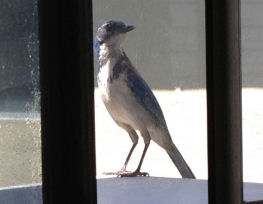
Because they’re smart, they learned pretty quickly that no amount of yelling or coaxing was gonna get them a peanut at that time of day, as I generally stay up late and get up at the crack of 11 or so. They adjusted their begging schedules accordingly.
Pretty soon it got to where they’d take peanuts from my hand, or land beside me when I was reading in the courtyard. I got worried because I don’t want them dependent on me and I don’t want them to be too trusting of people. One day one of them landed on the rail behind a UPS guy when he was making a delivery.
Then one of the jays figured out that the guy he saw through the small kitchen window of my apartment is the same guy who leaves peanuts out front, and he started landing on my air conditioner and banging on my window. I think he was trying to get an exclusive on the peanuts. He’d start at sunrise and go at it 10 or 20 times over the course of the day. We’re not talking tap-tap-tap here. We’re talking BAM BAM BAM, Open up in the name of the law.
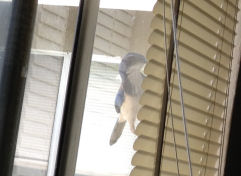
At first I tried opening the blinds so he could watch me go to the front door, which could be seen from the kitchen window. I’d hold up a peanut and open the door and try to get the jay to realize that there was now a peanut out front, so stop banging on my damn window. No go. He wanted his peanut, he wanted it directly from the kitchen window (it doesn’t open because of the air conditioner), and he wanted it now.
That was when I realized that the jays had trained me.
So now I’ve set out on a campaign to unspoil my slowly domesticating bluejays before the little bastards have me renting DVDs from Redbox for them, and before I become the avian equivalent of a crazy cat lady. I’ve got them to stop with the window-banging, but seeing as how both of them showed up for peanuts while I was writing this, I clearly have a ways to go.
Of course, it’s me who needs retraining. But everybody knows that.
“Avalon Burning” @ SF in SF
On Saturday, April 21, I performed a section from Avalon Burning, my novel-in-progress, at SF in SF. This monthly series of “Science Fiction in San Francisco” readings is held in the absolutely terrific venue of the screening room of the Variety Children’s Hospital, and proceeds from the evening benefit the Variety Children’s Charity.
Bruce McCallister read as well, and his hardboiled and funny “divine comedy” of a supernatural hit man caught up in a god vs. the devil shell game was a perfect complement to my dark & gritty post-apocalyptic fantasia.
The evening was well-attended, and the Q & A following centered (unsurprisingly) on definitions of “urban fantasy” and resistance thereto.
Many thanks to all who came out, to Terri Bisson for his congenial hosting and erudite moderation, and to Rina Weisman for her continual efforts in coordinating a true asset to the city of San Francisco and the local SF community.
Here’s video of the performance. I wasn’t able to place a camera face-on, so apologies for the side-angle view.
Apocalypse Now & Then
(In 2009 I wrote a two-week series of blog posts about post-apocalyptic novels & films for Borders’ blog. Because this subgenre has continued to flourish, I am reprinting the posts here.)
I grew up in the shadow of mushroom clouds. If you’re under 30, it may be difficult to understand how inevitable nuclear annihilation seemed back then. We were sleeping in the atomic bed our parents had made in World War II, our dreams invaded by visions of sudden light and inescapable heat. Social theorists and psychologists offered explanations and hypotheses, but the obvious one never seemed to be proffered: The bombs were real. The missiles in their silos were real. We weren’t making this crap up. They were aimed at us, and within them slept annihilation forged by our own minds yet paradoxically inconceivable.
Then the Cold War receded and the world went online. Geographic borders became less relevant; multiculturalism became the watchword of the nascent global village. Sudden light and inescapable heat no longer usurped our dreams.
Then began a series of events that worked their way into the public consciousness. The comet Shoemaker-Levy strafed Jupiter and the public was made viscerally aware that there but for the grace of god and an accident of orbital mechanics go us. Paleontologists and geologists began proving that extraterrestrial strikes hadn’t just wiped out the dinosaurs, they’d wiped out damn near everything — and more than a few times, too. NASA’s Near Earth Object Program has catalogued some 5,500 proximate orbiting objects, 1,000 of which represent a genuine threat. We may have got this far by simple virtue of being sandwiched between falling rocks.
Meantime epidemiologists realized humanity was overdue for a global pandemic, probably a mutated flu strain. The influenza pandemic of 1918 killed at least 50 million people (100 million, by some estimates) — in an age far less accustomed to readily available international travel.
And is it hot in here, or is it just us? The Northwest Passage opened up for the first time in recorded history. Sea levels rose. Species began migrating toward the equator. Extinction rates increased — not all of them due to climate change, either. Humanity’s very biomass was affecting the planet. The amount of grain it takes to feed the cows that feed us affects the food chain, the landscape, the atmosphere. People started buying electric cars as some kind of Band-Aid and blithely ignored the fact that most electricity is produced by burning coal (fossil fuel takes on a whole new meaning now, dunnit?).
And for the first time in human history more people lived in cities than out of them. Emergent digital infrastructures began migrating not only information but culture itself to a form that depended entirely upon an interdependent foundation of technological sophistication: Digital media and the Internet.
Things were looking kind of frail.
Only a generation ago our biggest worry was blowing ourselves up. Now we have evidence from a number of disparate sources that this fear is really a kind of hubris, a form of self importance. Because we can survive our technological and sociological adolescence and the universe can still smoosh us like a tick at any time. Big rocks from space can smash our little anthill. Gamma radiation from a sun that went supernova about the time the Visigoths were knocking at Rome’s door can sleet through us and end our overpopulation worries in a couple of generations. Free-riding viruses treat us as public transportation and discard their vehicles when they’re done with them. Solar flares can swing for the centerfield wall. The planet itself can run a fever and send us packing.
And we might make such cosmic worries moot with our own two hands, because it’s possible we’ve gotten too smart for our own good — what a friend of mine calls Monkey with a Gun. One hiccup on a gene-slice alteration can uncoil a billion years of DNA. One glitch in a nanobot can run rampant through the species. The torch we pass now runs on electricity. Civilization is built on quicksand. Humanity is a house of cards. I believe its increasing interconnectedness and interdependence is almost entirely good for it (though ultimately worrisome for independent cultural survival), because it allows us to build up survivable resistance in ways far beyond those that defeat mere bacteria. I also think it’s gonna be a photo finish however it turns out.
Artists and opportunists, preachers and con men, futurists and fabulists, entertainers and infomercials have surveyed this ripe and artificed terrain and asked themselves, What if all this stops? Do we eat, drink, and make merry? Do we survive? How? Does our planet survive us even if we do? Or is the end of much of life on earth the price we pay for monomaniacal evolutionary success? How can we flourish without destroying what surrounds us? Because our very success is a kind of catastrophe in the making. A slow-motion apocalypse.
We are a worried people dreaming out loud. We buy our dreams of heat and light. We go to bookstores. We go to theaters. These are our training manuals. Our collective rehearsals. In silent witness we practice our emergency preparedness drills. There is our reality-testing. There indeed may be our reality itself.
A Buddhist maxim says to live your life as if you are already dead. Perhaps our civilization is in the throes of learning that as well.
Dead to the World, and Vice Versa
(In 2009 I wrote a two-week series of blog posts about post-apocalyptic novels & films for Borders’ blog. Because this subgenre has continued to flourish, I am reprinting the posts here.)
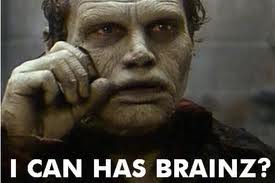 There is a subgenre of postapocalyptic scenarios that contains all of the elements I’ve previously discussed — societal breakdown, survivalism, moral quandary of looter/ predator vs. self sufficiency and altruism, questions of individual usefulness and the lengths to which you might go to in order to survive, entrenched technophiles vs. barbarians at the gate — and which implicitly contains all those elements’ fascination. But this subgenre also contains an additional element that I believe accounts for its enormous popularity, outpacing all the other end-of-the-world scenarios combined: The zombie apocalypse.
Zombie movies and books existed well before George Romero got hold of them and forever changed the iconography of the walking dead in the popular consciousness in Night of the Living Dead and Dawn of the Dead. Plenty of earlier works featured zombies, usually as bastardized or misunderstood interpretations of the Vodoun zombi, a corpse reanimated by a possessing spirit. These were inevitably depicted as mindless shambling slaves, and the horror they contained for their audience was the fear of being a hypnotized acolyte, a helpless laborer.
What Romero brought to this party was global contagion, insatiable flesh-gnoshing, and the zombie equivalent of a vampire’s wooden stake or a werewolf’s silver bullet: The Bullet in the Head. Suddenly zombies weren’t isolated creepies a la The Mummy, they were everywhere, they were hard to stop, they wanted to eat you, and you could become one of them. All humanity was now Other, estranged, alienated, paranoid, susceptible.
This aspect wasn’t entirely original with Romero. Change “vampire” to “zombie” in Matheson’s classic I Am Legend and you pretty much have Dawn of the Dead, published in 1954. So what’s the difference? What made post-Romero zombies the mac daddy of apocalypse scenarios?
When the original Battlestar Galactica was in production, the network wouldn’t allow the depiction of wholesale slaughter of humanoid creatures, especially as the show’s demographic was considered to skew young. The solution was to create a race of robots: The Cylons. Because you can slag robots till your trigger finger just won’t pull anymore and no one will bat an eye. Not even the network standards & practices people.
Zombies are Cylons. They’re people you have permission to kill. Because they ain’t people no more. And the standards & practices people of society at large not only won’t bat an eye when you slaughter them, they’ll cheer you on as a champion of the human race.
It’s no coincidence that zombie-hunting scenarios have long enjoyed videogame popularity. Here’s a first-person shooter that lets you make gnarly blue heads eat hot lead to your heart’s content and not feel a twinge of regret about it. Hell, you’re a hero.
The zombie apocalypse doesn’t just make you ask What would I do? It makes you say Hell yes I’d do it! Gimme a crowbar — I’m gonna bust into that gunshop. It’s no accident these books and movies emphasize variety and novelty — sometimes black-comedically — in the depiction of ways to whack deadheads. You get to act out your every free-floating hostility, every pent-up road-rage fantasy, every hell-with-all-of-you impulse. You have a free ticket to go postal. You get the hot babe and the Escape Chopper.
Zombies. The apocalypse we can all greet wtih open arms and loaded guns.
After the Fall Sale – Everything Must Go
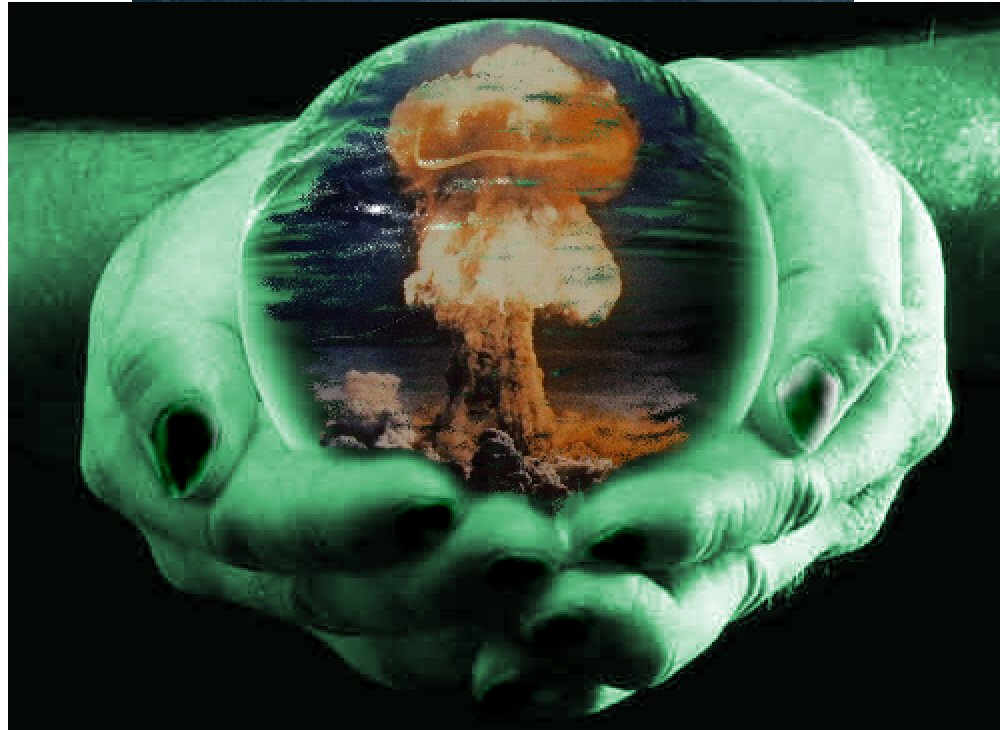 (In 2009 I wrote a two-week series of blog posts about post-apocalyptic novels & films for Borders’ blog. Because this subgenre has continued to flourish, I am reprinting the posts here.)
Apart from the personal appeal or romance of apocalyptic fiction and movies (which I also hope we’ve demonstrated is markedly divorced from the actuality of any likely apocalypse itself), there’s a sociological, even anthropological take implicit in these scenarios — the good ones, anyhow — that I find much more interesting: Postapocalyptic entertainment (the fact that this isn’t an oxymoron is borderline terrifying, when you think about it) examines the question of who we are — as a society and as individuals — when the rules are suddenly gone. How much of people’s actions are thwarted, tempered, or abetted by fear of judgement, retribution, punishment, by innate morality, by necessity? How civilized are we in the absence of civilization?
(Curiously, though many books and movies feature characters who are predators, looters, or “barbarians at the gate,” I can’t recall encountering one that charts a character’s progression [maybe regression is a better word] from pre-disaster citizen to cannibal looter. Hmm.)
These questions and themes are why I think of Lord of the Flies as a postapocalyptic novel, whereas Robinson Crusoe most certainly is not.
The bleaker, more fundamental, more nihilistic explorations of these scenarios go beyond asking How will you survive? to asking Why would you? To positing the irretrievable end of humanity, sometimes of all earthly life, and wondering if the instinct to survive is, by that point, a senseless acting-out of genetic instructions. (If you came here wanting one of them there feelgood kickass apocalypses, well — oopsy.)
The answer, of course, is hope. Hope springs eternal even where nature itself does not. Yay us.
The End of Daze
(In 2009 I wrote a two-week series of blog posts about post-apocalyptic novels & films for Borders’ blog. Because this subgenre has continued to flourish, I am reprinting the posts here.)
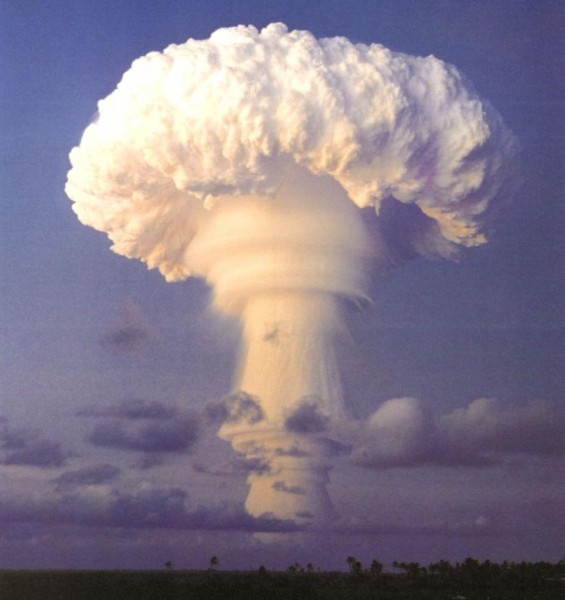 So I’ve dipped my toe in the postapocalyptic water over the last week to offer a brief survey of books and movies that I think are important in the After-the-Fall canon. Of necessity I’ve left out a bunch that I’d love to discuss because they’re just plain fun (Night of the Comet, the Resident Evil movies, “A Boy and His Dog,” a ton more). But as a foundation for talking about what in the world could be so appealing about the end of the world, I think we’ve got a broad spectrum of approaches and scenarios here.
So what’s the appeal of the apocalypse?
Generally, and most obviously, is the What Would I Do? question. What steps would I take and to what lengths would I go to flee the nukes, ward off zombies, quarantine myself from plague, fight the aliens, hide from the comet strike (good luck with that one)? Could I beat this rap? And if I did, how would I stay alive in the aftermath? Avoid starvation, radiation, enslavement, being eaten, freezing/ burning/being raygunned to death? Am I a loner, a predator, a rebuilder?
A necessary component question that, revealingly, people seldom seem to ask themselves is, Why should someone let me in his bomb shelter? In other words, what do I have to offer the immediate situation and the long-term process of survival and rebuilding? It’s like a big-budget version of that ruthless, Who’s Afraid of Virginia Woolf? party-game gigglefest and marriage-ender, “Lifeboat.”
When I wrote my first novel, Ariel, at the ripe old age of 19, I set out to write a Boys’ Adventure Story about the coolness of getting by in the postapocalyptic world. As I researched and thought about what it would really be like, the book itself began to show me that my initial instincts were misguided:
Because we lived away from the city, I sometimes walked down the street to the canal, and it was easy, with no cars coming and no city noises, to pretend something had wiped everybody out. Everybody but me. I think I wanted it that way. I thought up endless scenarios: the typical and clichéd ones of nuclear annihilation, others involving humankind wiped out by mutant viruses, bacteriological warfare, invading aliens, or disappearance in some great exodus I’d somehow missed out on.
But I’d never figured on anything like the Change. And when it happened it turned out to be nothing like what I’d wanted all along. It wasn’t some grand and glorious heroic struggle, One Man’s Fight for Survival. It was work, and it hurt — emotionally and physically. I never found out what happened to some people I cared for very much. The end of the world turned out to be something I preferred to fantasize about rather than experience. In that wandering time before I met Ariel there was one thought that often ran through my head: I’d always wanted to be alone like this, but I’d never realized it would be so lonely.
That was about when I realized that the writer in me wanted to subvert the notion of survival as somehow romantic. The vast majority of postapocalyptic movies and books contain an element (if not an outright assumption) of “Wouldn’t it be cool if this happened?” (Ariel is certainly guilty of this.) Even the more dour ones mine the huge pathos of “love at the end of time,” or at least laud the human spirit in the face of cosmic indifference. I believe one of the reasons McCarthy’s The Road has generated such interest is precisely because it is one of the few such works that contains not an ounce of romanticisim whatsoever.
Next time we’ll go from personal to anthropological. Woo hoo!
Aisle of the Dead (part 2)
(In 2009 I wrote a two-week series of blog posts about post-apocalyptic novels & films for Borders’ blog. Because this subgenre has continued to flourish, I am reprinting the posts here.)
Today I conclude my brief look at movies I think have made significant contributions to Apocalypse Cinema.
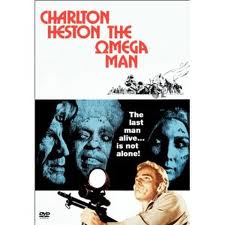 The Omega Man. Based on Richad Matheson’s classic I Am Legend, Charlton Heston chows down on scenery as the last man on earth after a weaponized disease wipes out most of humanity, leaving behind only demented survivors bent on killing Heston’s Robert Neville. The 1969 Tate-LaBianca murders were still very much on Hollywood’s mind when The Omega Man was released (1971), and Anthony Zerbe’s terrific take on a charismatic Manson-esque leader of “the Family” of silver-eyed mutant technophobe survivors who pursue Neville is a perfect foil for Heston’s declamatory style. An allegory of the hippie back-to-nature movement vs. Heston’s usurping Modern Machine Man, The Omega Man also manages to reflect many other movements that were shaping the culture (counter- and otherwise) at the time — Woodstock, Easy Rider, civil rights — in a cheapo backlot film that manages to work in spite of itself. Featuring a great score by Ron Grainer that was unavailable for decades, The Omega Man is admittedly dated and reaching, but somehow it still works for me — maybe because it was my favorite movie in the whole wide world when I was eleven.
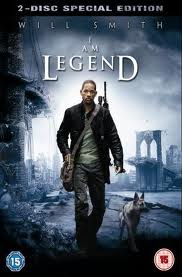 I Am Legend. The Big Hollywood production of Matheson’s classic novel had a storied and problematic gestation — at one point it was slated to star Arnold Schwarzenegger and be directed by Ridley Scott — but the final result starring Will Smith is surprisingly good and contains some setpieces that are absolute classics, if you can get past the unacceptably fake CG rave-style zombies. (To its credit, the production tried using madeup actors, but they were shooting in Manhattan in November with nearly nude extras and the whole thing got just plain dangerous.) Dead Manhattan has held a glorious poetry of decay for apocalyptic fiction at least as far back as Stephen Vincent Benet’s seminal 1937 “By the Waters of Babylon” (aka “The Place of the Gods,” shamelessly cadged by Andre Norton for Star Man’s Son [1953], aka Daybreak 2250 A.D., and an early influence on me), and this is the first movie to get it right. Subtly featuring grass growng through the pavement and the unnerving wrongness of pervasive cricket chirps throughout the cityscape — clearly someone did his homework and read Alan Weisman’s The World Without Us — the imagery of urban desolation should have gotten costar billing.
To my mind, I Am Legend’s dirty little secret is that it is clearly a remake of The Omega Man; I’d be willing to bet no one involved in the production ever read the Matheson novel (or, if they did, it was decided to ignore it in favor of the remake). I highly recommend watching the DVD with the unreleased alternate ending.
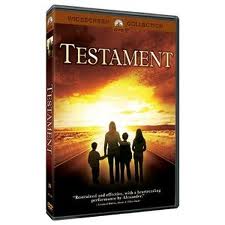 Testament. An unforgettable 1983 film about a mother (Jane Alexander) trying to keep her family together in a small Bay Area community in the wake of a limited-exchange nuclear war that likely has claimed the life of her husband (William Devane). There are moments of unbelievable raw emotion here (or, if you didn’t like it, moments of painfully inept sentiment). For me it works but it’s too “clean,” in that it deals with emotional issues but shies away from the gritty truth that would follow such devastation. It’s a bit as if Oxygen channel had made a post-apocalypse movie. The performances are powerful (and Lucas Haas is about three minutes old in this movie!). For the unflinching version, see the next entry.
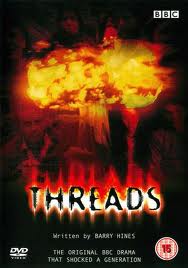 Threads. About the time America was up in arms over the supposedly controversial 1983 TV movie The Day After (a laughably unsubtle piece of hamhanded clumsiness directed by Nicholas Meyer, who should have known better), Britain was staggering around in mute numb horror produced by watching the mockumentary Threads, which (for 1984) was an unflinching Grand Guignol of life — such as it is — after the Big One. Relentlessly depressing (the handheld-camera jaunt through a critically massed ER trying to operate without power is worth the movie by itself), Threads takes a more extreme stand than most of its ilk in order to make its point, and features the most feel-good movie ending since Sophie’s Choice and Requiem for a Dream left ’em giggling in the aisles. The mockumentary style and scope work against the film a bit, distancing viewers from more direct personal attachment to any characters. Then again, this may be a blessing. Stupidly unavailable in a U.S-region DVD, I’m sorry to say.
Addendum to Original Post
I would add these two entries to those posted on the original Borders guest spots:
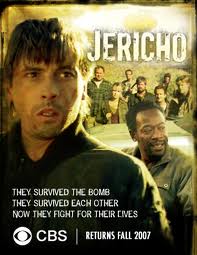 Jericho (TV series). The small Kansas town of Jericho is fortunately located in a relatively safe area between major nuclear strikes following a massive series of detonations that effectively destroys U.S. infrastructure and isolates towns, in what is essentially a well-done update of Alas, Babylon. Gritty and fairly realistic in its examination of many facets of the problems facing a small town suddenly cut off from the world (medicine, governance, vigilantism, looting, hoarding, fallout, etc.), Jericho boasted a talented cast playing absolutely credible characters. The show was dark and sometimes pretty grim (not one a them there light-hearted holocausts that network executives prefer), Jericho only played for two seasons. Totally worth seeing even if things don’t quite get resolved. Currently available to stream on Netflix.
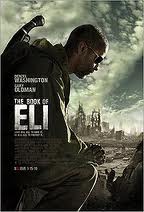 The Book of Eli. About 100 years after a nuclear holocause, Denzel Washington is Eli, a bad-ass prophet-like man on a mysterious pilgrimage west. Shantytown boss Gary Oldman discovers that Eli is carrying a Bible, and he really, really wants it because most books have been destroyed, and the legendary reverence for this one will give him major mojo over the townfolk. Naturally Eli ain’t about to give up his damn Bible. This sounds a lot dumber than it is. Washington is perfect in the role, for reasons I don’t want to say, and Oldman gives his best Early Shouting Oldman performance in years. I don’t want to say a lot about this movie because I don’t want to reveal too much, but it’s become one of my favorite post-apocalyptic films. Special mention to the perfect haunting score as well.
Honorable Mention
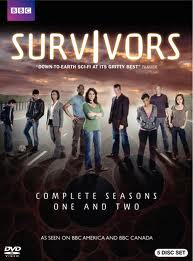 Survivors (BBC series). Lone survivors of a supervirus a la The Stand form a group and learn to rely on one another. My review on Netflix: I thoroughly enjoyed the two seasons of this show, but let’s get this out of the way right off: There’s a lot of stupidity in this thing. It doesn’t matter how many times the group is beaten, robbed, held at gunpoint, trapped, or conned, they absolutely refuse to get themselves even as much protection as a salad fork. Except for Tom, because he’s a Career Criminal, don’tcha know. They refuse to take precautions before entering buildings. When a member of their party has been taken they hang signs all over the city pointing to where they are, and not only does it never occur to them that the people chasing her when she escapes can read the signs, too, it doesn’t occur to the people chasing her, either.
They do a great job with the dead cityscapes, but there’s no evidence of the carrion that would be everywhere if 90% of the human race suddenly died. And lawns remain remarkably well kept. Stuff like that.
There’s a ton more. But I forgive it all of this stuff, because the characters are (with a few exceptions, such as Sarah) wonderfully well drawn. You genuinely care about these people. Enough that you hate to see them making the same stoopid mistakes over and over.
One thing you simply can’t help but notice as an American: Wow, there are a LOT less guns in England. It’d be rednecks & paramilitaries on parade here. On this show, if one guy has a gun, he’s got a dozen people rallied around him.
The closest comparison is Jericho, which for my money was a much more intelligent series that progressed quite logically. Still, I hated knowing that Survivors was canceled and there’s no getting past the cliffhanger ending of Season 2. You should know that going in.
And kudos for not having zombies.
Aisle of the Dead (part 1)
The SF in SF reading was terrific! Huge thanks to everyone who came out, and to Rina Weisman for inviting me. I’ll have video & a more detailed post sometime next week.
(In 2009 I wrote a two-week series of blog posts about post-apocalyptic novels & films for Borders’ blog. Because this subgenre has continued to flourish, I am reprinting the posts here.)
Having covered some novels I think have been important contributors to the Literature of Last Things, let’s turn our attention for the next few entries to movies that have given us some Technicolor insight into the end of the world.
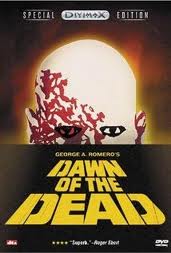 Dawn of the Dead. A postapocalypse film so iconic it’s hard to say anything new about it, George Romero’s Dawn of the Dead has been completely absorbed into the cultural landscape (Bonus Geek Points if you recognized the Robot Chicken end title theme as the mall music from Dawn of the Dead originally performed by The Goblins). This one has it all, because it invented most of it: Shambling zombies who are comical alone but terrifying en masse, shockingly rapid societal breakdown, the Escape Chopper, the abandoned shopping mall (I totally stole this for a scene in Ariel), the foraging & hoarding, the Funny Good Guy Getting Infected, the Bullet In The Head is All That Will Stop Them. Placed in historical context, it’s worth remembering that DotD was released unrated due to its unprecedented graphic grossness (setting off a makeup-effects arms race in the process) — a level of goosh that’s pretty much standard videogame fare nowadays; few have considered that the apocalypse may already be happening in slow motion.
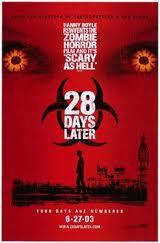 Every zombie trope in existence owes a debt to Romero’s tightly directed film. Even the inventive 28 Days Later is basically DotD with overcaffeinated brainmunchers. Also noteworthy as another in the “technnophiles defending themselves against the barbarians at the gate” theme common in postapocalyptic movies. If you think you can substitute seeing the remake instead, save yourself two hours of your life you’ll never get back and avoid it like the plague it clumsily depicts. The original is a true landmark.
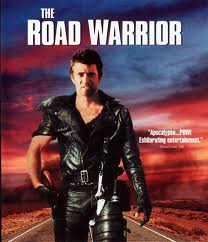 The Road Warrior. George Miller’s reductionist Campbellian (anti)hero myth is a true classic of kinetic roadpunk poetry whose striking imagery and energy continue to be ripped off by lesser talents to this day. This and Bladerunner shaped the feel of movies for a solid decade and more. Mel Gibson became an international star playing Max, a damaged former cop who Just Doesn’t Give A Damn Anymore as he cruises desolate highway stretches in “the last of the V8 Interceptors” across a wasted world in search of more fuel so he can keep on keeping on. Archetypally and structurally identical to Star Wars (Georges Miller and Lucas benefitted hugely from reading their Joseph Campbell, specifically Hero with a Thousand Faces), the film’s lean energy and simple drama played out against bleak landscapes go a long way in elevating the story to the level of myth. A “whiteclad technocrats keeping the fire alight” vs. “barbarians at the gate” storyline helped a lot.
I freaked out when The Road Warrior was released because it looked exactly like the image I’d had for my first novel, Ariel, which was right about to be released. I’ve heard that a very similar thing happened to William Gibson regarding Neuromancer when Bladerunner was released. Zeitgeist, indeed.
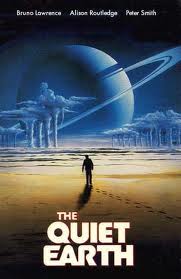 The Quiet Earth. This largely unknown 1985 New Zealand film deserves a wider audience. Modest in budget, personal in focus, and quirky in approach, this movie’s premise is that a government energy-grid project throws the world into a parallel universe, killing everybody except those who were right at the moment of their death when the event occurred. The first part focuses on a lone man’s increasing disaffection as he tries to cope; the remainder focuses on three survivors’ efforts to affect another fundamental change as they realize that the universe into which they’ve been thrust is unstable. Also one of the most striking final images of any movie ever.
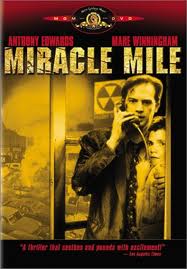 Miracle Mile. You answer a payphone outside a coffeeshop and it’s a scared private in a missile silo who has accidentally called the wrong number and thinks he’s telling his parents that the nukes are flying and they’ve got about an hour to live. What do you do? You set out on a mini odyssey across the mid-Wilshire district of Los Angeles to find that girl you’ve just met and get hold of an Escape Chopper, what else? Hampered by budget cuts and containing possibly the most uplifting depressing ending this side of The Road, Miracle Mile still manages to convey a sense of urgency and escalation as people find their own ways to fight the inevitable. Also notable for being Tangerine Dream’s best film score.
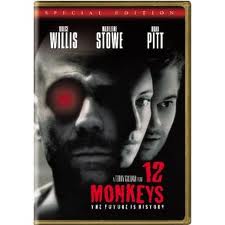 12 Monkeys. For my money the best time-travel movie ever made, Terry Gilliam’s fatalistic expansion of the classic French short “La Jete” stars Bruce Willis, never better as a prisoner forced by the desperate leaders of a remnant humanity gone underground to travel back in time in an effort to learn the source of the plague that has decimated the global population. Willis’ James Cole is haunted by a dreamlike childhood memory of a man being shot to death at an airport security checkpoint. Everything Cole does in the past (our present) to learn about or avert the coming plague only brings that dream image closer to reality.
Unlike the Terminator series, 12 Monkeys does not play fast and loose with violations and paradoxes, but adheres strictly to the logic that any attempt to change the past becomes by definition part of that very past, and every frame of 12 Monkeys is geared toward achievement and explanation of Cole’s opening dream/memory sequence, filling the viewer with an almost unbearable sense of tragic inevitably. And shame on you if you didn’t realize that it has a happy ending. One of my favorite movies.
Books to Die For (part 2)
(In 2009 I wrote a two-week series of blog posts about post-apocalyptic novels & films for Borders’ blog. Because this subgenre has continued to flourish, I am reprinting the posts here.)
Finishing my list of postapocalyptic books I think are standouts in the field. Tomorrow we’ll cover movies. Then we’ll get to the nitty gritty.
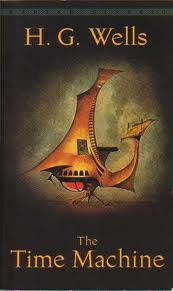 The Time Machine, H.G. Wells. So often considered as a time-travel classic that it’s easy to forget that this timeless (yuck yuck) novel of social darwinism gone awry gave us the innocent and inept Eloi living clueless in the ruins of their ancestors in the year 802,701, preyed upon by the steampunkish Morlocks, who are maintaining a remnant of civilization apparently by rote. Wells’ unnamed narrator moves even further through time to witness the death of the earth itself, cold beneath an ember sun, as the last living thing stops moving on a barren redlit beach. Wells accomplished all of this in about 60,000 words, too. Amazing book.
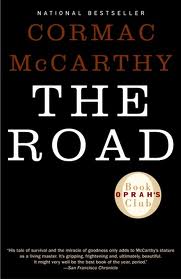 The Road, Cormac McCarthy. A boy bonds with his father on a trip to the beach! It doesn’t get any simpler than this: Years after an unspecified apocalypse has destroyed virtually all life on earth (implicitly not all at once but through a chain reaction of ecosystem cascade failure following some global trauma), a father tries to protect his son as they journey toward the ocean and the forlorn hope of community and life. McCarthy reverts to Hemingway minimalism mode (think The Dead Man and the Sea) for this gloriously despairing slog through a bleak devastated landscape. McCarthy never explains his apocalypse, which drives SF purists crazy. Good for him. McCarthy is the most fearless writer in America right now, and arguably our best prose stylist. That he is also commercially popular continues to astonish me, and reinforces my cynical belief that people pretty much read at the level of event and notice little else. I’m perfectly willing to be persuaded I’m wrong.
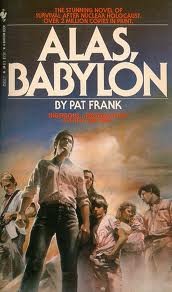 Alas, Babylon, Pat Frank. Somewhat dated now, Frank’s 1959 novel of a Florida community struggling to survive the aftermath of a nuclear war was one of the first in a long line of “survivalist” postapocalyptic novels in the public conscience. Written in the shadow of the sword of Damocles that hung over an entire generation that felt fairly certain it was going to end up reduced to breathable material, this isn’t a book about politics or social darwinism, it’s a book about trying to have hot water again. That the community is “reduced” to the circumstances of probably half the global population speaks to the appeal of postapocalyptic works in general: Horror for the comfortable is the loss of comforts. What is most interesting about Alas, Babylon is precisely that its characters’ struggles are much less interesting when considered apart from the aftermath of nuclear war — take away the bombs and it’s basically The Mosquito Coast – but that reduction colors everything, and fueled an entire subgenre for decades.
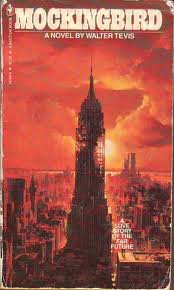 Mockingbird, Walter Tevis. The author of The Hustler was also an underappreciated SF writer who turned in a haunting, poetic postapocalyptic novel about a feckless, illiterate humanity reduced to tranquilized uselessness as they are protected by robot caretakers who were programmed a little too well. Here Tevis explores what it might be like to become the Eloi from the inside, and at the same time he turns in what might be the only novel ever written about the end of humanity due to illiteracy. Tevis’ android supervisor Spofforth is a singular creation and one of my favorites in SF. Inexcusably out of print.
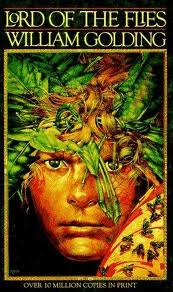 Lord of the Flies, William Golding. This may seem a weird choice in a list of postapocalyptic fiction, but I think apocalypse and the nature of humanity were very much on Golding’s mind when he published this 1954 masterpiece. A group of schoolboys survives a planecrash on an island. Unsupervised and unfettered by social constraint, they reenact the Scene Primeval in miniature, and the book is essentially a meditation on the artificiality of the veneer of civilization and what we are when we shed it (though I’d offer up that one of the things we are is creatures that eventually build civilizations) — the grist for postapocalyptic fiction’s mill. Making war is part of our innate ape heritage to Golding (who also wrote, tellingly, The Inheritors, about early hominids), and the inescapability of this even after we become “civilized” is beautifully brought home when the boys are finally rescued by a navy cruiser — a warship (a detail apparently lost on a great many readers & critics).
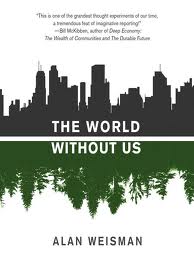 The World Without Us, Alan Weisman. This nonfiction book by journalist Alan Weisman seems weirdly to have been written specifically for me, as it surveys what would happen to the world were humanity to suddenly vanish — essentially the premise of Ariel and Elegy Beach (Weisman wisely elects not to wonder what would happen if magic were suddenly possible and formerly mythological creatures were present, though.) This book was astoundingly well-timed, occurring as essentially a reference work just as post-apocalyptic scenarios were sprouting up across all media. A must-read for anyone considering writing about human beings going bye-bye to any significant degree.
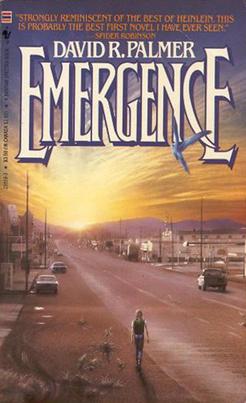 Emergence, David Palmer. Palmer’s first novel is a bravura tour de force starring one Candy Smith-Foster, 12-year-old homo post hominem supergenius who survives the end of everything by hiding in her father’s bomb shelter, emerging with her pet parrot Polly to learn how to survive in the emptied world until finally setting out to find others of her own kind. Candy writes in Pitman shorthand, and the book is a blow-by-blow recounting in truncated, telegrapher style (tellingly, Palmer is a court reporter) that shouldn’t work but succeeds gloriously. The wheels come off the storyline by the end, but until that point the novel’s detail and setpieces are wonderfully depicted, and Candy herself is a memorable voice in SF. Palmer is reportedly finishing a sequel (and, David, have fun with the emails you get when you publish a sequel a quarter-century after the original. I know whereof I speak). It’s a tragedy that this book is out of print. Are you listening, SF publishers?
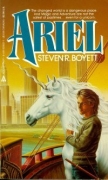 Worth mentioning here is the terrific Jim Burns cover for the paperback original. When Emergence was published I was insanely jealous, as it was exactly the cover I’d imagined for Ariel. Then Ariel was published with its own glorious Barclay Shaw cover and I wasn’t jealous anymore. Even more synchronistically, David and I knew each other in Gainesville, Florida, when our first novels were published. Oooh-WEEEEE-oooooh.
There are some “classics” in the field that I’ve left out of this list because, frankly, they didn’t work for me. If after-the-fall books are your cup of tea (and, golly, why wouldn’t they be?), you undoubtedly have a list of your own fave raves. Feel free to share — you can’t get enough of the end of the world.
Books to Die For (part 1)
(In 2009 I wrote a two-week series of blog posts about post-apocalyptic novels & films for Borders’ blog. Because this subgenre has continued to flourish, I am reprinting the posts here.)
Before talking about why postapocalyptic fiction and films are appealing, I’d like to take the next few entries to offer up some books and movies I think are standouts in the field. It’s an opportunity to give you a sense of my sensibility (tres clever, no?) and to present some works I think have been either overlooked or not normally included amid all the clang and clamor that is the end of the world as we read it.
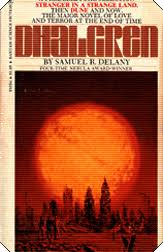 Dhalgren, Samuel R. Delany. One of my favorite novels and the book that made me want to write for a living. A very contained apocalypse, really, concerning an American city that has been cut off from the rest of the world. Depopulated, burned, transmogrifying, the city is as much a character as any of its memorable inhabitants. Buidings burn but are not consumed, landmarks and locations seem to shift, twin moons and a giant sun rise, gangs and communes dominate, laws and social conventions are largely ignored. Not the most accessible book in the world, but the craft and power of Delany’s prose here are some of the best you’ll ever read.
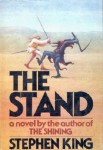 The Stand (original version), Stephen King. The broad cast of wonderfully developed characters and sheer epic scale of The Stand make it the Lord of the Rings of end-of-the-world novels. A weaponized superflu virus with a 99.9% mortality rate gets loose and reduces humanity to birdfood in weeks, setting the stage for a bliblical confrontation between opposing forces of survivors. (This novel is also one of the few good-vs.-evil conflicts I can stomach.) King walks you through the whole process from initial outbreak to post-confrontation aftermath with a level of realistic detail that is absolutely irresistible in a story that manages to attain the level of myth. One gets the impression ensuing generations will add the account as a third book of the Christian bible.
Though I’ve linked to the uncut version because it’s the only one in print, I highly recommend the original published version instead, because, frankly, King is a writer who enormously benefits from editorial direction and tightening; sadly, those days seem long behind him.
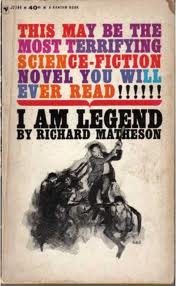 I Am Legend, Richard Matheson. A classic across the board, and deservedly so. Often imitated but never duplicated, Matheson’s novel was the first to breathe new life into hoary old eurotrash vampire lore, treating it with relentless logical sensibility as a communicable virus that kills most people and transforms those remaining into seemingly mindless bloodsucking ghouls. Robert Neville is the lone human being unaffected, and his everyday struggles simply to maintain in the face of futility are beautifully told and heartbreaking. (Trivia: I set the Change in Ariel at 4:30 as a nod to Neville ruminating over a clock stopped at 4:30 in I Am Legend.) Adapted with varying success as the movies The Last Man on Earth (with Vincent Price), The Omega Man (with Charlton Heston), and I Am Legend (with Will Smith), the novel still stands as a monolith never rendered in another medium with its original power. It also has one of the best final paragraphs ever written.
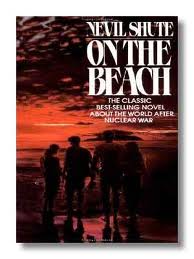 On the Beach, Nevil Shute. The end of the world as airport novel, Shute’s 1957 classic centers around the last remaining American submarine crew reaching Australia ahead of the inevitable clouds of lethal radiation in the aftermath of a full-scale global thermonuclear war. Shute doesn’t focus on the war itself, and the novel is all the more powerful for that, essentially treating Australia as a kind of RMS Titanic in which every look, line, and love is colored by the approaching iceberg of humanity’s fate. Wonderfully fatalistic, the depictions of society’s slow unraveling are haunting and memorable. The Stanley Kramer film, starring Gregory Peck, is also highly recommended (though after seeing it you’ll never want to hear “Waltzing Matilda” again).
More books tomorrow, and then we’ll cover movies.
After Thoughts
In 2009 Borders Books asked if I would do a two-week (!) guest stint on their fantasy & SF blog. To be honest, I can’t remember if they picked the topic of if I did. In any case, the posts centered around post-apocalyptic fiction and film.
Since these continue to flourish, I thought it would be fun to repost my Borders blog gig. It’s a look at my favorite post-apocalyptic books and movies, and an examination of why they’re popular. (I didn’t address the popularity of post-apocalyptic scenarios in Young Adult fiction a la The Hunger Games because I’m not familiar enough with the market to write about it with any real authority. But its increasing popularity continues to fascinate me.) Anyway, here’s the intro. We’ll dive into the meat tomorrow.
Not with a blog but a writer
My first novel, Ariel, and its sequel Elegy Beach a quarter-century later, are a bit unusual in that they’re postapocalyptic fantasy novels. The Road Warrior of the Rings, or somesuch. Which was kind of unusual in 1983, when Ariel was originally published.
I grew up with a soft spot for postapocalyptic fiction & movies (and I suppose it’s worth mentioning here that the post aspect has always interested me more than the actual apocalypse part, so I dunno about playing favorites with the how of it all), and I’ve done a lot of thinking about what the appeal is for an audience. I’ve written a surprising amount of fiction that could be classified as postapocalyptic, and a surprising amount more if I’m allowed to include stories featuring characters making their way through desolated landscapes. It’s definitely one of my tropes.
I’m curious about the current resurgence of postapocalyptic fiction and films even as I’m clearly part of it. (Coincidentally enough my postapocalyptic zombie novella “Like Pavlov’s Dogs,” originally published in Skipp & Spector’s Book of the Dead, has just been reprinted in John Skipp’s magnificent Zombies anthology. So I have three postapocalyptic works in print at the moment. Hmm.) People always look for some deep sociological meaning behind such trends. Anyone want to theory up on this one?
Reading @ SF in SF
 This Saturday I will be performing at the truly wonderful SF in SF series, along with writer Bruce McAllister (Dream Baby, Humanity Prime).
Mr. McAllister is a Hugo winner who has published in an impressive array of places, including Glimmer Train and the coveted Year’s Best American Short Stories. I’m definitely looking forward to hearing him. The subsequent Q & A will be moderated by Terry Bisson.
The evening is to promote The Urban Fantasy Anthology. My story in the anthology, “Talking Back to the Moon,” is an excerpt from my increasingly-long-in-the-making novel Avalon Burning. I’ll be performing a different section from the novel on Saturday.
SF IN SF
Saturday, April 21, 2012
The Variety Preview Room Theatre
The Hobart Bldg., 1st Floor
(Entrance next to Citibank on Market St.)
582 Market Street @ 2nd and Montgomery
San Francisco, CA 94104 (map)
Doors open 6:00 PM; event starts at 7:00
$5-$10 donation at the door benefits
Variety Children’s Charity of Northern California
Cover Stories
One of the many great things about my experience with Subterranean Press regarding the publication of Mortality Bridge was the cover. Bill Schafer, Subterrranean’s publisher, asked me to submit cover ideas. That alone was pretty damned cool, as writers don’t get asked that very often. (To be honest, that’s usually a good idea. One look at most writers’ website designs is enough to verify this.)
I can’t draw worth a damn, but I’ve done a bunch of graphic design work, and I worked in advertising for years (something I’m glad to have done, and even more glad to be no longer doing). Thank goodness that the spiffy magic of photo editing & illustration tools helps make up for a lack of drawing ability. I hunted around online for images I could composite, and I turned in two rough concepts:
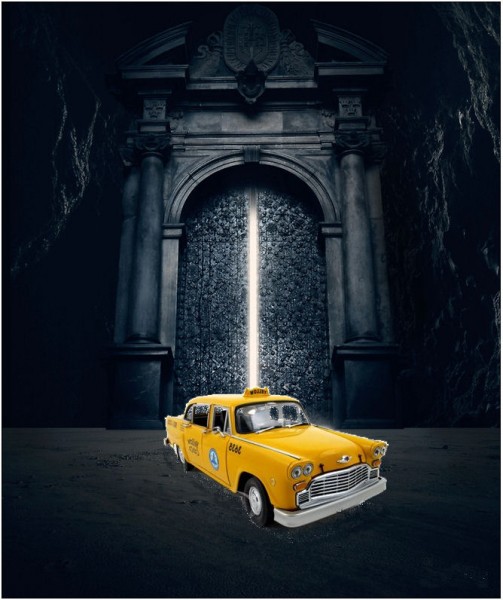
And cover artist (and horror icon) J.K. Potter turned in this cover, which shows you what can happen when a real artist gets hold of an idea:
For the e-book & softcover, I was again asked to submit ideas. (Yay!) Conceptually, it was really just going to be a reiteration of the hardcover image. I set a die-cast Checker Cab and a plaster gargoyle in front of a textured wall and took a bunch of pictures. I picked one I liked:
Then I made a ton of changes to it. I matched light sources & shadows’ replaced the wall with a rock cliff background and color-matched that; added a tunnel, shading, and rocky ground, and beat up the Checker Cab. (I use Paint Shop Pro X, which should make the spine of any professional designer curl like a question mark.) This is what I ended up with:
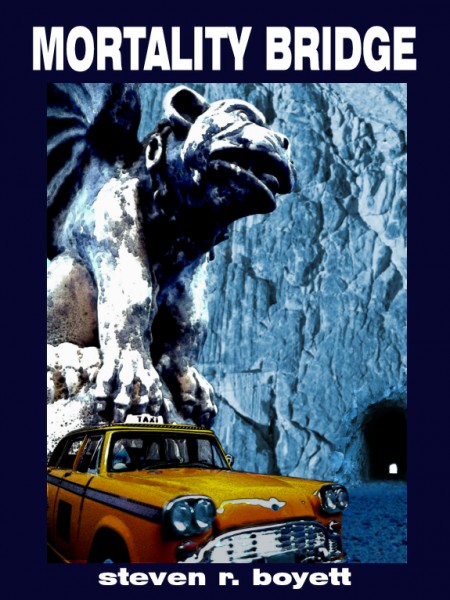
I really like it, and it’s a total failure. As an image I think it’s intriguing. As a design — blecck. Everything’s happening on the left side. Your eye goes straight to that huge flat blank space of cliff wall formed by the crescent of the inside edge of the gargoyle and the top right of the cab. Even worse, there’s no way to design around it. Putting the title in that space is hideous (trust me on this). Moving the elements around destroys the idea or makes it confusing. Wahhh.
I worked with the cover designer to see if we could preserve the idea, but any kind of monster or statue proved hugely distracting. A taxi cab parked in front of the gate of hell is really intriguing. It poses all kinds of questions and implications. Put a monster in it and you totally lose that. So we worked on keeping the feel while emulating the hardcover. This was the final result:
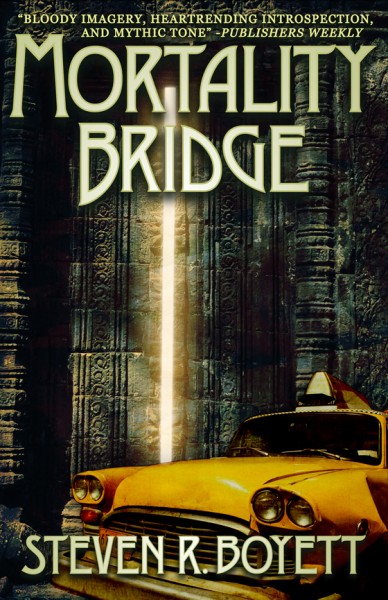
I thought it was okay, but then I got the actual softcovers, and I thought it looked great. There’s still a blank space, but the artist made use of it by pumping up that white line of partly opened door, so that your eye follows it straight down from nicely art nouveau title to the cab.
Every book cover is a problem that someone found a solution for. The number of solutions is vast. I find this stuff fascinating for the same reasons I’m interested in logo design: How do you convey an idea, a story, a reputation, a service, in a simple and easily understood image? Art directors at major publishers have to do this dozens of times a month.
Audiobook as acapella
I was fascinated with certain sections of the audiobook of Elegy Beach because the narrator, J.D. Jackson, picked up on the rhythms, even while his interpretation was very different from my own. I’ve used a lot of spoken-word pieces in my Groovelectric dance-music series. They work really well over tribal, percussive tracks. I’ve used acapellas, movie dialog, poetry, etc. One mix, Body Slam, is devoted to slam poetry. So it’s surprising that it took me this long to look at my own work as a resource for adding to mixes, especially since I tend to put some effort into writing in rhythm.
Since the latest Groovelectric mix, “Cave Paintings,” was another tribal/percussive mix, I thought it would be fun to use something from the “vibe” section of the Elegy Beach audiobook. This is a kind of post-apocalyptic rave in which the narrative, at points, assumes the rhythms of the music at the event.
I copied out the audio sections I wanted to use and did some editing. I finessed the phrasing to make it more on-beat. (It’s not as if Mr. Jackson narrated with a metronome going.) Then I lowered the pitch a bit, for effect and because it works well with heavily percussive music.
I auditioned tracks until I found one that had a nice, dark flavor that was insistent but not too busy. I dropped a lot of other vocals throughout the mix — gospel, chants, etc. I’m really happy with the result. It’s funny, but after a decade of utilizing spoken-word pieces in mixes, it felt very different to use something of my own. It was fun.
You can play or download “Cave Paintings” below. The Elegy Beach section starts around the 31:30 mark. If you’ve read Elegy Beach, you might enjoy this, considering what’s happening in the section of the novel that I used.
Download “Cave Paintings” [01:13:28, 69MB]
Cool Recent Stuff
I am a bad blogger lately, I know. I will be better. Soon. Yes, soon.
So John Scalzi, bless him and his legacy unto the end of the universe, recommended Mortality Bridge for the Hugo and Nebula award. I am deeply touched, and especially stoked because the novel has had a relatively low profile, and John’s recommendation is enormously helpful in making it more visible, and hugely appreciated.
Last night I went to SF in SF, a monthly series of science fiction readings in San Francisco organized by Rina Weisman that is held in a wonderful venue, the screening room of the Variety Children’s Hospital. Readers were Rudy Rucker, Jay Lake, and K.W. Jeter. Rudy read from his new memoir, Nested Scrolls. Jay read from his Sunspin series, and Jeter read a steampunk fairy tale based on “The Red Shoes.” Quite a lot of variety, and the Q & A afterward was lively.

Dinner with the participants before the event was a terrific back & forth of good conversation. I had not met Jeter before, and I was impressed by how helpful and bolstering he was to writers just beginning to establish themselves. It was also wonderful to see Jay Lake’s amazing upbeat determination in the face of chemotherapy. I wish him all the best.
The event was nearly at capacity, which is even more impressive considering that the Chinese New Year parade was going on at Market Street just outside. What I saw of the parade was pretty damn cool, and there was a wonderfully charged feeling in the air.

I’ve just finished the next round of revisions on Avalon Burning, wherein I sprinkled magic adrenalin dust on the manuscript to amp things up a bit and set up the final act. I’ll start making the changes on the computer tomorrow. I left myself a couple of [INSERT AMAZING SHIT HERE] spots, so there’ll be more work on the computer than simply transcribing my handwritten changes. I tend to separate my current self from my editing self, so that when I’m entering changes I sometimes regard them as having been made by someone else, and it’s not uncommon for me to stare at some note on the manuscript and say, “Why, you son of a bitch.” Perhaps my process is unconventional. Or maybe a lot of writers do this. I dunno.
In any case, I was glad to see that the book doesn’t seem the worse for the drastic cutting, which is the best evidence that it needed to be cut. A couple of scenes were too skimpy because I went overboard, but I left notes for the poor sap who follows me to restore some of the deleted material.
What I’ve been doing with my widdle self
Cutting 50% of Avalon Burning. Most pages look like this:
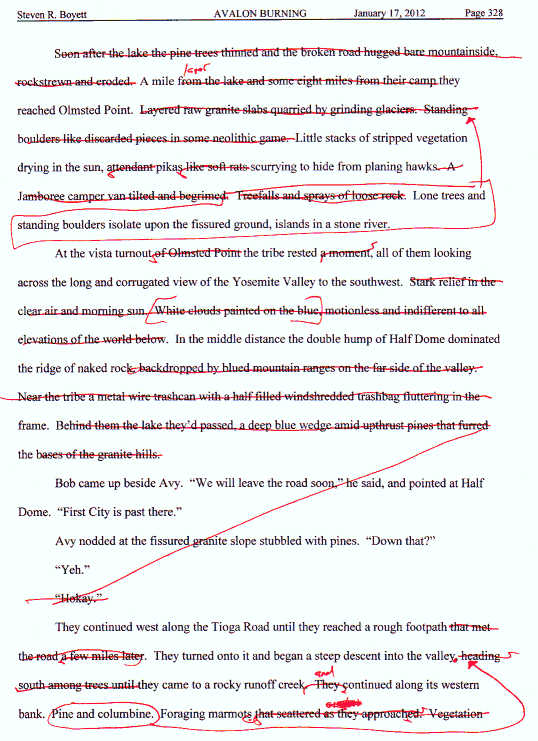
The revised page looks like this:
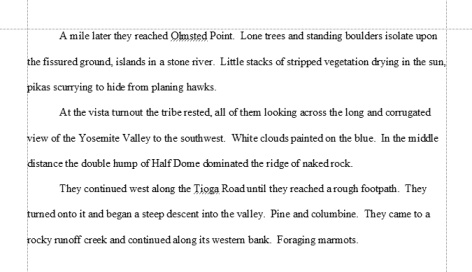
Multiply by 430 (the number of pages written). Repeat as needed. Revise again. Finish novel. Shorten new material. Revise the whole book one more time.
How’s your 2012 going?
Happy Birthday, Sam Clemens
 Today is the 176th birthday of Mark Twain. My appreciation of Twain’s work deepens as I get older, and the work of his that I like best has changed as time has gone on as well. Twain not only wrote with eloquence, humor, charm, and passion about America, he did so on behalf of America. More than any other writer he seemed to embody the national consciousness, and he remains arguably the best articulator of our nation’s view of itself.
If you never saw Ken Burns’ documentary on Twain, I highly recommend it. It’s available at Amazon and on Netflix.
This seems like a good time to give Twain’s rules of writing, from his essay “James Fenimore Cooper’s Literary Offenses.” I often distribute these to students in my writing classes emphasizing craft.
Mark Twain’s Rules of Writing
1. A tale shall accomplish something and arrive somewhere.
2. The episodes of a tale shall be necessary parts of the tale, and shall help develop it.
3. The personages in a tale shall be alive, except in the case of corpses, and that always the reader shall be able to tell the corpses from the others.
4. The personages in a tale, both dead and alive, shall exhibit a sufficient excuse for being there.
5. When the personages of a tale deal in conversation, the talk shall sound like human talk, and be talk such as human beings would be likely to talk in the given circumstances, and have a discoverable meaning, also a discoverable purpose, and a show of relevancy, and remain in the neighborhood of the subject in hand, and be interesting to the reader, and help out the tale, and stop when the people cannot think of anything more to say.
6. When the author describes the character of a personage in his tale, the conduct and conversation of that personage shall justify said description.
7. When a personage talks like an illustrated, gilt-edged, tree-calf, hand-tooled, seven-dollar Friendship’s Offering in the beginning of a paragraph, he shall not talk like a Negro minstrel at the end of it.
8. Crass stupidities shall not be played upon the reader by either the author or the people in the tale.
9. Events shall be believable; the personages of a tale shall confine themselves to possibilities and let miracles alone; or, if they venture a miracle, the author must so plausably set it forth as to make it look possible and reasonable.
10. The author shall make the reader feel a deep interest in the personages of his tale and their fate; and that he shall make the reader love the good people in the tale and hate the bad ones.
11. The characters in tale be so clearly defined that the reader can tell beforehand what each will do in a given emergency.
In addition to these large rules, there are some little ones. These require that the author shall:
12. Say what he is proposing to say, not merely come near it.
13. Use the right word, not its second cousin.
14. Eschew surplusage.
15. Not omit necessary details.
16. Avoid slovenliness of form.
17. Use good grammar.
18. Employ a simple, straightforward style.
Mortality Bridge E-Book Is Out
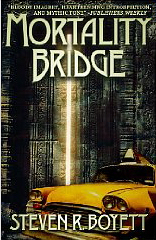 The e-book version of Mortality Bridge is now available! I worked closely with the layout artist to be sure the digital version adhered as closely as possible to the printed version’s typographical quirks and conventions , and we found alternative solutions where it could not. It was a learning experience, and I am very happy with the results, as well as deeply appreciative of the time, effort, and consideration taken to achieve this.
As I described in my Big Idea post on John Scalzi’s Whatever blog, it took literally half my life to write and publish Mortality Bridge. It was an exhausting amount of work and I had to grow a lot — as an artist and as a person — to do justice to what the book wanted to be. I’m more proud of it than anything I’ve ever written.
I’m also aware that it’s one of the least commercial things I’ve done. I could not be happier with my publishers, and they have been stalwart champions and supporters of a novel that tries to be a beautiful book about terrible things (which can be kind of hard for a major publisher to wrap its head around).
But because they are smaller, indie publishers, there isn’t massive marketing muscle behind the book, and despite rave reviews from some very high-profile sources, it doesn’t have the visibility of the major players in the industry — especially here in the holiday season.
So I’m asking for your help in getting this scrappy pound puppy into good homes. If you enjoy Mortality Bridge, please:
- Review it on Amazon or iTunes,
- Forward this announcement to anyone you think would be interested in the novel
- Tweet, blog Facebook, G+, and/or forum post about it
- Link to the Mortality Bridge website and recommend the sample chapters
- Write your congressman (okay, maybe skip that one)
Thank you for your support!
 |
 |
 |
[E-Reads] |
|
MobiPocket
(Kindle) |
iTunes / iBooks
|
ePub (Nook)
|
LJWC – The Downloadable Deluge
Here’s the second class I recorded at this year’s La Jolla Writers Conference. Since this is the one where I claim some authority on developments in digital media, naturally the recording inexplicably cuts off with about twenty minutes left in the class. Most of my lectures & readings record without a hitch, but LJWC remains cursed for me somehow. I promise to work on that next year. Player & download links after the description.
The Downloadable Deluge: A Life Raft for the Digital Tsunami
Boyett’s popular, interactive Digital/New Media discussions at LJWC serve as: A catalyst to writers struggling to keep pace with the astonishing rate of change in an industry in transition; a fire drill to help writers prepare for, exploit, or avoid what may be headed their way; a wake-up call to writers entrenched in media and business models that are becoming increasingly limited, if not outright archaic. This discussion of the state of the art is a survey of the year’s significant events at the intersection of art and technology, and a look ahead to see what may be in store for writers in a digital world. We’ll talk about e-books, piracy, copyright, advertising, revenue, distribution, representation, and much more. These are always pretty lively sessions!
DOWNLOAD [01:17:55] 105MB, 192K
LJWC – Revisionism
Here’s the first of two classes that got recorded at last weekend’s La Jolla Writers Conference. Player & download link below the course description.
Revision: The Real Art of Writing
Sure, you make your first draft the best it can be. But it’s easier to make it great on revision than on the first try, and knowing that can let you give yourself permission to not be perfect out of the gate. Even if your initial draft is terrific, revision is essential to condense, clarify, and clean up a manuscript.Steve Boyett will revise his own first-draft copy on an overhead projector to illustrate common mistakes, solutions, aesthetics, continuity, and more to demonstrate that revision can be as creative as the original act of writing.
DOWNLOAD [01:03:01] 88 MB, 192K
Home Again, Home Again
Back from a ten-day jaunt around Southern California that included attending World Fantasy Con and teaching at the La Jolla Writers Conference, with readings at both and an all-too-short stay in Los Angeles inbetween, visiting favorite places and what friends I had time to see (and apologies to the friends I wasn’t able to visit). I met a lot of great people and participated in some terrific events, but I was definitely glad to be back home.
The La Jolla Writers Conference was wonderful. It was my third year here and the students were as sharp as ever. My classes were well-attended and I talked for three solid days until I sounded indistinguishable from Tom Waits.
Bad weather put a crimp in what is normally a nicely social event. Rain & cold kept everyone off the grassy courtyard and had them scurrying to classes and putting to bed early. I thought this sort of weather was illegal in San Diego. Luckily it didn’t put a dent in the LJWC scheduled activities.
I also met uber-selling writers Jan Burke and Andrew Gross and had a terrific time with them. The three of us held a reading on Saturday night and it was a blast. Jan & Andrew write myster/thrillers, primarily, and I was amazed at their sense of timing. Both of them stopped their readings at the exact right moment and left me wanting more. So next day I bought the books (Jan’s Bloodlines and Andrew’s Eyes Wide Open). Clearly they knows what they is doing. I’m looking forward to reading them.
I usually forget to take pictures at these things cuz I run around like an overcaffeinated mayfly, but this year LJWC had Alana Renfro as their official photographer. At dinner Saturday night I wore my brown porkpie hat and Alana had her oh-so-Irish cap (I dunno what they’re called; I always think of them as British Racing Caps worn by men who drive Jaguar XKEs). So we switched hats and took this picture, which even a camera-conscious pundit such as myself has to admit is chock full o’ coolness. Plus I’m wearing the studio-wardrobe brown pinstripe suit jacket I got for a steal in Los Angeles. I sez hellyeh.
Every year at LJWC I lecture on digital media and related innovations and developments as they apply to writers. Naturally this means that I always screw up recording my classes with my digital recorder. This year was no exception. Despite charging four AAA batteries before the event, two of them went dead on me in the middle of classes and didn’t record, and at the end of one class I hit “stop” and recording started — meaning I hadn’t recorded that class, either.
Fortunately some did get recorded, and I’ll be posting them here over the next week after I have a chance to clean them up.
Meantime, a big hollah to my LJWC stoodeez.
Cory Doctorow Reviews Mortality Bridge
 Cory Doctorow has posted his review of Mortality Bridge on BoingBoing.net. Among other nifty things, he writes
…Niko’s race through Hell is one of the greatest supernatural adventure stories of recent memory…. It is not a mere allegory about sin and redeption, cowardice and nobility: it’s also a damned good story, which sets it apart from almost all existential allegories.
I’m pretty sure I owe Cory either Beer for Life or My Firstborn Child, which seems a perfectly fair bargain, considering his many kindnesses.
LJWC Schedule
 Here’s my teaching schedule for the La Jolla Writers Conference.
Friday, Nov. 3
1:00 – 1:50 PM
Revision: The Real Art of Writing
Sure, you make your first draft the best it can be. But it’s easier to make it great on revision than on the first try, and knowing that can let you give yourself permission to not be perfect out of the gate. Even if your initial draft is terrific, revision is essential to condense, clarify, and clean up a manuscript.Steve Boyett will revise his own first-draft copy on an overhead projector to illustrate common mistakes, solutions, aesthetics, continuity, and more to demonstrate that revision can be as creative as the original act of writing.
2:00 – 2:50 PM
The Craft of Fiction
Save the Art discussions for Starbucks — this class will focus on the elements of fiction and the techniques involved in crafting them. Elements such as dialog, character, action, setting and physical description, tone and atmosphere, voice, and more will be illustrated to help students identify their own strengths and weaknesses, and approaches for improving their craft in all areas.
Saturday, Nov. 4
4:30 – 6:20 PM
He Writes Purty, Don’t He? The Wonder and Danger of Lyric Prose
Saying you’re in love with language is one thing. Proving it is something else. This workshop will look at what goes into creating beautiful prose — meter, image fusion and juxtaposition, “pure” narrative and soliloquy, indirect discourse,and other techniques and choices used by writers such as Cormac McCarthy, Jack Kerouac, James Joyce, Shirley Jackson, and others to create prose that is as musical and poetic as it is functional. We will also discuss potential pitfulls of lyric prose, including “purple” prose, obscurity, marketability, pretentiousness, and more.
9:30 PM
Steven R. Boyett leads off LJWC’s new series of fiction readings by faculty members.
Sunday, Nov. 5
11:00 – 11:50 AM
Revision: The Real Art of Writing
Sure, you make your first draft the best it can be. But it’s easier to make it great on revision than on the first try, and knowing that can let you give yourself permission to not be perfect out of the gate. Even if your initial draft is terrific, revision is essential to condense, clarify, and clean up a manuscript.Steve Boyett will revise his own first-draft copy on an overhead projector to illustrate common mistakes, solutions, aesthetics, continuity, and more to demonstrate that revision can be as creative as the original act of writing.
1:10 – 3:00
The Downloadable Deluge: A Life Raft for the Digital Tsunami
Boyett’s popular, interactive Digital/New Media discussions at LJWC serve as: A catalyst to writers struggling to keep pace with the astonishing rate of change in an industry in transition; a fire drill to help writers prepare for, exploit, or avoid what may be headed their way; a wake-up call to writers entrenched in media and business models that are becoming increasingly limited, if not outright archaic. This discussion of the state of the art is a survey of the year’s significant events at the intersection of art and technology, and a look ahead to see what may be in store for writers in a digital world. We’ll talk about e-books, piracy, copyright, advertising, revenue, distribution, representation, and much more. These are always pretty lively sessions!
WFC 2011
I’m in Los Angeles visiting friends & doing a whirlwind tour of favorite places to Get Stuff — lunch at Porto’s Cuban Bakery, clothes shopping at It’s A Wrap used studio wardrobe. I’m trying very hard not to visit a Del Taco. I miss Del Taco. I’m also glad there isn’t one anywhere near me in the Bay Area.
Not all that much to report about World Fantasy Con, to be honest. The location left a lot to be desired, being generic and extremely decentralized. Mostly I hung out and talked with people.
My reading was sparsely though enthusiastically attended, and notable mostly because when I opened my manila folder take out my stories for the reading, they weren’t in there. I told the audience this and then went ahead and did the reading anyhow, from memory. Once again all that overachieving OCD practice pays off.
I recorded the reading (or whatever you want to call it), but since it’s stuff that’s already up here, I’m not going to post it.
La Jolla Writers Conference this weekend. Looking forward to it!
Meantime, Happy Halloween, everybody!