 This is a quirk of mine I haven’t run across in anyone else: I won’t go see movies based on books I really love. Maybe the movie version is great; I don’t care. It won’t be a gnat fart next to the movie in my head. And whether they get it right or get it wrong, I’ll be stuck with that imagery from then on, because we are hardwired such that visual imagery takes precedence, and tends to overhwelm everything else — including imagination.
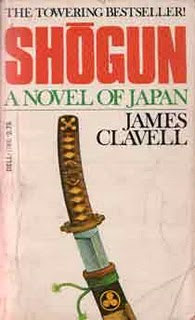
I first noticed this when I was in high school and the TV miniseries Shogun, starring Richard Chamberlain, became a huge hit. Now, by the standards of television at the time, Shogun was a very well-done show. The production values were high, they filmed on location, recruited Toshiro Mifune for gravitas and cred, did their homework, and rather successfully adapted an enormously involved and expositional historical novel.
 And I wished I’d never seen it. The James Clavell novel was and remains one of my favorite books. I’ve read it a bunch of times. But after seeing the miniseries, the next time I sat down to read the novel, it was nearly impossible to not to imagine Richard Chamberlain as John Blackthorne. And while Chamberlain was good in the TV version, the dude was not John Blackthorne. And good for TV (especially at the time) ain’t gonna come close to the unlimited budget my brain has for these things. So I learned something there.
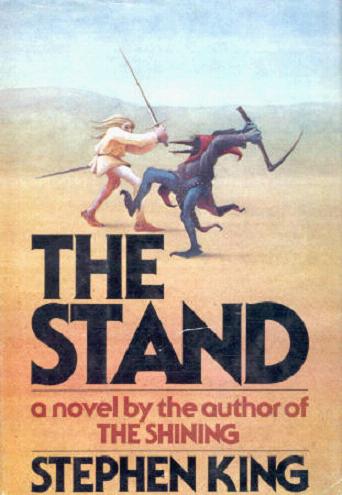
Then Mick Garris directed Stephen King’s The Stand. I knew Mick at the time, and we had a conversation one day in which he asked who I thought would make a good Randall Flagg. I told him King had thought Robert Duvall would be good in the part, and Mick said, “I was thinking of David Bowie.” Now, I think Mick said this because Bowie had just been an evil wizard in Labyrinth. In any case, once I heard that I realized that I wasn’t going to watch The Stand even if ended up being the best movie ever made.
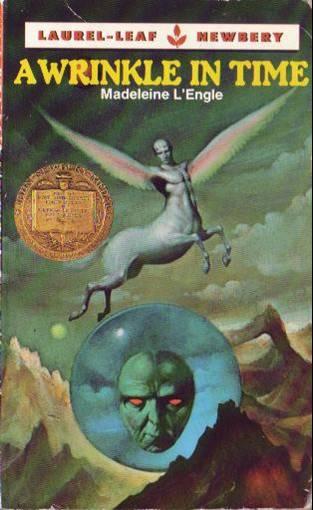
 And so began a practice of not watching movies based on my favorite books. I mean, seriously, did anyone alive think that Disney was going to do anything to A Wrinkle in Time besides gang rape it? Don’t people realize Blood Meridian is as much about the writing as it is about what happens?
When Peter Jackson’s Lord of the Rings came out, I was really torn. I’d liked Jackson since Bad Taste. I actually paid real money to see Meet the Feebles in a theater. I seem to be the only person who doesn’t consider The Lovely Bones a departure for him, as I am apparently the only person in the world who remembers Jackson’s excellent Heavenly Creatures. In any case, I liked Jackson and told myself that I was over LotR cuz it was one of my faves when I was 13 but so was The Omega Man, don’tcha know (well, The Omega Man still is, he said sheepishly). (One of these days I’ll blog about the unintentional blight on fantasy fiction that is The Lord of the Rings.)
 So I went and saw The Fellowship of the Ring at the Cinerama Dome in Hollywood (saw all of the movies there, in fact). And found myself very weirdly bifurcated about the movie. On the one hand it wasn’t remotely the vision I had for the book. On the other hand, I thought Jackson had done about the best possible job that anyone could have done (except for some horrendous shaky-cam fight scenes and the stupid dwarf-tossing jokes that pulled me right the hell out of the movie). I had to see it again to wrap my head around Jackson’s vision, and it was like that for all three films. And much as I enjoyed the books as a kid, I no longer have the sentimental attachment to them that I once did, so I don’t mind my precious gray cells being polluted by Jackson’s imagery. I thought Alice Sebold’s The Lovely Bones was a beautifully written novel, but I didn’t have an emotional attachment to it and didn’t mind seeing the Jackson film (which I liked a lot).
I was torn about seeing I Am Legend because the Matheson novel is so amazingly good even 50 years later, and I was weirdly relieved to see that the Will Smith version was really a remake of The Omega Man (did nobody clue in on this?); I’m pretty sure no one involved ever read the original novel.
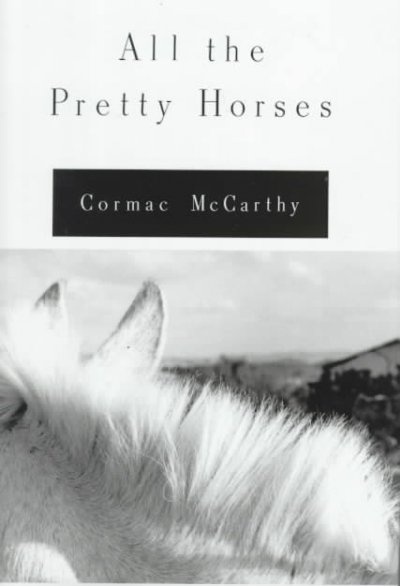
 I saw No Country for Old Men because I thought it was one of McCarthy’s weaker novels (I once quipped that it was a Miami Vice episode written by the best writer in America, and then recently learned that he’d originally written it [or intended it, can’t remember offhand] as a screenplay. See, cynicism makes you psychic. Unfortunately a real cynic knows that a real psychic is also usually a Cassandra. But I digress.) I thought it was hilarious that it won an Oscar for Best Screenplay Adaptation, because the Coens didn’t adapt a damn thing, they just made the book a movie, slavishly rendering about 95% of the novel, which is why the ending plays so oddly in a theater. It’s a book ending. But even though it was extraordinarily well done and I love the Coens, I couldn’t judge the movie at all because I knew everything I was about to see and hear. They didn’t translate it from one medium to another. But I wouldn’t see All the Pretty Horses, The Road, or the upcoming Blood Meridian (about the best-written novel I’ve ever read) even if I’d written the screenplay and was cast in the lead.
Phil Farmer’s Riverworld? Are you out of your friggin mind? I pity anyone who reads the book with that crappy imagery stuck in their head.
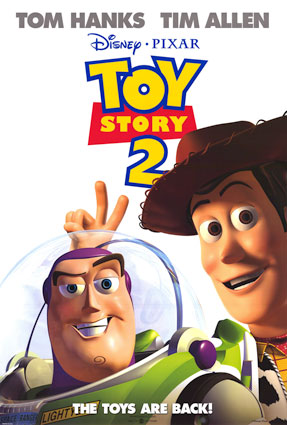 It’s weird to me that people tend to assume you have to see a movie if you liked the book. Sez friggin who? There’s a very real chance I wouldn’t go see a movie based on one of my own novels or screenplays for the same reason as all of the above: the movie in my head will always be a thousand times better. No one believes that when you say it, but I can prove it because I’ve never seen Toy Story 2 and never intend to, and I wrote the second draft of the damned thing.
And when I return to one of my favorite novels to luxuriate in it like some kind of bubble bath, I sure as hell don’t want David Bowie’s goddamn face in my head.