Congratulations on your recent launch of the new iPad device! I know that many pundits were more whelmed than overwhelmed (having fallen for the hype they themselves created; I recall no hyperbole out of Cupertino), but I think it is important to point out the acidic combination of bad memory and lack of foresight that allows such mavens to be hypercritical without applying the company’s past accomplishments to the likely developmental future of your wonderfully promising device. The potential is all there.
But my main point in writing you this open letter, Mr. Jobs, is to urge you to allow the e-book portal on the laudable iBooks section of the iPad to have a section devoted to free e-books, with content provided by users who format their own works using the easily available ePub platform iBooks already utilizes.
I strongly believe this would do for digital books and magazines what podcasting did for digital audio: bring millions of eyes to the device, allow niche publications that otherwise would be unaffordable in the traditional bound-print model, democratize the end-user experience regarding popularity of such works, and give yet another voice to creative people previously unable to garner what has long been considered the imprimatur of traditional publication.
As someone who created one of the world’s most popular music podcasts, Podrunner, I can attest firsthand to the power of such access, and to the broadening, enriching, and enlightening experience of finding and directly interacting with a hitherto unidentified, and indeed unavailable audience. It is empowering at all points of the transaction, from creator to consumer. For what is the purpose of such technology but access?
I believe such a free e-book portal — call it bookcasting — would not harm the present book industry one whit. It would instead provide an outlet and a potential audience for writers denied such by the expense and often the subjective whim of commercial publishing. The need to turn a profit would not be part of the bookcasting equation. It would allow writers the opportunity to supplant or even derive the totality of their income from reader donations.
Bookcasting would provide readers with access to perfectly fine authors denied publication because, while they may be talented artists, they are not necessarily commercial ones, and publishing them is not justified under the current and much more expensive publishing model. Readers would also have access to authors for whom there has simply not been room in a crowded marketplace with limited shelf space.
Bookcasting would even allow established traditional-publishing authors to have a venue for works outside the purview of their genre, books long out of print, or books considered too obscure or experimental for mainstream publication. It would also give traditional publishers an adjunct to offer works, interviews, and other material as a gateway to their commercial publications.
I believe that bookcasting would also usher in a renaissance of literary periodicals. Many prestigious bedroom periodicals of high repute that have been uable to remain viable due to production and distribution costs would suddenly be able to thrive, with overhead drastically reduced if not altogether eliminated.
I will be one of your first bookcast providers and one of your first bookcast readers. And I think there are millions of us out there.
Thank you for your attention, and I wish you the best of luck in all your future endeavors.
So this human male not only supports the oppression and subjugation of the alien creatures right in his own backyard, he even contributes to it. But through a miraculous process he ends up smack dab in the middle of the aliens themselves. Because he is brave and his heart is good, the Earth Mother Spiritual Leader and the Patriarchal Tribal Chief assign him a female to teach him the ways of the people — history, language, customs, warrior rites, the whole shebang. Other aliens don’t like or trust him, but his female mentor sees that he has the potential to be great among them. As he learns their ways he begins to realize that these people have an ancient and legitimate culture that is connected to the world in ways his own culture is no longer (if it ever was). Our hero undergoes a rite of passage in which he essentially becomes one of his adopted tribe.
Unfortunately our little human has himself initiated the process by which humans are going to invade the alien territory and destroy the aliens. Our hero switches sides, but he does not yet have the respect of the aliens because, to them, he himself is an alien. Then the aliens learn that the hero himself is a major factor in their immediate misfortune and imminent slaughter. To gain their respect and get their attention, he must perform a heroic feat that is undeniably something only the best of the aliens themselves can accomplish. He promptly does this, gives a rousing speech that demonstrates beyond a doubt not only his allegience but the fact that he is now one of them.
Then he basically becomes Leader of the Rebellion, and even goes so far as to unite formerly hostile animals in their environment against the common enemy, riding the backs of huge vicious creatures in an all-out spectacular attack against the technologically superior invading humans.
Because of his leadership and the combined strength of formerly competing factions on the food chain, the aliens win the day and send the technophile humans packing. Our Hero is now as much an alien as he ever was a human being.
I’m talking of course about The Ant Bully, released by Warner Bros. in 2006, to immediately disappear without a ripple in the ocean of CG kid films released at the same time.
I fear this post places me firmly in the Land of Mawkish Sentimentality, a porous-bordered, perfumey territory rife with poodle fur, diamondcollared kittycats, waifs with giant brown eyes, and the pervasive music of Counting Crows. The very embodiment of the Tarot Fool, I proceed regardless.
When I leave Los Angeles this weekend I am going to leave my desk behind for whoever wants it. This is causing me a certain and entirely unexpected measure of anguish.
In 1984 I was living in Gainesville, Florida, and my first novel had just come out. I had a rather amazing job word-processing for the History & English Depts. at the University of Florida. I had broken up with the first woman I ever lived with and was living alone in a rented house. I made about five bucks an hour, was getting lots of media attention, was getting rather epic amounts of female attentiion, was selling more copies of my first novel than many of the people whose manuscripts I typed and proofed would sell in their entire career, and was absolutely miserable. I wasn’t challenged and wasn’t getting anything written, and my completely stoopid ambition was to try to give a reading at the university and achieve some kind of legitimacy in their eyes. To be King Shit of Turd Moutain.
I’d met writer David Gerrold at a convention and we’d struck up a correspondence. He lived in Los Angeles, and I was trying to decide whether I should move to L.A. to be in the heart of the movie industry, or New York, to be in the heart of the publishing industry. I wrote David and I wrote the poet Nancy Lambert in New York and asked them questions about living where they lived — cost of living, job opportunities, pay, blah blah. David, no slouch when it came to reading people, called me up and said, look, I think you’re drowning there. I’m coming out to Florida to visit Epcot in three weeks. I’ll bring you back to LA if you want.
I said sure and gave notice at my job the next day. Three weeks and three days later I was in Los Angeles, and I never looked back. I was 23 years old.
I had very little money but wasn’t especially worried; I typed 110 WPM and my grammar skills were ridiculous; I had a job after giving myself a week off. I slept on a mattress on the floor of a room I rented from David. I had all my books in a bookcase I’d made with my friend Kerry that went together like some kind of Jenga puzzle, something only people who did not live in earthquake country could have concocted.
Tight as money was, I used my first paycheck to get myself a desk. It was a sturdy L-shaped desk that cost around $350, which was a decent amount to pay for a desk in 1984. But I knew I was going to practically live at this desk, and make a living at this desk, and I wanted something more than some Ikea cardboard monstrosity that would crumble to dust in months.
I loved my desk. Since moving to Los Angeles I have moved — let me count here — six times, and the desk has come with me. Last move I had to sacrifice the right-hand return on the desk because my new little office didn’t have room for it. I wasn’t happy about it but didn’t have much choice. I was ergonomic about the damned desk before I’d ever even heard the term. It was all about workflow. I used to teach a seminar at UCLA Extension called “The Writing Life,” all about practical aspects of managing a writing career, not a whit about writing itself. I devoted an entire segment, called “Arm’s Reach,” to what should be on your desk, in the drawers, in the drawer file, etc.
KayPro 10
I loved my desk. I still love it. It’s beat to shit, scarred, chipped, stained, and still something that might survive a nuclear blast. I wrote — let me count here — eight? Yeah, eight novels on this desk. I wrote longhand, I wrote using WordStar on a KayPro 10, I wrote using WordPerfect 5.1 on IBM PS/2 clones, and on PCs I built myself and casemodded (one to look like a Holstein cow with matching mouse & keyboard; I still use the cow copyholder & tape dispenser I painted). I’m writing this at that desk using a backlit keyboard attached to my Acer Aspire 9800 “laptop” with a 20″ screen.
I did a lot of graphic design work for my own stuff on this desk, in the heady days when I had time for such luxuries, and the desktop is covered with ruler-straight lines from X-Acto knife cuts. I learned to DJ on it, too, using Traktor 1.5, I think it was, and a SoundBlaster 5.1 audio card that was The Shit right before pro-level audio cards entered the mainstream consumer market. I had no studio monitors and learned on headhpones, which is kind of unusual.
The desk is so harshed that it will just look horrible in my office in the new place. It’s long been time to get a nice new desk, and one will be delivered to my new house the day after I move in. This is all necessary and good. I realize that the desk about which I’ve been waxing sentimental for several hundred words now is just a beatup assemblage of wood and veneer and glue and screws. I know that. But I can’t help feeling like I’m taking a great old dog to the vet to be put down.
Among the few things I know I’ll miss when I leave Los Angeles is Grauman’s Chinese Theater. (The Mann Corporation took it over some years back, but only cads with no sense of history call it Mann’s Chinese Theater.) It’s a venerable old warhorse of oldtime palatial theaters, among the last such in Los Angeles. The Orpheum is even bigger and more plush, but in disrepair and not used much. There’s an L.A. Theater Conservancy, Last Remaining Seats, dedicated to trying to preserve these grand dames — a losing battle, I’m afraid, as they are steadily being converted into swap meets and retail space, but a noble battle nonetheless.
Because I’m moving after being here for over half my life, I have been making a point to visit my favorite spots these last few weeks. I saw The Lovely Bones and The Imaginarium of Dr. Parnassus at the Hollywood Arclight (though I haven’t actually seen Avatar at the glorious Cinerama Dome (the anchor of the Arclight complex) because quite frankly it’s on the bottom of my list of movies to see. Yesterday I went to see The Book of Eli at the Chinese.
The Chinese was the first theater I went to when I moved to Los Angeles in 1984. I saw Children of the Corn there. Most of the cast showed up, and so I also got my first taste of spoiled little child actors. But having come from Gainesville, Florida, seeing a movie in a theater the size of a county where the people in the movie were also in the theater was — well, not cool, and not surreal. The word that comes to mind is enframing.
Even more enframing, I saw Speed at the Chinese. The scene where the Red Line car breaks through the street and screeches to a halt outside the theater was especially fun because the theater it slides in front of is the theater I was sitting in. You couldn’t help turning your head back toward the lobby, as if trying to hear the ruckus. (Though even more enframing was Gremlins 2, which I saw at the Vista. There’s a scene where the camera pulls back to show the movie you’re watching on a screen, continues back to include the theater audience, and trucks back as someone gets up and storms out to the lobby to complain to the manager [Paul Bartel] about the film. They shot the scene at the Vista — now that was surreal.)
One of the most fun movie nights I’ve ever had was when a big group of us got together at the Chinese to see Titanic on opening night. The anticipation was huge and the crowd was electric. (Possibly the best movie night I ever had was attending the premiere of 2010 at the Westwood Village with David Gerrold and sitting with Arthur Clarke, Peter Hyams, and Harlan Ellison. Good lord. Shame the movie sucked.)
Even a bad movie is better at the Chinese, and it speaks to a day when moviegoing was an event, a sort of absorbing group ritual, instead of the distraction from cell phone conversations it serves as nowadays. I will definitely miss seeing movies at the Chinese.
Getting my own ballot for the 2009 Hugo Award Nominations made me realize that it would probably be all wise and PR-like of me to mention that
Elegy Beach, by Steven R. Boyett (Nov. 2009, Ace/Penguin)
is eligible for nomination in the Novel category this year.
Not that you have to vote for it, you undertand. I mean, if you don’t, we’re still friends. I mean, in a superficial, don’t-call-me-to-bail-you-out-of-jail kind of way. But if you’re eligible to vote for the 2009 Hugos, there’s a chance you intended to vote for Elegy Beach but got that weird mind-goes-blank thing that happens when we walk into bookstores and grocery stores, and when we open the fridge. So I’m really just reminding you, you see.
Some years ago while auditioning samples for compositions, I was listening to pieces of Martin Luther King’s iconic “I Have a Dream” speech and was astonished to realize that that the speech is — from start to finish and without variation — 125 beats per minute for over 15 minutes.
I have always thought that the “Dream” speech is about the most passionate, important, lyric, and beautifully constructed stretch of oratory imaginable. The realization that it’s also right on tempo caused me to start listening to it as a musical construction. It has a nearly symphonic structure, with distinct movements. And of course there’s that astonishing finish.
I wanted to compose something that would underscore the speech’s musicality — a simple piece that wouldn’t call attention to itself or stand independently of the speech, but act as a bed to illustrate the structure and lyric beauty of King’s amazing words.
I did absolutely no editing to the speech beyond toning down some of the applause and EQing it a bit for clarity. It runs in “MLK” exactly as it was recorded, from start to finish, and the music is composed around it. All stops, breaks, returns, emphases are exactly as Rev. King delivered them.
After many listenings my appreciation for Rev. King’s words (and passion, and hope) has only deepened, and the demonstration of their musicality fills me with a childlike wonder. I hope that you are as moved and astonished by the beauty and depth of this speech as I continue to be.
This is a quirk of mine I haven’t run across in anyone else: I won’t go see movies based on books I really love. Maybe the movie version is great; I don’t care. It won’t be a gnat fart next to the movie in my head. And whether they get it right or get it wrong, I’ll be stuck with that imagery from then on, because we are hardwired such that visual imagery takes precedence, and tends to overhwelm everything else — including imagination.
I first noticed this when I was in high school and the TV miniseries Shogun, starring Richard Chamberlain, became a huge hit. Now, by the standards of television at the time, Shogun was a very well-done show. The production values were high, they filmed on location, recruited Toshiro Mifune for gravitas and cred, did their homework, and rather successfully adapted an enormously involved and expositional historical novel.
And I wished I’d never seen it. The James Clavell novel was and remains one of my favorite books. I’ve read it a bunch of times. But after seeing the miniseries, the next time I sat down to read the novel, it was nearly impossible to not to imagine Richard Chamberlain as John Blackthorne. And while Chamberlain was good in the TV version, the dude was not John Blackthorne. And good for TV (especially at the time) ain’t gonna come close to the unlimited budget my brain has for these things. So I learned something there.
Then Mick Garris directed Stephen King’s The Stand. I knew Mick at the time, and we had a conversation one day in which he asked who I thought would make a good Randall Flagg. I told him King had thought Robert Duvall would be good in the part, and Mick said, “I was thinking of David Bowie.” Now, I think Mick said this because Bowie had just been an evil wizard in Labyrinth. In any case, once I heard that I realized that I wasn’t going to watch The Stand even if ended up being the best movie ever made.
And so began a practice of not watching movies based on my favorite books. I mean, seriously, did anyone alive think that Disney was going to do anything to A Wrinkle in Time besides gang rape it? Don’t people realize Blood Meridian is as much about the writing as it is about what happens?
When Peter Jackson’s Lord of the Rings came out, I was really torn. I’d liked Jackson since Bad Taste. I actually paid real money to see Meet the Feebles in a theater. I seem to be the only person who doesn’t consider The Lovely Bones a departure for him, as I am apparently the only person in the world who remembers Jackson’s excellent Heavenly Creatures. In any case, I liked Jackson and told myself that I was over LotR cuz it was one of my faves when I was 13 but so was The Omega Man, don’tcha know (well, The Omega Man still is, he said sheepishly). (One of these days I’ll blog about the unintentional blight on fantasy fiction that is The Lord of the Rings.)
So I went and saw The Fellowship of the Ring at the Cinerama Dome in Hollywood (saw all of the movies there, in fact). And found myself very weirdly bifurcated about the movie. On the one hand it wasn’t remotely the vision I had for the book. On the other hand, I thought Jackson had done about the best possible job that anyone could have done (except for some horrendous shaky-cam fight scenes and the stupid dwarf-tossing jokes that pulled me right the hell out of the movie). I had to see it again to wrap my head around Jackson’s vision, and it was like that for all three films. And much as I enjoyed the books as a kid, I no longer have the sentimental attachment to them that I once did, so I don’t mind my precious gray cells being polluted by Jackson’s imagery. I thought Alice Sebold’s The Lovely Bones was a beautifully written novel, but I didn’t have an emotional attachment to it and didn’t mind seeing the Jackson film (which I liked a lot).
I was torn about seeing I Am Legend because the Matheson novel is so amazingly good even 50 years later, and I was weirdly relieved to see that the Will Smith version was really a remake of The Omega Man (did nobody clue in on this?); I’m pretty sure no one involved ever read the original novel.
I saw No Country for Old Men because I thought it was one of McCarthy’s weaker novels (I once quipped that it was a Miami Vice episode written by the best writer in America, and then recently learned that he’d originally written it [or intended it, can’t remember offhand] as a screenplay. See, cynicism makes you psychic. Unfortunately a real cynic knows that a real psychic is also usually a Cassandra. But I digress.) I thought it was hilarious that it won an Oscar for Best Screenplay Adaptation, because the Coens didn’t adapt a damn thing, they just made the book a movie, slavishly rendering about 95% of the novel, which is why the ending plays so oddly in a theater. It’s a book ending. But even though it was extraordinarily well done and I love the Coens, I couldn’t judge the movie at all because I knew everything I was about to see and hear. They didn’t translate it from one medium to another. But I wouldn’t see All the Pretty Horses, The Road, or the upcoming Blood Meridian (about the best-written novel I’ve ever read) even if I’d written the screenplay and was cast in the lead.
Phil Farmer’s Riverworld? Are you out of your friggin mind? I pity anyone who reads the book with that crappy imagery stuck in their head.
It’s weird to me that people tend to assume you have to see a movie if you liked the book. Sez friggin who? There’s a very real chance I wouldn’t go see a movie based on one of my own novels or screenplays for the same reason as all of the above: the movie in my head will always be a thousand times better. No one believes that when you say it, but I can prove it because I’ve never seen Toy Story 2 and never intend to, and I wrote the second draft of the damned thing.
And when I return to one of my favorite novels to luxuriate in it like some kind of bubble bath, I sure as hell don’t want David Bowie’s goddamn face in my head.
My Webster’s lists the verb form of “parrot” as “to repeat by rote.” That was pretty much my impression of what a parrot does, too. Then I met Alexander.
Baby picture
Alexander is a Vosmaerai eclectus, a species notable for sexual dimorphism more extreme than any other in the bird world; the females look so unlike the males that they were thought to be different species until the 20th Century. They’re native to New Guinea, but Alexander was hatched at Magnolia Bird Farm in Riverside, California. Maureen was there for it, and visited him constantly, and took him home with her five weeks later.
Alexander is a bit of a mess and something of a runt. His left shoulder is malformed and his wing won’t fully extend; he will never fly. He compulsively picks at himself (something wild parrots have never been observed to do) and has to wear a collar; otherwise, he will pull out highly vascular bloodfeathers and bleed to death. We hate the collar as much as Alexander does, and remove it whenever we think it will be safe — when he isn’t growing major feathers, which ain’t often.
Baby picture
Alexander seems about as smart as a three-year-old human being. I say this with some measure of objectivity, as someone with little prior experience of parrots and little sentimentality regarding them. I’ve seen him identify colors and objects from groups with no cueing from Maureen (that I observed, anyhow). He makes up games with consistent rules, usually involving the way an object is to be shared between him, me, and Mo, and gets flustered if you can’t figure out the rules.
And he talks. Oh, man, does he talk. I couldn’t say how large his vocabulary is, but it changes all the time, and one of the things that I’m still not used to is his ability to change inflection on words to convey different meaning, even though he hasn’t heard that word said that way before. He seems to understand that meaning changes with tone. He demonstrates this a lot around our neighbor Tiffany, because he seems to have a crush on her. (He likes girls a lot better than boys anyhow, but Tiffany is a special case for him.) He says “Hi” to her when she’s in her backyard, in a special tone he reserves exclusively for her. It sounds like a guy at a bar radar-locking on a babe a couple of stools down. You can almost here the “well, hel-LO there.”
He also imitates environmental noises (train brakes were a favorite for a while), and caws at crows with some pretty funny results if they get a look at him. The crows tend to circle and get other crows to take a look as well, refusing to believe that the picture doesn’t match the sound. I got him to say “quack quack quack” for a while, and do some Warner Bros. cartoon sound effects. Sometimes he talks in his sleep. That takes getting used to. He’s awakened yelling from nightmares a few times too. He most definitely will put words together in different combinations to form sentences he has not heard before. There’s cognition there.
Alexander loves to watch Powerpuff Girls and Dexter’s Lab. He laughs at appropriate moments (sometimes I hear it in stereo when he and Maureen laugh together — in identical voices). He has a thing for anything that drones, like a fan or a leaf blower, and will talk like mad when a drone is going. When Mo composes he sings along, in time and on key. I’ll never get used to hearing them do call-and-response, with Alexander basically playing “Simon” and getting annoyed if you don’t replicate his pattern (which he varies as he goes). At the end of this post are two recordings of Alexander accompanying Maureen (or vice versa, really), one a call-and-response, the other pretty much an improvised duet.
Where Murdoc is a grumpy misanthrope, Alexander is a genuinely sweet character who shares things and likes to play with others. Both birds can be counted on to sound off whenever I have a business call or phone interview, which adds that special touch of professionalism. It’s also a fitting irony that I — who have written a rather large amount of fiction dealing with what are basically sentient animals, and who have made my opinion of furries pretty well known over the years — would end up living with animals that talk.
(This audio player app for WordPress sucks the rope-veined boy bone, so I’m including download links as well.)
Mo & Alexander – Duet
[audio:http://www.steveboy.com/audio/mo_and_alexander_-_duet.mp3]
I don’t think you have to read me much to figure out that I’m not a very schmaltzy, widdle fwuffy bunny kinda guy, and I definitely deliberated before blogging about the birds (“The boys,” as we call them). But if John Friggin Scalzi can keep posting pictures of his christalmighty cats — a species of furry mercenary that would happily smother a baby the second your back is turned — then I can bygod talk about my birds every once in a while.
I wouldn’t really describe myself as a bird person. I love animals (except for cats, which in any case are not animals but hairy gargoyles) and grew up out in the country surrounded by lots of them. Mostly I’m a dog person. (I’m not trying to sell anyone on dogs here; I’m aware that they’re big dumb smelly fur-covered emotion manipulators. But I don’t know of any other animal that will pull a baby out of a swimming pool or help a blind man across a busy street. Hell, most people won’t do that.)
In any case, if you’re primarily a mammal-type person, parrots take some getting used to. Their body language and habits and patterns and such were quite foreign to me at first. They aren’t just feathered mammals. In fact I suspect the reaction from any parrot-owner to the theory that birds evolved from dinosaurs would be mostly Duhhh. Cuz that’s clearly what they are — little feathered dinosaurs. In your own living room. Woo hoo.
My impression of parrots was like most people’s: big loud birds that echo what they hear, usually owned by eccentric people who would probably be crazy cat ladies if they were more mammal-centric. Then I became a stepfather to two of them.
Murdoc is a severe macaw. It’s illegal to import them now, and given his age and the fact that he was wild-caught, we figure he was somewhere around the last batch of his species to be brought (legally, anyhow) into the U.S. We don’t support buying wild-caught birds; the methods used to capture them and bring them to market are cruel from start to finish. Murdoc was a rescue. He’d been bought at a garage sale, which I find simply unbelievable, by a family that owned a pet shop. This family’s kids used to beat on Murdoc’s cage with a broomhandle while yelling at him. Maureen, my wife, grew up with parrots, and when she saw this she couldn’t stand it, and worked off the price for him in the pet shop. Then she set about the lengthy process of teaching him not to go full-on flapping panicked gonzo whenever a human being came anywhere near.
Murdoc is crazy. We figure he’s around 45 years old. He doesn’t talk, except to say “Murdoc” and, when the phone rings, “hello.” He’s kind of like Timmy on South Park, though; he’s learned to say his name any number of ways to make his meaning clear. He’s (understandably) terrified of sticks and strangers, doesn’t like loud noises or going outside. When I met Maureen he would attack anything that wasn’t Maureen. In the morning he would climb down from his cage in the room he shared with Alexander in Maureen’s apartment, walk into her bedroom, climb up on the bed, and walk across me to get to her. What woke me up most mornings when I stayed with Mo was Murdoc climbing the metal footboard. Mo would preen him and I would lie there imagining the damage his beak could do to me if he wanted it to.
Then one day he climbed up and didn’t go to Mo and wanted me to preen him. Which I did. I was terrified. Gradually he warmed to me, to the point that he would let me preen him in the morning but not Mo. Then he fell in love with me and tried to kill Mo whenever she came near me. But love changed Murdoc. He would act silly. We found out he was ticklish on the bottoms of his claws, and he does this weird chokey laugh thing when you tickle them. He sings along with certain notes I hit or sounds I make. He also has a weird thing for being under things. I’m always building him a fort with pillows and a sheet, and he plays in it. He insists on exploring empty cardboard boxes, blankets, and cabinets. You’d think he was some kind of den animal. He’s insane for peanuts.
Murdoc is generally grumpy and not very social. (People and their pets, yah?) Often I feel sorry for him because he’s had a hard life and he’s pretty much broken. Mostly he just wants to be left alone. He loves me, though, and I’ve grown to love him. In fact love saved Murdoc, honestly.
Apart from the holiday traffic and wallblind idiocy of drivers whose ears go flat to their head as they stop in the middle of the road in utter hawkshadowed panic, this tends to be my favorite time of year. Besides the meridian at which I look back on the previous year and look forward to the next, for some reason it’s usually my busiest and most creative time of year. I always have more projects going on and more outlets for them.
Late 2009/early 2010 is no exception. 2009 was one of the best years of my life. ELEGY BEACH and ARIEL were reprinted, with the latter — a 26-year-0ld reprint, mind you — garnering reviews and strong sales, and with ELEGY BEACH doing, as far as I can tell, quite well also. I went back to SF conventions for the first time in a decade (and DJ’d a dance at WorldCon in Montreal), and found new friends in Cory Doctorow and John Scalzi, who are movers and shakers to make me feel I’m standing still. My wife went with me to Burning Man for the first time, and the event was amazing this year. My all-night DJ set onboard the Nautilus X art car was epic. My Groovelectric & Podrunner series didn’t see any fundamental change, but they stayed on top of iTunes Music Podcasts, and Podrunner made the iTunes Top 100 Podcasts list for the fourth year in a row.
2010 is starting off with a bang. Maureen and I are busily packing up the house to move to the East San Francisco Bay area at the end of this month. Normally I hate moving, but I’ve wanted out of Los Angeles for several years now, and we’ve both fallen in love with our new little town, so if the undeniable pain in the ass of relocating is the price of admission, I’m all over it. We love the community there, love the new (and much larger) house, and have lots of friends up that way, so there’s plenty of incentive. I think about what I’ll miss about Los Angeles and, other than friends, I draw a blank. Which is always a sign it’s time to go.
But good god I have a lot of books. And this is after getting rid of about 25% of them a year ago.
I have March 1 deadlines on three projects and have to keep the Groovelectric and Podrunner podcasts going, as well as revising one novel and working on the new one. I know it’ll all get done because god knows I’ve done it all before.
AVALON BURNING, the new Change novel, is proceeding slowly, but I’m really happy with it. The FERRY CROSS THE MERCY revision is stalled, I think because this is going to take a lot of concentration and uninterrupted sessions, and that ain’t happening right now. But it will.
Here’s my interview on KFAI public radio, aired on New Year’s Eve:
[audio:http://www.steveboy.com/audio/write_on_radio_12-31-09.mp3] (if this gives you a “file not found,” use the link below. This player app for WordPress absolutely sucks.)
I think one reason I don’t post more often is that I have a sort of essay mentality when it comes to blogging. I tend to want to have a topic or a theme, and sometimes I’m either stuck for one or just too damned busy to put together something coherent or even god forbid artful.
I contrast this with the more confessional, open-diary variety of blogging, which I seem to avoid (present entry excepted). Part of that is a concern for maintaining some separation between my professional and private life. Part of it is a conviction that no one is interested in the trivial and quotidian events of my life (which is one reason I simply don’t understand either end of the Twitter transaction).
In any case, I’m stepping outside the usual thematic bounds of my blog to talk in my oh-so-meta way about what sorts of things are going on that have kept me from being a Good and Faithful Blogger.
After getting back from Seattle with the more-or-less-finished ELEGY BEACH Google Earth maps I spent the next three days really finishing them up — adding relevant novel text and pictures to the popups, adjusting locations to conform more closely with the text, etc. The map is online now, and it’s friggin unbelievable. The ARIEL and ELEGY BEACH maps also work on the latest version of the Google Earth app for iPhone, too. Friggin unbelievable redux.
At my agent’s request I am revising my latest novel before submitting it. I’m pissed off at having to do it, mostly because my agent is right. I’ve worked on this novel for a long time, and part of me dreads diving back into it while another part of me relishes the chance. I love this book a lot, which is great in terms of passion, but not so good in terms of being able to maintain a necessary cold distance. I had that distance on ELEGY BEACH, and I don’t think it’s a coincidence that it was also the best publication experience I’ve ever had.
I have also started another Change novel. I admit I am a little surprised by this. You will be, too, as it isn’t the book that anyone is expecting would follow on the heels of ELEGY BEACH. I’ve learned to shut up and let the thing that wants to write have its say, since arguing with it only makes the inevitable a much more rocky ride anyhow.
I’ve been asked for stories in two collections and have gotten underway on those. I’m excited about this, because short stories are my first love, and I miss writing them terribly. (Though maybe I have always written them terribly, yukkity yuk.) Believe it or not I used to only write short stories and swore I’d never write a novel. Since I have literally made two careers out of things I swore I’d never do, I think perhaps I should swear never to be a hugely popular, NY Times-bestselling author with a DJ career involving stadium gigs. There, I’ve said it, and by golly I intend to stick to it.
I am talking to a Very Large Corporation about sponsorship for my Podrunner podcast. If it goes, it’ll be a perfect match.
My wife and I are finally doing something about moving out of Los Angeles and hope to be in new digs around February. My love affair with this city ended some years back, I’m afraid. We just grew apart, is all. It happens. L.A. will be fine without me. And vice versa. I’ve been househunting out of town a few weekends in the last month.
There’s a ton more going on, of course — there always is — so I’m getting back to it right now. I hope everyone is having a good holiday season.
Throughout history — and probably before that — human beings have created types of music that are meant to focus awareness and (somewhat paradoxically) induce trancelike states.
These types of music rarely take the form of three-minute pop songs. Popular music strongly emphasizes melody, both because it is lyric-oriented and because it relies on familiarity to capture public attention and dissemination.
Melody and lyrics require a kind of attention that is antithetical to a meditative, trance-like state. Trance-inducing music isn’t about melody, it’s about groove. Rhythm. A kind of mathematical pattern repetition that evolves slowly if at all.
We’re pattern-recognition creatures; it’s in our hard-wiring. To remove, or at least de-emphasize, the melodic component of music, to boil it down to its essence and concentrate on rhythmic pattern — on groove — is to invite the body to move in sync with those patterns. This is an ancient, primal experience, and music that invites it opens the mind and body to a primal and tribal experience that is shared in a place that possibly precedes language. In my experience there are few things more primal than being part of a big room full of people moving in rhythm to music.
The majority of exercise involves moving in rhythm. So it seems only natural that these movements be coordinated by music. The scientific term for matching movement to music is dancing.remember?
Given the above distinctions between melodic and pattern-oriented music, it’s only logical that repetitious movement be matched to pattern-oriented music. When the body is moving in rhythm and the mind is not distracted by the familiarity of melody or lyrics, but rather meditatively “in the moment,” the mind is not distanced from the body but immersed in it, occupied with it. The pattern-oriented music acts as a bridge between mind and body.
Let’s go a step further
Trance-oriented music has evolved over literally millennia to very efficiently help achieve this state. Modern electronic dance music incorporated the lessons from these types of music and developed a type of pattern-oriented music that was designed to fit seamlessly into a larger, longer sequence of other such compositions, providing entire nights of dance music that are, in a very real since, a gradual modification of a starting groove that doesn’t ever stop.
The ability to mix and record at very specific speeds (beats per minute) enables a perfect marriage of exercise (dance, remember?) and music, with the mix acting as the go-between uniting body and mind.
There’s nothing mystical about any of this. If your attention is involved in relatively repetitious music, you aren’t as concerned with fatigue or resource depletion. Naturally you don’t want to ignore these things, but neither do you want awareness of them to be at the forefront of your experience.
Yoga does something similar by putting the focus on breathing. If you’re hyperfocused on your breath, you aren’t thinking how much this damned pose hurts or how much better it would be to sit down to a terrific dinner right now. And a focus on breathing keeps your attention on a crucial component of the practice — the rate at which you’re consuming and burning up oxygen. So the breathing and the focus are as much a part of the workout as the movements themselves.
Groove-oriented music in a run or workout plays a role similar to breathing in yoga: The pattern-heavy grooves give your mind a focus point, and the steady tempo gives your body a constant rate at which to move. This regulates energy expenditure and makes the workout vastly more efficient.
Here’s the important thing: The music isn’t a distraction from the workout. It’s an integral component of the workout.
A lot of people look for distractions when they work out. They watch tv or read on the treadmill, listen to audiobooks or news while they’re running, etc. But these things are meant to occupy your mind, distracting you from the discomfort of the workout. As distractions, they keep you from paying attention to your body — the energy it’s expending, the efficiency and economy of good form. Not only are you less involved in your workout, you aren’t working out as well as you might. Your body’s trying to burn calories and develop strength and endurance, and yet you aren’t involved in the process!
The point with the Podrunner running mixes is to give you a partner that helps you literally pace yourself without separating your self from your body. The music acts as a mediator between mind and body. It’s the breath in your yoga practice. The whole point is to “be here now.”
Even without all this trance-y theorizing, there’s strong evidence supporting fixed-BPM (beats per minute) music as a training tool, by virtue of the steady tempo regulating pace and energy expenditure. You don’t want to burn out too quickly, and you don’t want to slow up without realizing it because you’re tiring. So the music serves as a metronome for your body. Even a hardcore competitive runner who wouldn’t dream of competing while listening to music can benefit, simply because it conditions the body to work at a consistent pace — a winning strategy for any distance runner. A steady pace is even more important from a fitness standpoint.
The vast majority of my listener emails consists of people telling me they’ve worked out longer, gone farther, reduced run time, lost weight, and/or achieved personal bests — with no change in their routine other than adding Podrunner. Some of it is that trance-state thing, and some of it is just that they’ve got a metronome for their stride, which makes their workout more efficient.
I firmly believe that the kind of music Podrunner features plays a major role in this as well. Because — even apart from psychological theorizing and energy-efficiency studies — the music is wikked kewl.
My Podrunner podcast has been named as one of iTunes’ Top 100 Podcasts of the Year for the fourth year in a row. Woo-hoo!
Podrunner is a series of nonstop, fixed-BPM electronic dance music mixes for runners, joggers, power walkers, treadmill, aerobics, and just about any other exercise that can benefit from a fixed tempo. We’ve been written up in magazines and newspapers, and have been one of the most popular podcasts in the world since Podrunner launched in February 2006.
Its success was entirely unexpected, and it has led me on an adventure (sometimes rocky, I admit) that I simply would never have imagined having.
Thank you again, iTunes, and thank you again, listeners!
I’m in Seattle till Thursday, working with my friend Adrian Smith (polymath IT genius whiz who has also been a guest DJ on my Podrunner podcast) to finalize the Google Earth maps depicting the locales and route for the primary events of ELEGY BEACH.
Since no one else seems to have realized what an amazingly cool thing this is, I’m gonna shuck any pretense of modesty and tell you what an amazingly cool thing this is.
One of the unexpected fringe benefits of my oddly obsessive-compulsive need to work for real-world accuracy in my own odd brand of reality-based fantasy is that you are able to use the free Google Earth application to follow the locations events of ARIEL and ELEGY BEACH in real time using satellite imagery to see exactly where these events take place.
You’re even more able to use it because we have worked very hard to provide you with custom downloadable Google Earth maps that delineate locations, tour them, link to online pictures of landmarks, and include relevant text from the novels. You really can tour the Del Mar racetrack that dominates the first section of ELEGY BEACH. You really can fly the hang-gliding route in ARIEL. You really can go on the Goodyear blimp ride at appropriate altitude between Carson, California, and the Tejon Pass. The accuracy and detail astonish me. Maybe you’re young enough to take this stuff for granted. I’m old enough to be amazed by it.
In any case, while there are Google street maps of book locations, I don’t know of anything like what we’re doing here. As of about a month ago you can even use these maps on Google Earth for iPhone. If no one takes advantage of it, it’s still so unbelievably cool someone should hand me some kind of special Hugo award for it. So nonny nonny pooh pooh.
I’ll finalize the ELEGY BEACH maps after I’m back from Seattle. I will tell you unabashedly that I love these. I love the technology that helps make it possible not only to render these impossible visions with even more clarity, but to make them available for readers.
Monday marks the final entry in my two-week gig as a guest blogger on Borders’ Babel Clash page. The theme has been “apocalypse,” and I’ve surveyed books and movies in the field and talked about why I think many of us are attracted to end-of-the-world (or at least of civilization) scenarios, why some are more popular than others, and how the notion of likely apocalypse itself has changed over a generation.
Babel Clash is usually a back-and-forth debate and/or discussion between several writers, but I was the only guest for the topic (everybody else probably had a life and a desire to experience some sort of holiday, to which I say humbug), and I used the platform to explore the subject in more depth than I might otherwise have been able to. It took some time away from being able to post to my own Write Now blog, but if postapocalyptic scenarios are interesting to you, take a look at my Babel Clash entries. (I’m especially fond of “Apocalypse Now & Then.”)
The Fuzzy Edge of Authorship – “An entire reconceptualization of copyright and ideas of authorship is beginning to fill the vaccum left by current intellectual property law that is being rendered archaic by technology. This explores some of the implications for authorship inherent in the ability to freely reproduce, remix, and transmit digital media. What should creators hold on to, and what should they let go of? How is current law hampering creativity, and how is it struggling to help provide for creators?”
This was my final talk at Podcamp Arizona, and the first of the lectures that I’m putting online because it’s a version of a song I’ve been singing for over a year now, on a topic I believe is going to have an increasing impact on creators, consumers, and third-party providers over the next decade. It finally occurred to me to start recording some of this stuff. Mister Cutting-Edge Communications Technology, that’s me.
(In case you were wondering, no, a “podcamp” isn’t a geek sleepover with footy pajamas and sleeping bags. It evolved out of the barcamp anti-conference concept of nonhierarchical conferences featuring ad hoc, user-generated content. Podcamp AZ isn’t run that way, but they call it a podcamp and run it much more loosely than a traditional multitrack, scheduled conference event.)
Those of you using those free antiseptic wipes from dispensers outside grocery stores so that you will not expose yourself to cooties when you get your carts, please cut it the hell out. All you are doing is confirming to the rest of the world that America is a paranoid, germophobic, xenophobic culture.
More important, you’re helping to quickly breed even more drug-resistant bacteria, and helping to create less germ-resistant human beings. So with every little wipe you are a traitor to your race, and I hate you.
My two-week stint as a guest blogger on the Borders SF site Babel Clash begins today. The topic: Apocalypse in fiction & film. They definitely went to the right boy for this one (though I’m gonna lean more toward post-apocalypse, cuz how civilization goes into the crapper doesn’t interest me anywhere near as much as what happens afterward).
Dear Stephen,
After well over thirty years of learning, growing, and fond affection, it pains me to say that I believe our relationship must end. We have grown apart, and must go our separate ways. I will always treasure the heyday of our youth, when the world stood in mute awe at the glaring olympian light The Stand cast across publishing and the heady subgenre of postapocalyptic fiction. I stood by you in the Bachman days when you tried to see how much of what made you you was your style or your name, when The Long Walk could stand right up there with S.E. Hinton. I started getting nervous with Misery, not just because it was at least your third novel whose central character was a writer, but because of its murky undercurrents of resentment toward an audience that attained a nearly Pink Floyd level of directed anger toward the people who like you but who just don’t get it.
Perhaps most painful of all you followed Misery with The Dark Half, about a writer whose nemesis is literally himself. I stuck with you because I could see you trying to work it out, trying to find a way out of the corner that fame had painted you into, and even resenting it. Lately you’ve tried to disguise it in books such as Duma Key, by having a protagonist who is a painter and not a writer. I stuck with you because I’m quite aware I’ll never have the slightest idea what that level of fame must be like across every facet of daily life, and I simply admired that you continued to write prodigiously in the spotlight’s glare. Because you’re a writer in your very marrow.
With the challenge of publication itself well behind you, I could see you trying to challenge yourself. Deliberately hamstringing yourself in order to see how much story you could still tell. So you released Misery, which takes place in a house, and Gerald’s Game, which takes place in a room, and Rose Madder, which barely takes place anywhere at all. I hung in there even while I felt as confined by these self-imposed limitations as your characters were.
You lost me a few times, but I’d invested in this relationship and I was rooting for you. You have been a startling phenomenon, our age’s Dickens, a one-man hurricane. People read you who don’t normally read much at all. I’d feel we needed a break and I got fine with not reading you (it was hard to watch the Gunslinger series slot into formula after the open-ended jazz of the first book; I think I can spot the moment you started reading not just Cormac McCarthy but All the Pretty Horses, and I couldn’t get past that). But inevitably I’d hear something that piqued my interest and pulled me back. And I would enjoy what it is I so like about you (your timing is the best in the business, your characters — with the exception of your writer protagonists, who interestingly are often depicted in a harsh light — are people we see in everyday life, not Everyman Symbols or invulnerable and unaffected comic-book heroes). But there would always be that gnawing familiarity of formula, predictability (I think I must be the only person in the world who called giant spider to predict the climax of It), contrived folksiness.
But I’m sorry to say that I think you have finally jumped the shark, and that, as of page 37 of the hardcover edition of Under the Dome, it is truly over between us.
I’d heard good things about this one, and any book that separates an entire town from the rest of the world (it’s been done before, necessarily more obscurely [cf. David Wiltshire, Genesis II]) and deals with the prevailing anarchy has a warm place in my heart before I’ve even cracked the cover. I hit page 34 where a character on a tractor hits the invisible wall, flies off, and breaks his neck while the tractor idles beside him, and tried to regard the end-of-section line “Nothing, you know, runs like a Deere” as just a speedbump, something I could put behind me. A cuteness that should have been resisted because it detracts from the scene, reminds the reader that, after all, this is being written by somebody. It’s the kind of thing any writer could put in an early draft, and that any seasoned writer should remove on revision.
Then I hit section 5 on page 37.
We have toured the sock-shape that is Chester’s Mill and arrived back at Route 119. And, thanks to the magic of narration, not an instant has passed since the sixtyish fellow from the Toyota slammed face-first into something invisible but very hard and broke his nose.
Ignoring the fatty writing (wouldn’t “broke his nose against something invisible but very hard” have been a more [ahem] active voice and less redundant [we can figure out “face-first” from the broken nose, dude]?), could you give any louder, clearer indication than “thanks to the magic of narration” that you just don’t care about our relationship anymore? That you’re making it all up, and that you no longer care if I know that you’re faking it? Don’t you have enough consideration and professionalism anymore to feel obliged not to yank me completely out of the one-step-removed collusion that is reading? I feel I have paid my twelve bucks for a major studio summer movie and seen bad models dangling on wires, shadows of boom mics, actors glancing off-set. I can practically hear the typing.
Before you accuse me of being unfair, let me take pains to say that I’m fully aware that James Joyce, in Finnegan’s Wake, “brings us by a commodius vicus of recirculation back to Howth Castle and Environs.” But he does it in the first line of the book, and by so doing lets us know what we’re in for. You pull this bait & switch on page 37, well after establishing your standard omniscient, third-person voice, so that this line just sits there like a turd in a punchbowl. This is the moment in the movie where I leave because I understand that I’m better off getting on with my life than getting angrier in a dark room as a lot of money is expended on the assumption that I am an idiot. This is the point, Stephen, where I walked out of your book. Walked out of all your books.
The truth is I’m not mad at you but disappointed in myself for coming back in the first place. Some relationships are about understanding that you will be manipulated. But when the manipulator takes great pains to remind the manipulated that he is not only being manipulated, but shoddily so, anyone with more spine than a gummi worm knows that it’s time to leave. That, from that point on, it’s his own damn fault if he lets it continue. Fool me twice, shame on me.
I realize that I am not really entitled to feel disappointed, because disappointment implies some expectation on my part that you shouldn’t necessarily feel obligated to fulfill. In that sense, then the horrible “dear john letter” cliche holds true: it isn’t you, Stephen, it’s me. You’ll be pefectly fine without me, of course, and I will always treasure the experiences you have given me and the lessons you have taught me, and of course I wish you all the very best in your life and in your future endeavors. And of course I hope that your millions of other relationships continue to flourish.
Having fun on the second day of Podcamp! I got to meet Mignon Fogarty (aka Grammar Girl) in person for the first time (previously we’ve traded emails and nodded in passing at hectic conventions), and I found her an utter delight — charming, personable, and very comfortable in front of a crowd. Her presentation on advertising products in podcasts was fantastic.
I’m recording my presentations and will make them available online after I’m back. Meantime, here are some video interviews I did yesterday.
Watching people gesture and pose as they talk on cell phones as if the person they’re speaking with can see them, it’s clear to me that areas of the visual cortex come into play when people use the phone. Put simplistically, you’ve got X amount of gray-matter RAM, and a certain portion of it is given over to visualization (real and imagined). As people seem to imagine the person they’re speaking to on the phone (there are probably good evolutionary reasons for this), some of the space given over to direct visual perception is being occupied.
Now put that in a car and watch it go all over the road. We’re good at registering motion, but when things aren’t moving we tend to regard the situation as static. The visual input is cached (I’m still being metaphorical, okay?). The brain feels it’s okay not to pay attention too closely right now because nothing’s moving toward it, nothing’s threatening.
In a nutshell this is why I think talking on the phone while driving is a Bad Idea. It’s also why I think that “hands-free” laws for talking on the phone while driving don’t address the underlying hazard: It isn’t the hands being occupied that’s dangerous (though certainly it comes into play); what’s dangeous is the mind being occupied. It doesn’t happen when a passenger’s in the car because you don’t have to picture him; he’s right there beside you, gesturing back at you.
I’d be interested to see the results of brain scans of people talking on phones (of course, god knows what happens when you introduce a cell phone into that — surely there’s some way to get around it). I think the results would bear out my wacky little pet theory that the visual cortex is engaged. Then I’d have sound, scientific reasons why people should hang the hell up and pay attention.
If someone wants to wrap himself around a lightpole, that’s his business, and we can at least be thankful if it happens before he can pee in the gene pool. But when someone’s distraction threatens to put me into a lightpole, I take it personally. I’m funny like that.
I’m off to Podcamp in Phoenix tomorrow morning. Looking forward to presenting and attending some presentations as well! After I’m back I can’t wait to write about last week’s La Jolla Writer’s Conference, which was simply amazing.
I watched the documentary Genghis Blues the other night for the first time in a long time, and it freaked me out a bit to realize that there was an entire chapter of my life that I have hardly shared with anybody, that has influenced me greatly, that I count as one of the happiest stretches I’ve ever been through, and that exists as a strangely self-enclosed parenthetical in my life. I’ve met a surprising number of the people who appeared in that movie.
Like a lot of Americans who know anything at all about the country of Tuva and Tuvan throat singing, I was first exposed to this method of producing and modulating several notes at once when I saw an old episode of Nova called “Tuva or Bust,” concerning physicist Richard Feynman’s efforts to get to a Shangri-La-seeming country called Tuva in northern Mongolia.
On the Nova episode they played some excerpts of Tuvan throat singing and I was hooked. It sounded like a human being imitating a didgeridoo but singing flute-like melody above the fundamental drone. I’d never heard anything like it. At the time I was interested in the didgeridoo but had not yet learned to play it. I hunted down some CDs (this was just as the Internet was making things easily trackdownable), familiarized myself with some of the styles, and started teaching myself how to do it.
One day soon afterward I learned that Paul Pena would be playing a show at the central library. Pena had been the subject of an incredible documentary called Genghis Blues. He was a blind blues musician who heard Tuvan throat singing on his shortwave radio, taught himself Tuvan, taught himself throat singing, met Ondar in San Francisco at a show, and ended up traveling to Tuva to compete in an annual contest.
I went and saw Ondar & Pena and it was startling to realize the varieties of human ability. The show was incredible.
Yahoo Groups were a big new thing then, and I formed a group for Tuvan Throat Singing. It gradually got about 500 members, as I recall. Through this network I learned that a Tuvan group called Huun Huur Tu was going to be playing at McCabe’s in Santa Monica; one of the Yahoo grop members was associated with the tour. I met Huun Huur Tu and was invited backstage, and then was invited to their hotel.
Where we all got roaring drunk.
Tuva is a part of the Russian Federation, and Tuvans tend to speak fluent Russian. So when guests complained about the noise and the security guard showed up to tell us to keep it down, then turned out to be a Russian immigrant, he ended up staying and getting drunk with us. Then a group of ridiculously attractive girls from Russia who were staying at the hotel just showed up out of nowhere and flirted like crazy. (Could I make this up?)
At one point the band members asked to hear me sing. After hearing them, that was about the last thing I wanted to do, but I gave it a shot. Bopa kept putting his hand on my chest and saying “From here! From here!” I kept trying to figure out what muscles I had to use to make the sound come from lower in my chest. Finally he said, “No, no — too much here.” And tapped his head. “More here,” he said. And tapped his chest. Not more chest, Steve. More heart.
I learned more about art with those guys in one drunken night than I’d learned in all the previous decades.
I played the didgeridoo while the band huddled around me and sang. That was amazing. A musical earthquake. They freaked out when I began playing “Arte Sayir,” a famous Tuvan melody, as overtones on the didge. I’ve never heard anyone modulate overtones on a didgeridoo in a melodic way, but throat singing had taught me how.
The Yahoo Group grew stoopidly mystical and I pulled the plug on it. I saw Huun Huur Tu a few more times (and was delighted that my wife, an amazing composer, got to meet them), but after I got into DJing and dance music I kind of drifted from overtone singing and that community. That one, planetary-alignment night all came back in one unalloyed rush while I was watching Genghis Blues. Drunken huddling and delicate melodies over beautiful earthquakes. A hand on my chest: More heart.
The signing at Mysterious Galaxy went quite nicely. Besides signing copies of Elegy Beach and Ariel (old and new), I blathered endlessly about the writing of the books and my approaches to writing in general, and answered some great questions (my friend Tom Morgan showed up and grilled me mercilessly — I can’t wait till the tables are turned).
The staff at Mysterious Galaxy Books were wonderful and the store is the kind of specialty bookshop I’m sad to say you just don’t see that often anymore. If you live in the San Diego area, I can’t recommend them enough. We hadn’t even gotten underway and I was talking to MG employee Samantha Wynn about Burning Man and DJ gigs as if we’d known each other forever.
I’ll be seeing some of the MG crew again in a few days when I teach at the La Jolla Writers Conference, as MG is the book supplier for the conference. Woo hoo!
Ladies and gentlemen, due to circumstances beyond our control -- Steve Boyett
One really great surprise: Greg van Eekhout, whom I’d run into at World Fantasy Con, showed up. Greg was a talented student of mine when I used to teach at UCLA Extension, and now he has published a bunch of stuff, including his most recent YA novel, Norse Code. It’s been wonderful to watch his career develop and his star rise. He’s also a great guy. I just wish he’d have the consideration to age along with the rest of us. He doesn’t look a day older than when he was in my classes, and I think that’s extremely rude of him.
With Ken Mitchroney -- my buddy pal!
I was also delighted that Ken Mitchroney, my buddy pal since the Early Impecunious Period, showed up with a crew of animators and ne’er do wells (if that isn’t redundant). I’ll blog about Ken one day but it’ll be tough: he’s had such a full life, and has accomplished so many things in so many different fields, that he deserves a book, not a blog post. (Director, storyboard artist, comic book artist, race-car driver, pinstriper, custom car & trike builder, artist & advisor to Ed “Big Daddy” Roth, railfan & antique train restorer, official cartoonist and logo designer for the Oakland As & the Baltimore Orioles — and that’s just on Mondays. He also took a great shot of me for the author’s pic on the recent books — and a good shot of me is a bigger accomplishment than all the other stuff put together.)
Great question! I'll have my secretary IM you about that.
Ken dragged along his friends & Omation Studios coworkers Woody Woodman, Hayley Kohler, Tom Morgan, and Paul Claerhout. The latter two I met when I wrote interstitials for The Ant Bully at DNA Studios in Dallas. One-man peanut gallery and curmudgeon-in-arms John Field, whom I’ve known since the Late Salacious Epoch, threw zingers from the seats.
Paul wanted my signature notarized, too. Jeez.
It was the first such event I’ve had in a long time, and it felt great to have old friends there.
I promised myself this blog was going to be an ongoing series of essays and conversations on a variety of topics — writing, science fiction & fantasy, authorship & intellectual property in the 21st Century, the remix as metaphor for the art of our age, occasional reports on events and the status of books & various projects. What I promised myself it would not be is a billboard for me and my work. We already get more than enough spam in our lives without me adding to the heap, I think.
But. I just didn’t anticipate was how crazy the week of Elegy Beach’s release was going to be. I hope you will forgive me if I just yield to the inevitable this week and report on what’s going on with Elegy Beach. (I have no report on World Fantasy Con because there’s simply nothing to report about it.) I’ll get back to our regularly scheduled programming after the weekend, I promise.
I’m madly scrambling to get ready for the World Fantasy Convention this weekend. We leave Thursday morning & I’m so not ready.
The day after I get back I have my Elegy Beach launch party & signing at Mysterious Books in San Diego (Nov. 3). I’m almost ready for that. I’ll be bringing schwag and some mix CDs to give away, too.
“The More Things Change,” the second of several essays appearing in conjunction with the Elegy Beach release, is now online. This one addresses the disparity in depiction of the Change between Ariel and Elegy Beach. I think it provides some interesting info, and I hope it will answer some reader questions in lieu of me having to answer them a whole lot of times.
Several websites have asked for essays from me in conjunction with the release of Elegy Beach. Naturally I’m only too happy to oblige! But even though I’m perfectly comfortable promoting my work, rather than just write some long commercial for my new book I think it’s fun to use these as opportunities to talk about my approach to my work — how I do what I do. (Or, at least, how I think I do what I think I do.)
The first of these, “The One True Thing,” is online at BSC Review. It’s about my insidious methods of using concrete, real-world details to sell outright impossible fantasy. Naturally the examples I use are from the books that are out now. Fiendishly clever of me, innit?
It’s funny, when I write, the decisions I make and the methods I use feel very instinctive to me. I don’t often question them. “I trust my process,” as the painters say. (I need to remember to say that in interviews. It sounds so confident and artistic. So if you read an interview where I say that, you can know that I’ve set out to be confident and artistic.)
After it’s all done, though, I get asked about methods, reasons, etc. My mom finished Elegy Beach the other day and asked me a terrific question about why something was in the book that I hadn’t really thought about. (A question I also realized no interviewer will ever ask me. Shame. It was a great question.)
I was somewhat surprised that I had an answer for her. I’m surprised when I write these essays and realize I have some idea why I handle this stuff the way I do. It turns out that some part of my brain does all this on purpose. He just doesn’t bother emailing the rest of me about it. For all I know he leaves Writer Steve off the list, too. Maybe he doesn’t want him to get too self conscious.
See, now I’m getting all existential on yer ass and wondering who’s really pulling the strings. I mean, if one part of me knows how I do it but doesn’t tell the part of me that actually does it, and the rest of me stays the hell out of the fray, then who’s running this clown car?
So with one book coming out and another one just sent off to the agent, even though I’m fairly busy with promotion-related stuff (November is gonna be nuts), my attention immediately turned to DJing and designing my wife’s music website. I mean at around 4 a.m. on Sunday I literally packed up the new novel to mail off to my agent the next morning and then did a new Podrunner mix. The next day I began the laborious and detail-intensive nonsense involved in upgrading my DJ rig and getting new controllers.
Clearly something in me just doesn’t know how not to have a new project going on. I’m the worst person in the world to go on vacation with. I have no idea how to sit by a pool and read.
I gave an interview the other day, and I was talking about how I didn’t write an ARIEL sequel right away because I simply didn’t have a story to tell and I didn’t want to do it unless there was a story that needed to be said. The interviewer said, “It sounds like you really like to be challenged.” I told her that, well, the truth is that I get bored easily.
I’ve thought about that a bunch this week. I mean, literally minutes after the new book was put away I shifted focus to a new challenge in my DJ life, because I’ve felt fairly stagnant there. I’m not sure how I feel about that. It’s fun, but good lord, could I be more Type A?
I finished the massive revision of my next novel over the weekend and sent it off to my agent yesterday. Now maybe I can go back to some kind of normal schedule (one that involves more than three hours’ sleep a day) and actually do some useful things around the house. My wife deserves some kind of medal. Mo’s been running interference between me and the world whhile I dig through this mountain. But I’m through and the book is off.
I get anxious about these things. Bitter experience (largely of my own devising, I hasten to add) has taught me that having a book out is no guarantee of someone buying the next one. I’m afraid that despte being a fairly different person from what I was when I was publishing more regularly Lo These Many Years Ago, and despite clearly having a much-improved approach to publishing (and to the world in general), I still drag my past around like a boat anchor.
This is the first time I can recall being able to be anxious/eager/impatient about waiting for a book to be published at the same time I’m anxious/eager/imaptient about a book I’ve sent off.
I think narrator JD Jackson did an amazing job, and I can’t wait to hear the whole thing (what you think I’ve heard it yet? Yeesh).
Also, Library Journal just gave Elegy Beach its first official review:
Thirty years after technology ceased to work and magic returned to Earth, Fred and his friend Yan discover how to reverse “The Change” and set off a chain of events that includes a pursuit up the broken interior of California to stop a madman from destroying the world. The long-awaited sequel to the 1983 cult classic Ariel captures the reader’s attention from its first sentence (much like its predecessor), building in both intensity and intrigue until its unexpected but entirely appropriate conclusion. VERDICT Laced with humor in odd places, this postapocalyptic fantasy ranks with classics such as Walter M. Miller Jr.’s A Canticle for Leibowitz as an example of first-rate storytelling that serves up both a cautionary tale for the 21st century and an author’s masterwork. Highly recommended.
This came in today. It’s the final publication hardcover of Elegy Beach.
It’s funny, I’ve been Mister Matter-of-Fact ever since my agent sold the book almost exactly a year ago. I’ve been happy, grateful, anxious, appreciative, responsible, cooperative, parental, all kinds of emotions. Not to mention busy as hell.
What I haven’t been is hugely excited. I’ve written elsewhere (mainly in the Elegy Beach Afterword) that I had to compartmentalize myself in order to write this book at all. To get out of the way and let Writer Steve do it, but only let him to that, and leave the rest of my life alone. I think that necessary distancing may be why I haven’t gone all schoolgirly on everyone about the novel’s imminent publication.
Then the book showed up today. And I got excited as hell. I mean I was giddy all day long. Stoopid giddy. Making silly noises and laughing at my own jokes kind of giddy. Playing with a new puppydog kind of giddy. Because the book is gorgeous.* And because no amount of immersion or envisioning or daily attending to the tiny details that go into putting something like this together, prepared me for the unexpected, unalloyed joy I felt on holding the thing in my hands. I didn’t feel that way when I got copies of my first novel. I dunno why not. But this. This.
And now I’m horribly excited. It’s been a long time coming, folks.
_______
*Bless jacket designer Judith Lagerman, the art director at Penguin, and everyone who had anything to do with the production end of this book.
Samuel R. Delany’s DHALGREN remains my favorite novel, though I no longer think it’s the best novel I’ve read (it’s still up there, though). I must have read it 10 or 12 times. It came out when I was in seventh grade. I bought it for the cover, the wonderful and misleading jacket copy, and the fact that the book was huge.
The front cover reads:
Stranger in a Strange Land,
Then Dune and now,
The Major Novel of Love
And Terror at the End of Time
Well, sign my ass up! “The major novel of love and terror at the end of time” — I would kill to have a line that good on a cover. And I’m in seventh grade and nuts about postapocalyptic stories (back then we just called them “end of the world books”), and comparing something to Stranger in a Strange Land and Dune was pretty much a guarantee to get me to shell out my $1.95 (Wow! 1975! Wow!)
The back cover reads:
The sun has grown deadly… The world has gone mad, society has perished, savagery rules over all. All that was known is over. All that was familiar is strange and terrible. Today and yesterday collide with tomorrow. In these dying days of earth, a young drifter enters the city…
And the catchpage (first page you see) reads:
In the crippled city
where time has lost its meaning
and violence is swift and sudden,
a nameless young man with no memory appears…
He shares his great strength
in a loving trinity with a young boy
and a haunted, beautiful woman
in that time before the end of time…
Good lord! All of it off the mark but not untrue, exactly, and all of it just gorgeous.
The book begins in midsentence and ends midsentence. There in the bookstore I looked to see if they joined up, and they did: the book looped. (Though now I would offer that there’s a halftwist in the narrative that makes the book a Mobius strip.) At the time I had not read FINNEGAN’S WAKE, so the idea that an author could reach out through a page and make me do that and by implication serve me notice that I was in for a deeper, more involving experience than I might be accustomed to, had me from the first line. It opened up the idea of fiction for me, something like the way 2001: A Space Odyssey opened up the idea of movie when it was released. And the rest of the novel only continued unfolding and subverting the conventions of the novel. This guy was using fiction to write about language. Holy shit.
I’d been writing fiction since I was about five, but I clearly remember the moment I realized I wanted to write for a living. I was in the school cafeteria about to be late to class because I couldn’t stop reading this book. Everyone had picked up their trays and gone to class and I was almost alone in the big room and totally absorbed. And it hit me: I want to do this. I want to write something that does for someone somewhere what this book is doing to me. I’m thirteen years old, and I want to do this for a living.
The only time I have ever been starstruck was when I briefly met Delany in the con suite at some convention. I was too tongue-tied to tell him any of the above. Which maybe he’s heard a thousand times, I dunno, but I can’t imagine getting tired of it. My friends were astonished. Boyett? Tonguetied? Starstruck? Are you freaking kidding me?
I return to DHALGREN every few years and find it a different novel every time. What I bring to it is different, what I glean from it is different. To me this is a hallmark of a book that stands the test of time: it is not the same book always. What it even seems to be about transforms. In seventh grade that spoke to my very marrow. That height was where I set my sights. It speaks to me still.
How about you? Do you have a watershed moment associated with a favorite novel? I hope you do.
Chapter 13 of ELEGY BEACH is now available on elegybeach.com. You can read it directly on the website or as a downloadable PDF.
This chapter begins a gradual change in the novel’s writing style as well as an increasingly serious tone to the book itself. Despite being a lengthy chapter that occurs well on into the novel (around 1/4 of the way in), it’s relatively self contained and manages to have a lot going on without giving too much away and being a potential spoiler (I hope).
Chapters 1 and 2 are already available on the site.
I hope to be able to offer excerpts from the audiobook around the time the print and e-book versions are released (November 3). I’ll definitely announce it here when I do!
I can’t write a story or novel unless I have a title. In fact I have a folder with a list of titles that have come to me (“The Placebo Plague” — c’mon, don’t you want to know what that’s about? I do). There’s nothing mysterious about it. In many ways the title is simply my perspective on the work. It lets me know how I see it. How I want it seen.
To me a title is a kind of lens that colors what follows. I don’t think it’s a coincidence that works I’ve written first and titled later are inevitably my weakest stuff (”Bridge” is one of my worst published, I think, and didn’t have a title till it was done, whereas “Drifting off the Coast of New Mexico” and “Emerald City Blues” are two of my best [I think], and had a title from the start).
Rene Magritte used to randomly pick titles for his paintings, or have friends title them. Not because he didn’t care, but because there was an enormous tissue of implied yet totally subjective meaning generated by the relationship between painting and title. In many ways that’s exactly what Magritte was all about; it’s why semiologists and grammatologists love him. A painting of a giant rose filling up an ordinary room, entitled “The Tomb of the Wrestler.” That engages me. Maybe it doesn’t mean anything, but the fact that I try to supply information to connect those two signs, painting and title, speaks to how the human brain can’t help but work. I have titles I want to write stories about just so I can expand on them, or understand that initial image (”The Weatherman Cringes at the Storm’s Approach” is an extreme example; “The Ghost of Her Reply” is a more compelling one).
Which brings me to science fiction and fantasy.
One of the ways genres define themselves is by developing so many conventions that they unintentionally caricature themselves. I mean, who outside the genre is gonna read a book called The Dragonriders of Pern or The Sword of Shannara? Partly it’s that Ludlum-esque titling formula (The Personal-Pronoun Noun) acting on readers to let them know what they’re in for; it’s not a huge leap from The Dragonriders of Pern to The Slime Devils of Gralfnab 9. In this way (among many others) F&SF aren’t just ghettoized; they ghettoize themselves. The Wyvvern, The Integral Trees (try saying that one out loud), The Architects of Hyperspace — who are we talking to here? No wonder we (sure, I’ll say “we”) band into paradoxically self-congratulatory and commiserative conventions that sneer at “mundanes” and “muggles” when they cock their head like Victor the RCA dog as they watch us reading God Emperor of Dune or RenSime on the bus and smile condescendingly.
Here’s an opportunity — damn near a billboard — that lets you be intriguing and appealing (Stranger in a Strange Land, Lest Darkness Fall, Voice of the Whirlwind), that lets you pimp yer ride, and instead most of us are chugging around in lumpy primer gray Bondo and thinking we’re all made of awesome.
I’m trying to post consistently but lately it’s been difficult because my sleep schedule is completely wacked. I’m cranking away to finish revising my next novel to get it out to my agent by November. To do that I’m working at night, going to bed around 5 or 6 a.m., and waking up in the afternoon.
At least, ideally that’s what I’m doing. I thought it would be a good idea because my phone doesn’t ring at 3 a.m., I don’t get dragged down by quotidian distractions. A pure focused stretch of creative time, just like the old days.
What makes this not at all ideal is that we own parrots. Plural. A vosmaeri eclectus and a severe macaw. I love them dearly and often want to drown them. (I won’t go on about the birds themselves because whothehell wants to read yet another blog entry about someone’s pet?) You think only roosters crow at dawn, right? Nossir, all birds just love to celebrate every sunrise like they’re starring in some Cat Stevens ballad.
So an hour or two after I go to bed the birds start their own sunrise serenade. Then Murdoc, the macaw, who is a crazy old broken rescue who has bonded with me, has to preen me. Which means I spend the next several hours trying to sleep while a parrot tries to chew through my arm.
These are things you never thought you’d have to deal with later on in life.
So for about the last month I’ve been a shuffling stumbling holloweyed thing who looks like he wants nothing more than to eat your brain. Other work is piling up. Daily chores are neglected. The rest of my life is piling up. But something in me insists on doing it this way.
I know what it is, of course: this book wants to be written at night. It’s unbelievably dark and funny as shit, and I have worked obsessively to make every dark disturbing word of it as beautiful as I can. It’s the best thing I’ve ever written and the hardest. I could write a book about what I went through to write this book (but don’t worry, I won’t). I don’t like to talk about it in any detail because I’ve learned that just because I’m working on a book doesn’t mean that it will ever see the light of day. What I will say about it is that it’s the first thing I’ve ever written that I’ve felt certain that, had it been written by another writer, I would count among my favorite novels. That’s a weird feeling.
With any luck I’ll be talking about it in more detail come November. Meantime it’s shuffle, stumble, type, sleep, repeat as needed.
I think science fiction (and to some extent fantasy) writers tend to fall into one of two camps: Wellsians or Vernians. Both men were seminal figures in the development of modern science fiction. Both enjoyed enormous popularity in their time. Both created landmark works that staked out iconic images and themes. Lunar exploration, extreme terrestrial exploration, genetic experimentation and controlled evolution, mechanized global warfare and weapons of mass destruction, and even the “mad scientist” are just a few of the contributions they have in common.
Wells (1866 – 1946) wrote the time-travel and alien-invasion novels by which all subsequent would be measured. Verne (1828 – 1905) wrote the “lost world” and undersea-travel books that cast a shadow over any that might follow.
Both men were often compared to one another, and it’s clear that neither was crazy about it. Nowadays we’d call Verne a “hard SF writer,” meaning that he’s more focused on the technology and plausibility of his stories. Wells was definitely a “what-if” guy. He once wrote that he liked to “put an impossible thing into the world” and then step back and see what happens. His bent was more sociological than that of Verne, who considered himself more of a predictor. Verne wanted to extrapolate what future technologies could emege from present ones. Wells wanted to extrapolate what impacts such developments might have on their developers.
Wells was often taken to task for not being as plausible as Verne, for not being a predictor. He said flat out he had no interest in predicting the future; he was writing about the present, in the Heinlein sense of “If this goes on….” Verne was often criticized for being more interested in his engineering than in his characters.
It’s not often discussed, but also not surprising, that a rivalry existed between the two men. They weren’t just competitors, they fundamentally disagreed with each other’s approach. Verne was in no way a fantasist, and once said about Wells, “I sent my characters to the moon with gunpowder, a thing one may see every day. Where does M. Wells find his cavorite? Let him show it to me!” (Cavorite being a gravity-proof substance invented by Wells to effect travel in First Men in the Moon.)
I’ll say flat out that I fall on the side of Wells. I don’t care about the submarine. I don’t care about the gunpowder. I care about the characters and the impact of the submarine and the gunpowder on the characters’ world. When Star Trek becomes more about the Enterprise than the people in it, I’m gone. (At some point I should blog about pitching to Gene Roddenberry when ST:TNG was in preproduction. What a laff fest that was.) I don’t care if cavorite is real. When you bring on the guy in the white coat and start explaining cavorite to me, your story becomes about cavorite. For Wells cavorite was literally a launching point for his story. The guy wanted to get to the moon to see what was there. Verne wants to write big cannon porn more than actually get where he’s going. He’s all about the stuff.
I don’t remember Verne’s characters. The only standouts are Phileas Fogg and Captain Nemo, and Fogg is a cipher (largely a parody of British colonialism; it’s worth remembering that Verne was French) and Nemo is a rationalization (Verne really loved his way-kewl ship-sinking war machine submarine but understood that he couldn’t just go putting the whammy on sea trade, so he made Nemo an antiwar activist who was one of the first embodiments of the “destroy villages in order to save them”/”war to end war” school of thought. Do you buy this? Me neither. It’s hardly remembered because the most developed character in 20,000 Leagues Under the Sea is really the Nautilus.)
I remember Wells’ journalist from War of the Worlds. I remember his narrator from The Time Machine. The fact that they go unnamed is all the more remarkable. I remember virtually everyone they meet. Verne strikes me as little more than a tour guide, walking characters through scenes so he can point out the Really Neat Details of his Really Kool Ideas. You can almost hear the narrative pauses so that we can ooh and ahh.
While I’ll grant you Wells could get bogged down in a didactic agenda (see Things to Come), his main concern is depicting what happens when the extraordinary invades ordinary lives. I’ll take that any day, even if I never discover where the extraordinary comes from. Linear thinkers trying to chart the world on graph paper have to let that go. They’ve forgotten, or perhaps never understood, that it doesn’t matter how the goddamned warp drive works. That the warp drive is bullshit. That the people who thought it up thought it was bullshit. That it was just a way of getting somewhere so that they could tell stories. That it’s cavorite.
Mysterious Galaxy will hold the first official book signing for ELEGY BEACH on November 3, the day of release. I’ll see what kinds of schwag I can bring along as well (mix CDs, flyers, bookmarks, whatever else I can think of). If you live in the San Diego area, swing by & say hi!
Mysterious Galaxy Books
Tuesday, Nov. 3, 2009, 7:00 PM
7051 Clairemont Mesa Blvd., Suite #302
San Diego, CA 92111
Tel: 858.268.4747 Map
When I practiced martial arts (which I did for 25 years) and yoga (which I did for about 7 years) I was focused, intent, and lost in the moment. In fact yoga felt like slow-motion martial arts. Outside of these things, I am the second-clumsiest person I have ever seen. I bang into doorways, stub my toes, and find ingenious, unique, Rube Goldbergesque ways to engineer personal injury. You could follow me around for a couple of days and have material for three more Final Destination movies.
I’ve never understood it. I’m not uncoordinated. I have reflexes, if I may say so, like a cat hockey goalie on speed. But let me spend an hour in your house (or, hell, my house) and you’ll want to redecorate in bubblewrap.
The clumsiest person I have ever met is my mother. She could trip over a hole on an ice skating rink. She’d find a way to cut herself in a Nerf factory. I used to wonder how she lived long enough to have children, then wonder if I got my clumsiness from her. This made me wonder if clumsiness could be hereditary, and how that could possibly be. I mean, how can you naturally select for traits that seem unlikely to let an organism live long enough to reproduce? It’s like saying there’s a suicide gene. Scuse me?
One thing I have not inherited from my mother is a tendency to panic in emergencies. If she cuts herself she runs around flapping the bleeding appendage and spraying blood everywhere and yelling “Somebody! Somebody!” She does the funky chicken and her ears go flat to her head and she yells incoherently.
I once ran over my foot with a lawnmower. I was pull-starting it and the knot caught and the mower lifted just as the engine started and it landed on my foot. I looked down at my shredded shoe and shut off the lawnmower and walked into the house and into the bathroom and took off my shoe and my sock and put my foot in the bathtub and ran water, and only then did I realize I’d only cut off the top of my shoe. I’ve got a hundred of these stories. I used to take a certain warped pride that I remain calm in emergencies, which is good when you’re someone who tends to create emergencies.
Then I met Maureen. At the time she’d been an ICU nurse for about 13 years. Let me tell you right now that it sucks to go out with an ICU nurse. You can’t come home and bitch about your day. When we were going out I was working at an ad agency. I’d come home and say, “I got yelled at today for correcting an ad headline. How was your day” And she’d say, “Well, I had a cardiac patient break his straps and tear out his IVs and code on me. I had to crack his chest while his tubes bled everywhere.” However bad your day is, your ICU nurse wins.
Being married to an ICU nurse means that when you, as a carrier of the Clumsy Gene, inevitably gack yourself on something, you will receive rapid expert medical attention. What it doesn’t mean is that you’ll get an ounce of sympathy. They just ain’t wired like that.
What all this has to do with writing
“A writer in a canoe in the rain,” someone once said (or more likely wrote), “should be able to write about what it’s like to be on the Titanic.” Man, do I relate to that. Someone else wrote (about journalism) that “all life is copy.” I relate to that, too.
Long ago when I lived in Gainesville, Florida, I was helping my friend Kerry move to a new place. It was a crazyhot day and I pulled a sixpack of Pepsis from the back seat of my car. This was back when Pepsis came in tall 16-oz glass bottles in thin cardboard carry cases. I pick up the case, two bottles hit, one of them explodes, and a glass sliver flies off to open up an artery in my calf. I look down and it’s spurt spurt spurt. I clamp it and I yell out I need a tourniquet. (Which I didn’t. Being calm doesn’t mean being right.) We clamp the wound and figure out what to do. I’ve just moved to Gainesville and I work graveyard at a convenience store and I have no money and no insurance. Kerry works at a chem-testing lab. He says, fuggit, let’s go see Randall.
Randall is Kerry’s boss. Randall works with lab rats. Randall can sew my dumb ass up.
Randall looks at the wound and says “Hold on” (his tone exactly the tone Maureen used 26 years later). He comes back with a bottle of brandy, a bottle of hydrogen peroxide, a spool of thread, and a suturing needle. He tells me, look, you don’t have a lot of nerves in your leg, really. His way of reassuring me is to take the needle and shove it through the back of his hand. “See?” he says. “If I hit a nerve just tell me and I’ll move the needle.” He asks me if I want a shot of brandy.
Hellno. I want two shots of brandy. I drink ’em double plus quick too. Kerry holds my hand and Randall kneels before me and dips the thread in hydrogen peroxide and sews up my wound. To this day I remember being fascinated by the thick layer of skin yielding to the layer of fat above the artery. On time it hurt and I said so and Randall moved the needle a little and it didn’t hurt. But I remember that the feeling of the thread sliding through the skin made me want to fwow up.
When we’re done Randall gives me some antibiotics and says, The stitches’ll probably get infected. If they turn bright red take these.
I won’t go into what it feels like to recover from an artery-deep cut with homemade stitches. Or to go back to Tae Kwon Do practice waaaay before it’s healed.
The wound turns bright red around the stitches. I take the antibiotics. The infection goes away. Some time later it’s time to remove the stitches. I sterilize an Xacto knife with alcool and cut them and pull them out with tweezers. One stitch is stubborn and I apply some pressure and the Xacto knife pops through and slices into my thumb. I look at it bleeding and think, No way. No goddamn way. I am not going to anyone about this.
Eventually it healed. To this day I can’t feel anything from the top of my right shin down to across my right instep. That is, I can feel pressure but not much more. If I hit the wound itself I get pins & needles. The nerves never really reconnected.
Almost all of this incident got transmuted into my novel The Architect of Sleep. Bentley gashes a leg and gets an infection and is delirious and bedridden. It’s important to the plot so he can have time to learn about the culture he finds himself immersed in. But the details came straight out of my life.
If you’re a writer, when something horrible happens, something just as horrible inside you stands aloof recording and reporting and thinking, Oh, I can use this. You gash yourself and something in your brain hits “record.” Your father has a stroke and part of you becomes a journalist. It sucks — and it’s also necessary. All people hurt themselves. All fathers die. Capture that. Find the way of looking at it no one else has seen. Else you have no business being in this business. Else what you say rings false. Especially in fantasy and science fiction, where you have to make the reader believe impossible things. The truth of details and feelings like these acts as an anchor for the rest.
So tonight I wash dishes because our dishwasher’s broken, and I’m a good little doobie and I clean up afterward, and I carry the dirty strainer to the trashcan to bang it clean. Only, being me, I’ve left a cabinet door open, and when I bend to bang the strainer I gack my head doubleplus good on a corner of the cabinet door.
You know those moments where you really hurt yourself? I’m not talking stubbing your toe and imitating Fred Flintstone for all the neighborhood to hear. I mean when you really seriously Fuck Shit Up. Things get quiet for a second. You have a moment of astonishing clarity in which the Times Square Scroller in your brain parades bright lights that say Wow You Just Fucked Shit Up. Yessir. I made a little owie noise and went down to my knees and grabbed my head and felt warmth on my hand and took a look. Oh yeah. Scalps are heavily vascular and bleeding often seems worse than the injury really is. I know this. I apply pressure and say, “Maureen. Can you come here? I’ve hurt myself.” I say this really calmly while I watch blood rain down on the kitchen floor.
One thing about large quantities of real blood, it looks really fake.
Mo comes in and takes a look and rolls her eyes and says, “Hold on.” I hold on. Literally. She comes back with a compress and takes a look and swabs and compresses. When we’re sure we’ve got it contained enough that I won’t go bleeding all over the carpet we go to the bathroom and she fills a hypo with something I’m sure an average citizen can’t get hold of and she irrigates the wound and swabs it and appliess a fresh gauze pad and bandages it. I look like a gunshot victim. “Don’t scratch it,” my wife says. “I’m going back to bed.”
Half an hour later she comes into my office for a status check. “Feeling disconnected?” she asks. “Tingly fingers? Dizzy?” That’s right for a thousand, Alex.
What does all this have to do with writing? Well, I’ll get to it. I promise.
Chapter Two of ELEGY BEACH is now online in HTML & PDF formats. This is the full Chapter Two and goes a bit past the sample available at the end of ARIEL.
The ELEGY BEACH promotional audio is also online. You can listen to it here:
ZOMBIES, edited by the incomparable John Skipp, has just been published, and holy cannoli, this thing is gorgeous. I’ve been looking forward to the book coming out, but I had no idea it was going to be such a very cool thing.
Some background: In the late 80s John and his then-writing partner Craig Spector published the landmark anthology Book of the Dead, a shared-world collection that took place in George Romero’s zombie universe. Besides having an intro by (and blessing of) Romero himself, the book was a veritable Who’s Who of horror at a time when amazing things were happening in the genre. We’re talking Stephen King, Robert McCammon, Ramsey Campbell, Dave Schow, Doug Winter, Joe Lansdale — the goosh factor alone was off the charts. BotD became a landmark in the field, and likely one of the instigators of the current zombie phenom.
My novella “Like Pavlov’s Dogs” was included in BotD, and I was delighted and flattered to share company with some of the squishiest guys around. I knew there was no way I could outgross these guys, no way I could slam my prose beyond the pale the way these people did for a living. Instead I opted for a widescale, kaleidoscopic narrative that used a lot of tricks and had a lot of narrative presence even while it dove into people’s minds as those very minds were shutting down (were being shut down, really). It marked the beginning of a more liberating narrative approach for me and encouraged me to work on honing similar takes on other narratives.
Flash forward 20 years. Zombies are everywhere in pop culture and Black Dog Press has come out with what has to be the definitive anthology of zombie stories — 699 pages of shambling blueskinned braineating goodness starring the top of the pops in the field again. And who better to put this wieghty tome (literally; my car leaned to one side when I drove home with the thing) than the past master of the gnoshing dead himself, John Skipp?
John has run the gamut in this megamonster — from “Lazarus,” originally published in 1906, to stories from Neil Gaiman, Stephen King, Ray Bradbury (now there’s a name I just don’t conjure when I think of zombie stories), Robert Bloch, Poppy Z. Brite — the list goes on & on. “Like Pavlov’s Dogs” gets between the covers with this stellar bunch, and I couldn’t be more delighted. When John asked about reprinting it I was flattered but not a lot more, to be honest. Wow, cool, “Pavlov’s” will be back in print, that’s great. I didn’t think much more about it.
Then I saw the thing at Barnes & Noble yesterday and went flubbedy flubbedy gimme gimme. Good lord it’s impressive. Black Dog did a great job with everything from art direction to interior illustration. John’s selections are incomparable, and he reprints several stories (“On the Far Side of the Cadillac Desert with Dead Folks,” by Joe Lansdale, “Jerry’s Kids Meet Wormboy,” by Dave Schow) that raised the bar on going too damned far. Read these aloud in a group. I dare you. I’m usually kinda hard on my earlier self (as I should be on the arrogant ignorant bastard), but I was happy to re-read “Like Pavlov’s Dogs” and find it not that dated and a lot of fun.
Besides John’s terrific intros (he writes exactly like he talks, and it’s always great to hear John talk) and about five kerjillion stories, there are also two appendices: a historical perspective on zombies, and an essay on the zombie in pop culture.
If you want your fiction to be some kind of literary Prozac, this definitely ain’t the book for you. It pushes, it bites, it’s filmed in Hemoscope. It’s chunky, gooshy, gross, hilariously funny, upsetting as all get out, unforgettable, and sure to be a landmark in the field. Bless you for once more asking me to play in your sandbox, John. This time I know why the sand is red.
Because a couple of other giveaways & contest are occurring at the same time, and because an odd number of you have inexplicably pristine copies, I’ve extended the deadline on the Ganked-Out ARIEL contest to Sept. 25.
The Rules: The owner of the most nasty, gnarly, beatup dogeared puppychewed copy will win an autographed copy of the bright shiny new purty purty paperback edition of ARIEL, courtesy of Yrs. Truly. Send your pix to . Good luck and get mangling!
It’s standard when an audiobook is about to go into production for the author to provide a list of pronunciations for words and names the narrator may not be clear on. This is especially true of fantasy & science fiction, where even the title can be something likeThe Gloffnokkrz of Grlfnib 9 (whothehell wants to be seen on the bus reading this, I don’t want to know). I turned in my list for ARIEL & ELEGY BEACH and then spoke to the audiobook’s director, Bob Deyan, owner of Deyan Audio. They’ve been in this business a long time and have produced more Grammy winners than Joe & Katherine Jackson (check out this roster!).
Bob Deyan tries to make sense of ARIEL
Bob was professional, diplomatic, and very enthused about the project. We had a discussion about narrators and tone for both books, and he auditioned several voice artists he uses often and let me listen to their recordings and select the one I thought most appropriate. When he found out I live about 20 minutes from his studio he immediately invited me to come down to record my brief Author’s Intro to the book and listen to a recording session. Since this kind of opportunity is about as rare as final-cut rights on a director’s contract, I jumped at the chance.
Deyan Audio is a repurposed two-story house in Tarzana (yes, it’s named after Tarzan; Edgar Rice Burroughs used to live here), California. The Deyans have kept the house’s homey and inviting feel while putting a great deal of effort and expense into creating a modern, top-flight recording studio. You can walk into the spacious kitchen and munch out to your heart’s content, then head upstairs to one of the three studios (Tarzan, Jane, and Boy) that use Pro Tools and Genelec monitors (this was hardcore porn for DJ & Composer Steve), and wonderful anechoic little vocal booths that made me want to go home and kick my ghetto-ass home studio. (I’m just kidding, little ghetto studio. I wuv you. Don’t be mad.)
Me, Ramon De Ocampo, Bob Deyan
Bob introduced me to his wife Deb and the three of us became instant old friends. That happens rarely and I cherish it when it does. Bob gave me a studio tour and then took me upstairs, where Ramon de Ocampo, ARIEL’s narrator, was in session, and I listened in for a while.
Let me backtrack a little here and mention that for a while it wasn’t certain that my publisher was going to pick up the audiobook option on ARIEL. I had actually begun recording it myself in my little home studio. Having been a podcaster for the last 3-1/2 years and a DJ for the last 10, I’m fairly well set up for it, and have learned enough postproduction skills to make a perfectly acceptable recording, at least in a technical sense. I’d recorded the first two chapters, but I found it extremely difficult for a couple of reasons.
First of all, even after three or four hundred podcasts, I remain quite mic conscious. You can put me in a room with a thousand people and I will have no trouble at all talking to them and being fast and funny and aphoristic and all like that, but give me an empty room with a mic and I just choke. I can’t pretend the damned thing is a person. I ain’t no actor.
The second reason is somewhat paradoxical: I’m too close to the material and too far away from it. I have no doubt I have read ARIEL at least 50 times. I revised and proofed it as I wrote it, after it was written, for publication, for e-book publication, and for reprint. I know vast stretches of it by heart and it’s so familiar to me that I ain’t sure what the words mean anymore. But by the same token, ARIEL was written nearly 30 years ago and I’m not only not the same writer I was then, I’m not the same person. And this different person had just completed a sequel that was markedly different in style, tone, and depth. I simply didn’t know how to approach an ARIEL narration.
So Ramon De Ocampo’s voice comes from a pair of dreamywonderfulkewl Genelec speakers in a little studio in Tarzana, California, and his voice isn’t my voice, and his take isn’t mine but is the take of a professional storyteller who isn’t overly familiar with the material, and by god he sounds like my protagonist to me.
It was an odd and wonderful moment.
Ramon came out of the booth and was enthusiastic as a puppy. The guy practically is Pete: we talked martial arts and movies and books and such, and we hit it off so well that Bob threw us into the tiny booth together and hit “record” and Ramon interviewed me for 20 minutes. (It’s included on the ARIEL audiobook; here’s a sample:
Bob’s all, I dunno why you say you’re mic-conscious, you’re fine, you’re too hard on youself. I tell him Just wait.
No, hold your hand like THIS when you speak
Then voice artist JD Jackson shows up to audition for ELEGY BEACH. Bob had suggested him and I immediately took to his voice and his style. Bob, Ramon, and JD asked me questions authors can only dream of when it comes time to adapt their work to audio: tone, voices, accents, delivery, rhythm. Good lord, I was in control freak heaven. I gave them suggestions (and later even recorded scratch vocal for JD, because ELEGY BEACH’s often-quirky style and even narrative layout presents spoken-word problems not present in ARIEL). I had opinions, of course, but the fun for me was in telling them I really wanted to be open to interpretations, that my take isn’t by any means the only one or even an authoritative one. I certainly didn’t want to try to direct over Bob’s shoulder, and it’s a credit to his confidence in his own work that he was so open to ideas. (On ELEGY BEACH we later mutually agreed to chuck several of my brilliant, artsy, and totally unworkable suggestions.)
Ramon and JD (who, I should mention, are also offensively good-looking men) took off, and Bob went into the studio with me to record the Intro. Take 1: you choked on that one a little, Steve. Take two: Just relax. Take three: Stop moving around so much, okay? Take four: wow, you really suck major hose at this, don’t you, Boyett? (Bob never actually said any of those; he’s way too nice. )
To anyone who thinks that voiceover work is just someone talking to a mic, I highly recommend reading up on plosives, sibilants, mic dynamics, diaphragm projection, pop screens, flat space, and about a thousand other details. I know all this and I still suck. These people have trained to use their voices as instruments with every bit the effort, technique, and
JD Jackson, me, Bob Deyan, Ramon De Ocampo. Damn, I'm short.
professionalism of a studio sax player. And audiobook recording is a highly competitive industry struggling with a limping economy, transforming business models in the face of New Media, and working very hard (and for significant material investment) in a field in which even their major successes are mostly unrecognized (what, you think Bob actually brought home any of those Grammys and Audies his productions won? Think again). I came away with an enormous appreciation for what they do at Deyan Audio, and for the efforts they took to include me as a collaborator in the translation of one medium to another.
Bob, Deb, & Samson (who had just been attacked by a wolf!)
My day at Deyan Audio was simply terrific, and I left excited about the audiobooks for both novels and delighted at having made new friends.
–Production just completed on the ELEGY BEACH audiobook. I’ll be writing a post on the audio production for both novels because my level of involvement was so unusual.
–My novella “Like Pavlov’s Dogs” has been reprinted in John Skipp’s Zombies: Encounters with the Hungry Dead. It’s at Amazon & should be in bookstores in a few days. I’m really glad it’s available again; it was written in a fevered couple of weeks and marked a change in my style in which I discovered the joys of indirect discourse through an omniscient narrator and began to employ a more kaleidoscopic approach.
–I’ve promised myself that today is the day I get back to finishing the revisions for my next novel. Believe it or not the book is actually finished and revised. The poor thing has been sitting there collecting piles of other work to be finished on top of it for the last six months while it waits for me to enter the on-paper revisions into the computer. Only a couple of months away from being finished and turned in to my agent, and then I get so busy I can’t get to it. This sure sounds familiar.
An excerpt from the 20-minute interview included with the ARIEL audiobook is now up on the ARIEL website. This was a totally impromptu interview conducted with Ramon De Ocampo, ARIEL’s narrator, the first time I visited Deyan Audio during the audio production. We hit it off right away and the interview came out great. Good thing, cuz we was way squeezed into that widdle booth.
Cory Doctorow’s review of the ARIEL reissue linked to a pic of his ganked-out copy of the original paperback, which he has read possibly more times than I have read A Wrinkle in Time (which I think I’ve read more times than any other novel). Curiously, over the years readers have sent me a few other pics of ganked-out copies of ARIEL.
Clearly these ARIEL-retentives need a nice shiny brandspankingnew copy.
Clearly the thing to do is to hold a contest.
So here’s the deal. Send me a picture of your own ganked-out copy of the original edition of ARIEL. The owner of the most nasty, gnarly, beatup dogeared puppychewed copy will win an autographed copy of the bright shiny new purty purty paperback edition of ARIEL, courtesy of Yrs. Truly.
Send your pix to . Deadline is noon, Sept. 17. I will be the sole arbiter of gankiness (no photoshopping, you clever devils you), and I’ll post the pic when I announce the winner.
It’s worth mentioning that the original edition in good condition is worth a bit nowadays, so you might want to think hard before you ganking-out that pristine copy just to win a new one.
So I’m out in the middle of shit nowhere in the northern Nevada desert exploring art projects on the playa one night at Burning Man with my friend Scott. We’re looking at this yurt that someone has set up. There’s nothing around it. Scott tells me he wishes he had a map of the Black Rock City so he could mark locations of some theme camps and art installations. (For a week the temporary Black Rock City that houses Burning Man is the fourth-largest city in Nevada, dontcha know.)
Through the oval doorway of the yurt I can see a nice soft floor, cushions, soft lighting, a comfy space in the middle of the hostile environment. I take some pix because it’s an inviting little oasis here. I duck my head and step into the oval. There’s a guy sitting inside the yurt right beside the door. He looks up at me as I come in and says, “Steve Boyett? I just met you at WorldCon!” In fact it’s Ryan Alexander, whom I clearly remember meeting at the dance I DJ’d at WorldCon in Montreal a month earlier.
Ryan has made postcards as gifts for people he meets on the playa. He gives one to my friend Scott.
The postcards are a map of Black Rock City.
And people ask me why I go to this.
I’m just back from Burning Man and playing catchup. I’ll put up a real post in a few days, and soon my Burning Man 2009 photo/video album. Meantime, if your’re so inclined, have a look at the albums for 2007 and 2008.
I’m off to Burning Man in two days. Am I ready? Yukkity yuk yuk. I still have to Playa-proof my laptop, pack, make a sign for my friend Scott’s brilliant Karma Box art project, launch two podcasts (one of which begins an ad campaign), take our parrots to be boarded (a line I can only imagine my younger self hearing my older self say), pick up the RV (what, you think I camp out there in a tent? Hellwiddat! I paid those dues a looong time ago, thank you veddy much), load the RV, and a lot of other things I’m sure I’m forgetting (oh, yeah: finish painting the hula hoops I made for my wife to bring along).
A couple of scattered things before I take off till Sept. 8:
–ARIEL launched on Tuesday and shot up to #1 on Amazon’s “Movers & Shakers” list, and to #185 on the overall best sellers. It didn’t stay there long and I didn’t expect it to — this is a reprint of a book published 25 years ago, ferchrissake. That it got up there at all is simply amazing (and I owe Cory Doctorow cappuccino for the rest of his life for the JATO units he stuck onto the book’s launch). And apparently Barnes & Noble has a LOT of ARIEL floor stands (known in the biz as “dumps”). I’m WaY sTOkEd!
–Audible.com is currently sponsoring my Podrunner podcast. Choose a free audiobook from any of 60,000 titles (including, ahem, ARIEL) when you sign up for a free trial membership.
–I’m hooked on The Colony on Discovery Channel. Big surprise, Mister Postapocalypse likes a fake postapocalypse show. It’s contrived but it’s still fascinating. I get all anthropological around this stuff. FWIW, I’m also hooked on Mythbusters (how could anyone not be?) and Deadliest Catch.
–I visited Deyan Audio yesterday to go over potential issues in translating ELEGY BEACH into an audio medium. ELEGY has a lot of — well, let’s call ’em quirks. And since I’m going to be out of town while they’re recording, they won’t be able to call me up to ask wotthehell some of my weirdness is supposed to mean, and howthehell it’s supposed to be spoken. The fact that they would call if I were around, and that I’m able to visit them and go over these things (and record scratch dialogue for the book’s narrator, and record my Afterword) is nearly miraculous. I’m doing a future blog post about my experiences at Deyan; it’s been wonderful.
–I tried to add several “What I’m Reading Now” plugins to my WordPress blog and couldn’t get any of them to work. Yeesh! Does anyone know of a decent one? Cuz, you know, the problem couldn’t be me.
–Everything around Los Angeles is on fire right now. I mean biblical, pillar-of-smoke-by-day, pillar-of-fire-by-night stuff. Smoky skies. The sunsets are nice, though. See, every silver lining is obscured by clouds.
Have a great week, everybody, & I’ll be back in about 10 days!
Posted on
ARIEL is officially released today. Cory Doctorow, bless him, released a Boingboing piece on it this morning. Weirdly, I went to Barnes & Noble yesterday to pick up a copy of Cory’s short story collection OVERCLOCKED, because I’ve been reading his essays on intellectual property in the digital age for a while now, and after meeting him at Worldcon I was definitely intrigued to see what his fiction is like.
The B&N had a bunch of copies of ARIEL in two different locations. I was a bit surprised, because they’re usually pretty strict about not displaying until the official release date. Guess I ain’t J K Rowling. Am I complaining? Hellno!
At first it just seemed kinda cool. Oh, look, my book’s out already. Swell! Then I thought about how long it had been since I had a book out on a bookstore shelf somewhere (at least, a non-used-book store). I’ve published (and not published) a decent amount since ARIEL in various media and categories (though to read the reactions & PR you’d think I went to a Himalayan retreat for decades, what’s up with that?). But even so, it’s been a long time since I had a book out (and with my name spelled correctly, Sooper Bonus Points fer that!). And it hit me oddly. A sort of glad melancholy. It feels good.
But I’ll be honest: it’s ELEGY BEACH I’m really waiting for.
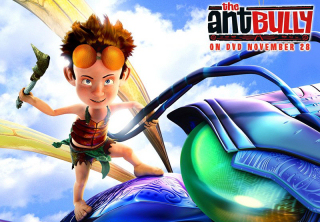
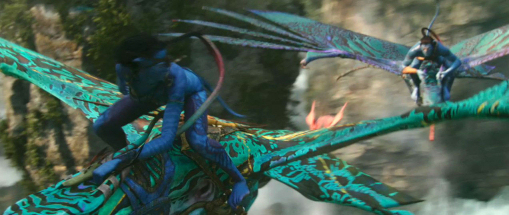
 I fear this post places me firmly in the Land of Mawkish Sentimentality, a porous-bordered, perfumey territory rife with poodle fur, diamondcollared kittycats, waifs with giant brown eyes, and the pervasive music of Counting Crows. The very embodiment of the Tarot Fool, I proceed regardless.
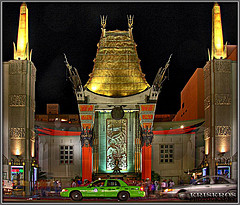 Among the few things I know I’ll miss when I leave Los Angeles is Grauman’s Chinese Theater. (The Mann Corporation took it over some years back, but only cads with no sense of history call it Mann’s Chinese Theater.) It’s a venerable old warhorse of oldtime palatial theaters, among the last such in Los Angeles. The Orpheum is even bigger and more plush, but in disrepair and not used much. There’s an L.A. Theater Conservancy,
  Because I’m moving after being here for over half my life, I have been making a point to visit my favorite spots these last few weeks. I saw The Lovely Bones and The Imaginarium of Dr. Parnassus at the Hollywood Arclight (though I haven’t actually seen Avatar at the glorious Cinerama Dome (the anchor of the Arclight complex) because quite frankly it’s on the bottom of my list of movies to see. Yesterday I went to see The Book of Eli at the Chinese.
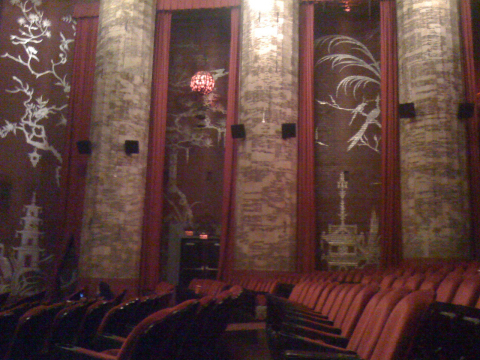 The Chinese was the first theater I went to when I moved to Los Angeles in 1984. I saw Children of the Corn there. Most of the cast showed up, and so I also got my first taste of spoiled little child actors. But having come from Gainesville, Florida, seeing a movie in a theater the size of a county where the people in the movie were also in the theater was — well, not cool, and not surreal. The word that comes to mind is enframing.
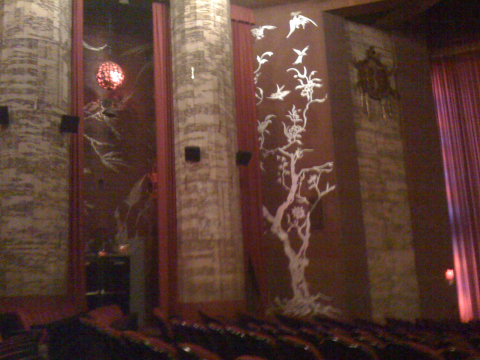 One of the most fun movie nights I’ve ever had was when a big group of us got together at the Chinese to see Titanic on opening night. The anticipation was huge and the crowd was electric. (Possibly the best movie night I ever had was attending the premiere of 2010 at the Westwood Village with David Gerrold and sitting with Arthur Clarke, Peter Hyams, and Harlan Ellison. Good lord. Shame the movie sucked.)
 Getting my own ballot for the 2009
  Some years ago while auditioning samples for compositions, I was listening to pieces of Martin Luther King’s iconic “I Have a Dream” speech and was astonished to realize that that the speech is — from start to finish and without variation — 125 beats per minute for over 15 minutes.
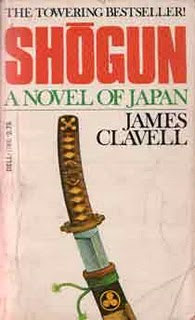 This is a quirk of mine I haven’t run across in anyone else: I won’t go see movies based on books I really love. Maybe the movie version is great; I don’t care. It won’t be a gnat fart next to the movie in my head. And whether they get it right or get it wrong, I’ll be stuck with that imagery from then on, because we are hardwired such that visual imagery takes precedence, and tends to overhwelm everything else — including imagination.
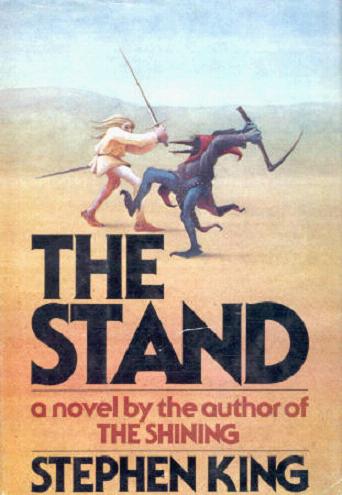 And I wished I’d never seen it. The James Clavell novel was and remains one of my favorite books. I’ve read it a bunch of times. But after seeing the miniseries, the next time I sat down to read the novel, it was nearly impossible to not to imagine Richard Chamberlain as John Blackthorne. And while Chamberlain was good in the TV version, the dude was not John Blackthorne. And good for TV (especially at the time) ain’t gonna come close to the unlimited budget my brain has for these things. So I learned something there.
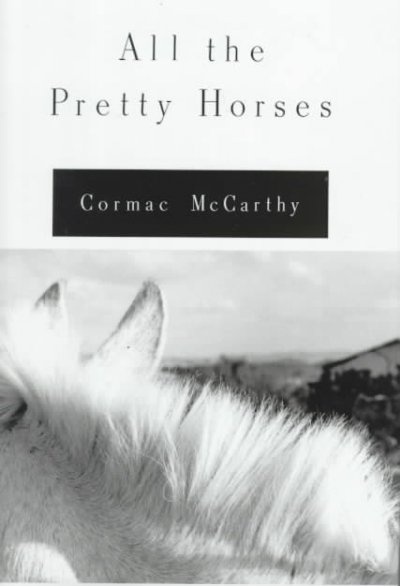 And so began a practice of not watching movies based on my favorite books. I mean, seriously, did anyone alive think that Disney was going to do anything to A Wrinkle in Time besides gang rape it? Don’t people realize Blood Meridian is as much about the writing as it is about what happens?
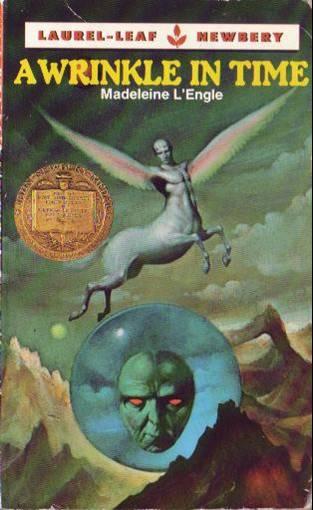 So I went and saw The Fellowship of the Ring at the Cinerama Dome in Hollywood (saw all of the movies there, in fact). And found myself very weirdly bifurcated about the movie. On the one hand it wasn’t remotely the vision I had for the book. On the other hand, I thought Jackson had done about the best possible job that anyone could have done (except for some horrendous shaky-cam fight scenes and the stupid dwarf-tossing jokes that pulled me right the hell out of the movie). I had to see it again to wrap my head around Jackson’s vision, and it was like that for all three films. And much as I enjoyed the books as a kid, I no longer have the sentimental attachment to them that I once did, so I don’t mind my precious gray cells being polluted by Jackson’s imagery. I thought Alice Sebold’s The Lovely Bones was a beautifully written novel, but I didn’t have an emotional attachment to it and didn’t mind seeing the Jackson film (which I liked a lot).
 I saw No Country for Old Men because I thought it was one of McCarthy’s weaker novels (I once quipped that it was a Miami Vice episode written by the best writer in America, and then recently learned that he’d originally written it [or intended it, can’t remember offhand] as a screenplay. See, cynicism makes you psychic. Unfortunately a real cynic knows that a real psychic is also usually a Cassandra. But I digress.) I thought it was hilarious that it won an Oscar for Best Screenplay Adaptation, because the Coens didn’t adapt a damn thing, they just made the book a movie, slavishly rendering about 95% of the novel, which is why the ending plays so oddly in a theater. It’s a book ending. But even though it was extraordinarily well done and I love the Coens, I couldn’t judge the movie at all because I knew everything I was about to see and hear. They didn’t translate it from one medium to another. But I wouldn’t see All the Pretty Horses, The Road, or the upcoming Blood Meridian (about the best-written novel I’ve ever read) even if I’d written the screenplay and was cast in the lead.
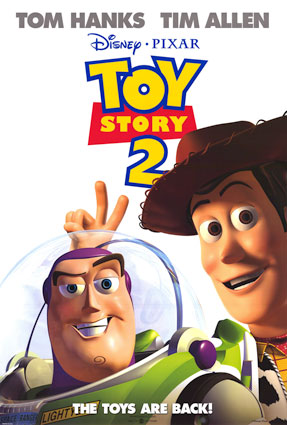 It’s weird to me that people tend to assume you have to see a movie if you liked the book. Sez friggin who? There’s a very real chance I wouldn’t go see a movie based on one of my own novels or screenplays for the same reason as all of the above: the movie in my head will always be a thousand times better. No one believes that when you say it, but I can prove it because I’ve never seen Toy Story 2 and never intend to, and I wrote the second draft of the damned thing.
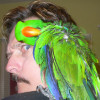 My Webster’s lists the verb form of “parrot” as “to repeat by rote.” That was pretty much my impression of what a parrot does, too. Then I met Alexander.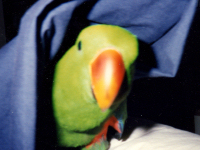

 because he seems to have a crush on her. (He likes girls a lot better than boys anyhow, but Tiffany is a special case for him.) He says “Hi” to her when she’s in her backyard, in a special tone he reserves exclusively for her. It sounds like a guy at a bar radar-locking on a babe a couple of stools down. You can almost here the “well, hel-LO there.”
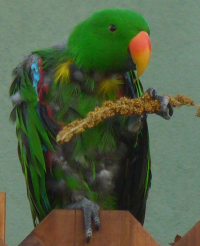 Alexander loves to watch Powerpuff Girls and Dexter’s Lab. He laughs at appropriate moments (sometimes I hear it in stereo when he and Maureen laugh together — in identical voices). He has a thing for anything that drones, like a fan or a leaf blower, and will talk like mad when a drone is going. When Mo composes he sings along, in time and on key. I’ll never get used to hearing them do call-and-response, with Alexander basically playing “Simon” and getting annoyed if you don’t replicate his pattern (which he varies as he goes). At the end of this post are two recordings of Alexander accompanying Maureen (or vice versa, really), one a call-and-response, the other pretty much an improvised duet.
 I don’t think you have to read me much to figure out that I’m not a very schmaltzy, widdle fwuffy bunny kinda guy, and I definitely deliberated before blogging about the birds (“The boys,” as we call them). But if
 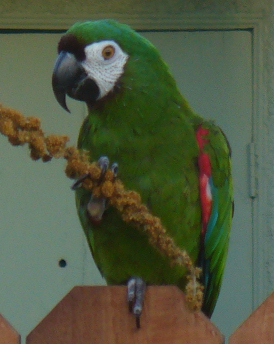 Murdoc is a
  and walk across me to get to her. What woke me up most mornings when I stayed with Mo was Murdoc climbing the metal footboard. Mo would preen him and I would lie there imagining the damage his beak could do to me if he wanted it to.
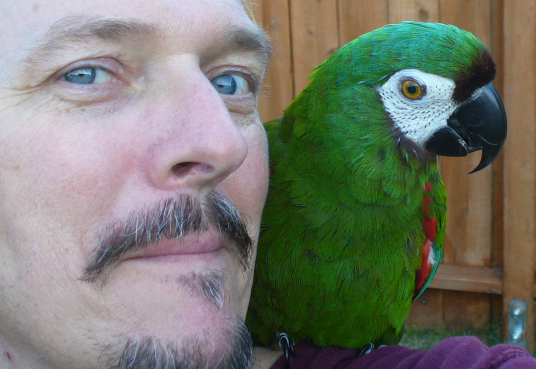 Murdoc is generally grumpy and not very social. (People and their pets, yah?) Often I feel sorry for him because he’s had a hard life and he’s pretty much broken. Mostly he just wants to be left alone. He loves me, though, and I’ve grown to love him. In fact love saved Murdoc, honestly.
 Apart from the holiday traffic and wallblind idiocy of drivers whose ears go flat to their head as they stop in the middle of the road in utter hawkshadowed panic, this tends to be my favorite time of year. Besides the meridian at which I look back on the previous year and look forward to the next, for some reason it’s usually my busiest and most creative time of year. I always have more projects going on and more outlets for them.
 I think one reason I don’t post more often is that I have a sort of essay mentality when it comes to blogging. I tend to want to have a topic or a theme, and sometimes I’m either stuck for one or just too damned busy to put together something coherent or even god forbid artful.

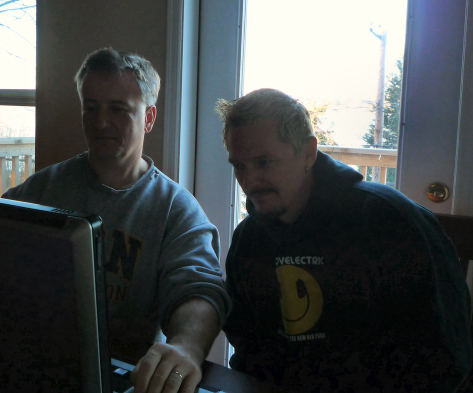 I’m in Seattle till Thursday, working with my friend Adrian Smith (polymath IT genius whiz who has also been a guest DJ on my
 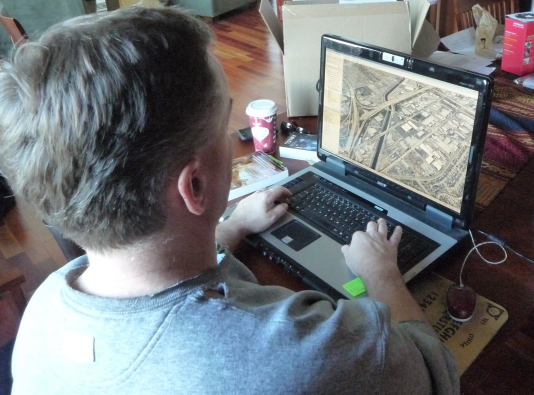 You’re even more able to use it because we have worked very hard to provide you with custom downloadable Google Earth maps that delineate locations, tour them, link to online pictures of landmarks, and include relevant text from the novels. You really can tour the Del Mar racetrack that dominates the first section of ELEGY BEACH. You really can fly the hang-gliding route in ARIEL. You really can go on the Goodyear blimp ride at appropriate altitude between Carson, California, and the Tejon Pass. The accuracy and detail astonish me. Maybe you’re young enough to take this stuff for granted. I’m old enough to be amazed by it.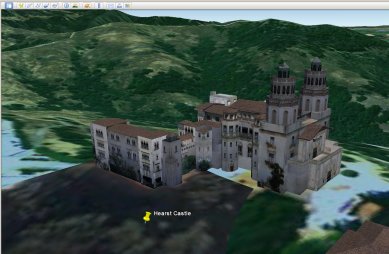


 Those of you using those free antiseptic wipes from dispensers outside grocery stores so that you will not expose yourself to cooties when you get your carts, please cut it the hell out. All you are doing is confirming to the rest of the world that America is a paranoid, germophobic, xenophobic culture.
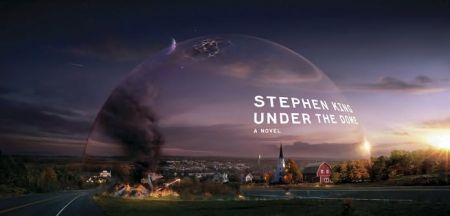 Dear Stephen,
 Having fun on the second day of
  Watching people gesture and pose as they talk on cell phones as if the person they’re speaking with can see them, it’s clear to me that areas of the visual cortex come into play when people use the phone. Put simplistically, you’ve got X amount of gray-matter RAM, and a certain portion of it is given over to visualization (real and imagined). As people seem to imagine the person they’re speaking to on the phone (there are probably good evolutionary reasons for this), some of the space given over to direct visual perception is being occupied.
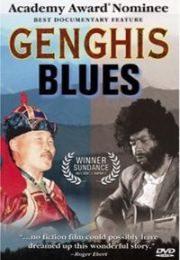 I watched the documentary
 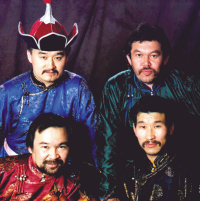 Yahoo Groups were a big new thing then, and I formed a group for Tuvan Throat Singing. It gradually got about 500 members, as I recall. Through this network I learned that a Tuvan group called
  The signing at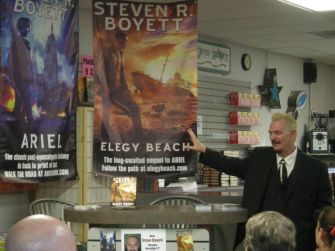
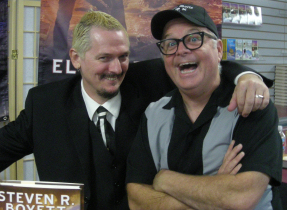
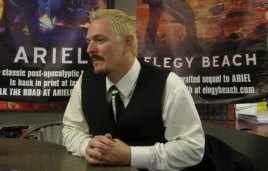

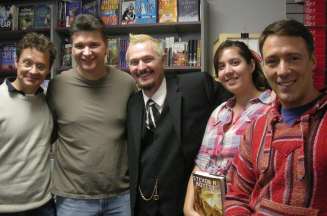
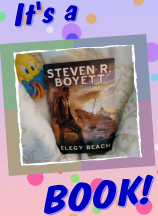 I promised myself this blog was going to be an ongoing series of essays and conversations on a variety of topics — writing, science fiction & fantasy, authorship & intellectual property in the 21st Century, the remix as metaphor for the art of our age, occasional reports on events and the status of books & various projects. What I promised myself it would not be is a billboard for me and my work. We already get more than enough spam in our lives without me adding to the heap, I think.
 Several websites have asked for essays from me in conjunction with the release of Elegy Beach. Naturally I’m only too happy to oblige! But even though I’m perfectly comfortable promoting my work, rather than just write some long commercial for my new book I think it’s fun to use these as opportunities to talk about my approach to my work — how I do what I do. (Or, at least, how I think I do what I think I do.)
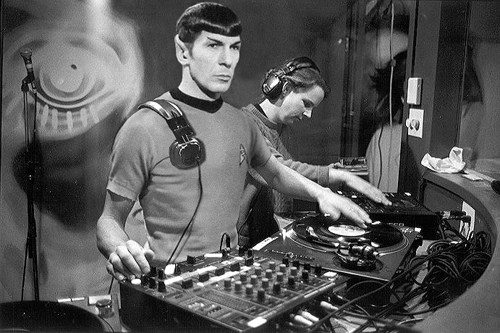 So with one book coming out and another one just sent off to the agent, even though I’m fairly busy with promotion-related stuff (November is gonna be nuts), my attention immediately turned to DJing and designing my wife’s music website. I mean at around 4 a.m. on Sunday I literally packed up the new novel to mail off to my agent the next morning and then did a new Podrunner mix. The next day I began the laborious and detail-intensive nonsense involved in upgrading my DJ rig and getting new controllers.
 I finished the massive revision of my next novel over the weekend and sent it off to my agent yesterday. Now maybe I can go back to some kind of normal schedule (one that involves more than three hours’ sleep a day) and actually do some useful things around the house. My wife deserves some kind of medal. Mo’s been running interference between me and the world whhile I dig through this mountain. But I’m through and the book is off.
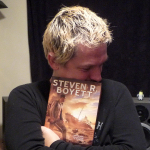 This came in today. It’s the final publication hardcover of Elegy Beach.
 I can’t write a story or novel unless I have a title. In fact I have a folder with a list of titles that have come to me (“The Placebo Plague” — c’mon, don’t you want to know what that’s about? I do). There’s nothing mysterious about it. In many ways the title is simply my perspective on the work. It lets me know how I see it. How I want it seen.
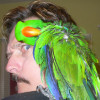 kes this not at all ideal is that we own parrots. Plural. A vosmaeri eclectus and a severe macaw. I love them dearly and often want to drown them. (I won’t go on about the birds themselves because whothehell wants to read yet another blog entry about someone’s pet?) You think only roosters crow at dawn, right? Nossir, all birds just love to celebrate every sunrise like they’re starring in some Cat Stevens ballad.
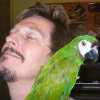 So for about the last month I’ve been a shuffling stumbling holloweyed thing who looks like he wants nothing more than to eat your brain. Other work is piling up. Daily chores are neglected. The rest of my life is piling up. But something in me insists on doing it this way.


 . Good luck and get mangling!
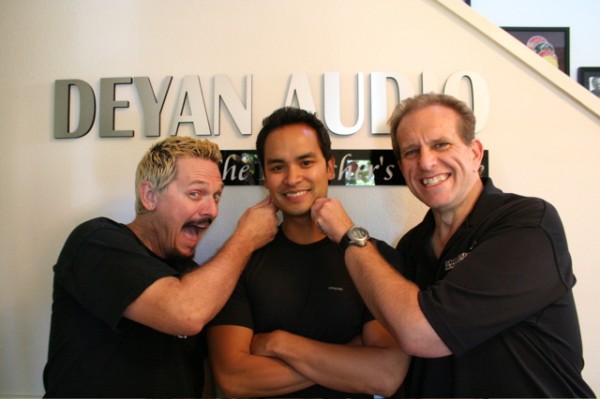
 Ramon and JD (who, I should mention, are also offensively good-looking men) took off, and Bob went into the studio with me to record the Intro. Take 1: you choked on that one a little, Steve. Take two: Just relax. Take three: Stop moving around so much, okay? Take four: wow, you really suck major hose at this, don’t you, Boyett? (Bob never actually said any of those; he’s way too nice. )

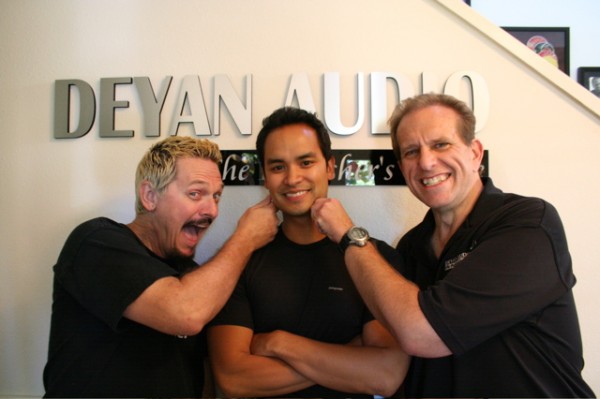
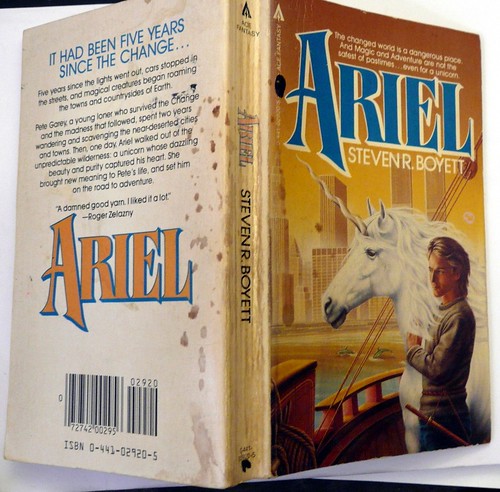
 . Deadline is noon, Sept. 17. I will be the sole arbiter of gankiness (no photoshopping, you clever devils you), and I’ll post the pic when I announce the winner.
 So I’m out in the middle of shit nowhere in the northern Nevada desert exploring art projects on the playa one night at Burning Man with my friend Scott. We’re looking at this yurt that someone has set up. There’s nothing around it. Scott tells me he wishes he had a map of the Black Rock City so he could mark locations of some theme camps and art installations. (For a week the temporary Black Rock City that houses Burning Man is the fourth-largest city in Nevada, dontcha know.)
 ARIEL is officially released today. Cory Doctorow, bless him, released a